



You've got a design ready, shirts picked out, and a deadline creeping closer. Then a pressing question arises. Where should you print DTF transfers so the result looks good, presses cleanly, and arrives on time?
That's a common stumbling block. The artwork might be solid, but the supplier choice decides whether you get sharp color, smooth adhesion, and a transfer you'd confidently sell, or a pile of reprints and wasted blanks. DTF has grown fast because it works well for short runs, one-offs, and full-color designs across a wide range of fabrics. The global direct-to-film printing market is projected to approach nearly USD 4 billion, driven by full-color output on many fabric types and no minimum order quantities, according to DTF Office's market overview.
That growth is useful for buyers because it means you're no longer choosing from a tiny group of experimental providers. More shops now offer DTF, but they don't all offer the same level of process control, file support, speed, or consistency. If you're trying to decide where to print DTF transfers, price matters, but it's rarely the whole story.
Why Finding the Right DTF Partner Matters
A transfer supplier isn't just a vendor. They're part of your production line.
If the print is off-color, your brand looks off-color. If the film is poorly cured, adhesion suffers. If the order arrives late, the event date doesn't move just because your printer had a backlog. That's why picking where to print DTF transfers is less about finding the cheapest upload form and more about reducing risk.
Good DTF solves real small-order problems
DTF became popular for a practical reason. It handles the kind of work that used to be awkward or expensive with other decoration methods. Small online brands, side-hustle apparel sellers, school groups, and local event businesses often need flexible quantities, fast reorders, and artwork that changes constantly. DTF fits that workflow well.
What matters on the buyer side is what that flexibility looks like in practice:
- No forced bulk commitment: You can test designs without locking into large minimums.
- Broad fabric compatibility: Cotton, polyester, and blends are all common use cases.
- Strong fit for full-color graphics: Multicolor art, gradients, and detailed prints are easier to run than with many traditional setups.
A bad partner creates expensive problems
The biggest mistake new buyers make is treating all DTF suppliers as interchangeable. They aren't.
One shop may have excellent color handling but weak file review. Another may print fast but ship inconsistent transfers. A third may accept any upload with no warning, which sounds convenient until a low-quality file gets printed exactly as submitted.
Practical rule: The best DTF partner is usually the one that prevents mistakes before they become reprints.
That's especially true if you're selling finished garments instead of pressing for yourself as a hobby. At that point, your printer affects margin, reputation, and customer retention. Cheap transfers become expensive fast when they create wasted garments, delayed shipments, or support headaches.
Your Three Main Options for Printing DTF Transfers
A lot of first-time buyers hit the same point. Orders are starting to come in, deadlines are tight, and the question stops being “Can I sell this?” and becomes “Who should print my transfers so I don't ruin shirts, miss dates, or fight color problems on every reorder?”
You have three real options. Print in-house, work with a local shop, or outsource to an online DTF specialist. All three can work. The better choice depends on your volume, how fast you need reprints, how comfortable you are with file prep, and how much production responsibility you want to carry yourself.
DIY in-house setup
In-house printing gives you the most control over schedule and output. If a customer needs a name correction, a same-day reprint, or a last-minute add-on, you can respond without waiting on another company's queue or shipping schedule.
That control costs time and attention.
A DTF setup is not just a printer and heat press. You are managing RIP software, white ink behavior, film handling, powder application, curing, storage conditions, nozzle checks, and maintenance. If one step drifts, the finished transfer can look fine on the table and still fail after pressing or washing. Shops that do well with in-house DTF usually have steady volume and someone who is willing to treat production like a process, not a side task.
In-house makes the most sense when:
- You print often enough to keep equipment in use: Idle machines create their own problems, especially with white ink systems.
- You need immediate turnaround: Same-day jobs and frequent reprints are easier to handle under your own roof.
- You want full control over color and testing: This matters for brand work, repeat clients, and garment-specific adjustments.
If you only need transfers once in a while, the math usually turns against you fast. Maintenance, spoiled materials, and failed tests eat up the savings people expect.
Local print shop
A local shop gives you a middle path. You avoid equipment ownership, and you may be able to get transfers the same day or next day without paying for expedited shipping. For school orders, event merch, and local business jobs, that can solve a real problem.
The main trade-off is range and consistency. Some local shops run DTF every day and know the process well. Others added it to support existing customers and still focus more heavily on screen print, embroidery, or signs. That difference shows up in file support, color matching, and repeat accuracy. A simple logo order may run perfectly. A gang sheet with gradients, skin tones, and tiny type is a better test of whether the shop really understands DTF production.
Local shops are often a good fit when:
- Pickup speed matters more than rock-bottom pricing
- You want direct communication with the person handling the order
- Your artwork is straightforward and easy to review in person
- You may need help troubleshooting garments, press settings, or placement
The risk is uneven capability. Ask to see recent transfer samples, not just finished shirts. A clean pressed sample can hide issues in film quality, edge detail, or adhesive coverage.
Online DTF specialist
Online DTF specialists usually have the best production systems, especially for repeat jobs and higher order volume. Their workflow is built around gang sheets, artwork intake, curing consistency, and shipping transfers out every day. That specialization tends to reduce the small errors that create expensive reprints.
This option is often the lowest-risk choice for businesses that want predictable output without buying equipment. The strongest suppliers also make ordering easier with gang sheet builders, artwork review tools, and file checks that catch common problems before print. That support matters more than many new buyers expect. A cheap transfer is not a bargain if the file portal is clumsy, the colors drift from order to order, or nobody flags low-resolution art.
Color handling is one place the gap becomes obvious. Shops that run DTF as their main service usually have a more repeatable process for underbase control and color management. If that is a concern, it helps to compare DTF transfer suppliers known for more vibrant color output before placing a larger order.
The downside is distance. If support is slow or upload requirements are unclear, a simple reorder can turn into a delay. Turnaround also depends on cut-off times, production load, and shipping carrier performance, so “fast” on a homepage does not always mean fast for your specific order.
Comparison of DTF Printing Options
| Factor | DIY (In-House) | Local Print Shop | Online DTF Specialist |
|---|---|---|---|
| Speed | Fastest for reprints once your setup is stable | Strong for local pickup and short-notice jobs | Strong for repeat orders if production and shipping are organized |
| File support | You handle everything yourself | Varies a lot by shop | Often better, especially if supplier offers file checks or gang sheet tools |
| Color accuracy | Depends on your profiling, maintenance, and testing | Varies by operator and equipment | Often more consistent when DTF is the supplier's core service |
| Ease of use | Lowest. You manage the full process | Moderate. Direct communication helps | Usually highest if the ordering system is well built |
| Cost structure | Higher upfront investment, lower unit cost at volume | Moderate, often with some premium for convenience | Often efficient for short runs, reorders, and outsourced production |
| Best fit | Frequent production and full process control | Local deadlines and hands-on communication | Scalable ordering, better systems, and lower operational risk |
If you are still testing designs or learning the process, outsourcing usually creates fewer expensive mistakes than buying equipment too early.
How to Choose the Best DTF Print Supplier
Most buyers compare suppliers the wrong way. They look at posted pricing first, then maybe shipping, then stop there. That's backwards. Start with output quality and workflow reliability, then ask whether the price still makes sense.
Check durability before you compare rates
A transfer that looks good fresh off the press but breaks down in wash care isn't a good deal. Buyer guidance points to durability, consistency, turnaround, equipment quality, and support as key decision criteria. Well-made transfers can reach 50-100+ wash durability when the white underbase, adhesive powder, and film are properly matched and cured, according to Lion DTF's guidance on transfer quality.
That's the benchmark worth asking about. Not vague claims. Ask whether the supplier can show consistent wash performance on actual garments.
Questions worth asking:
- How do you handle white underbase and film matching?
- Do you review files before printing or print exactly as uploaded?
- Can you help with color-sensitive artwork?
- What fabrics do you see the best results on?
If color is a major concern, it also helps to review guidance on which DTF transfer suppliers offer the most vibrant colors so you know what to compare beyond simple brightness.
Match the supplier to the job type
A one-off Etsy order and a school uniform run do not need the same supplier strengths. Some jobs need speed. Others need careful file validation. Others need gang sheet efficiency more than anything else.
Here's a practical way to sort that out:
| Job type | Supplier trait that matters most | Common mistake |
|---|---|---|
| One-off merch | Easy ordering and no minimums | Overpaying for support you don't need |
| Gang sheets | Smart layout tools and clear file rules | Wasting sheet space with manual layout errors |
| Bulk team or event apparel | Consistent repeat output and deadline reliability | Choosing low price over dependable turnaround |
| Brand-sensitive drops | Stable color handling and responsive support | Assuming every supplier interprets color the same way |
There's a real trade-off between speed, support, and price. The cheapest option can still be the most expensive if it creates one failed launch, one missed event, or one stack of misprinted transfers.
Look at the ordering experience
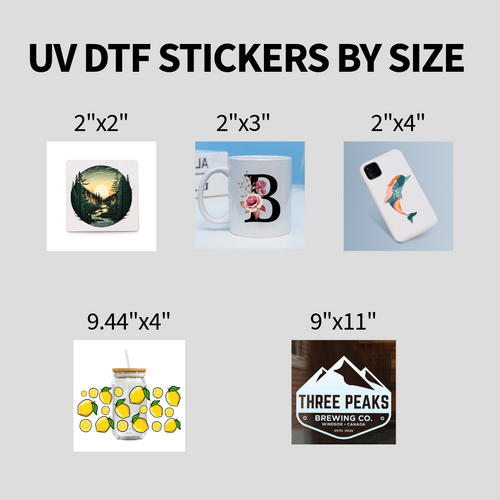
A good supplier should make it easy to submit work correctly. Clean upload tools, file review options, and gang sheet support all matter because they reduce preventable mistakes. Modern workflow tools offer substantial assistance in this regard. For example, Lion DTF Transfers is one supplier that offers online gang sheets, by-size ordering, and file upload tools, which is useful for buyers who want a more structured ordering process without building everything manually.
A supplier's website tells you a lot. If ordering feels confusing, support is slow, or file requirements are vague, expect friction after checkout too.
Preparing Your Artwork for Flawless DTF Prints
You can pick a fast supplier, pay for rush shipping, and still lose the job if the file is bad. I see that more than almost anything else with first-time DTF buyers. The printer can only output what you send, and DTF will reproduce stray pixels, soft edges, and hidden backgrounds you never noticed on screen.

The biggest file-prep mistake is assuming “good enough on a monitor” means “good enough to press.” It usually doesn't. DTF prints detail well, which is good for sharp graphics and bad for sloppy prep. If there is a faint box around the art, a leftover glow, or rough clipping around the edges, it can show up on the finished transfer.
Clean edges matter more than beginners expect
Edge cleanup decides whether a print looks production-ready or homemade. A logo with a dirty perimeter often looks fine at normal zoom, then prints with a light halo or random specks around it.
Before uploading, check these points:
- Transparent background: Make sure there is no white box, colored fill, or hidden layer behind the art.
- Edge cleanup at high zoom: Look for halos, floating pixels, rough selections, and leftover shadows.
- Usable source quality: Screenshots, social media downloads, and compressed web graphics usually break down in print.
- Readable small details: Thin lines and tiny text need enough weight to survive pressing and wear.
A lot of failed orders start with artwork that was never built for print.
Build files at final size
Set the design to the exact print dimensions before you export it. If a left-chest logo will print at 3.5 inches wide, inspect it at that size. If a full front graphic will run 11 or 12 inches wide, check it there. Problems show up fast once you stop viewing the file as a thumbnail.
Color needs the same kind of reality check. Bright screen colors do not always translate the same way on fabric, especially across different garment colors. Brand work, event merch, and repeat orders all benefit from using the same file version each time instead of making small last-minute edits that shift color or detail.
If you want a practical reference before uploading, this guide to custom DTF transfers ready to press shows the kind of file standards that help orders run cleanly.
Check the file like a printer would
I tell new buyers to review artwork in two passes. First, zoom out and judge the overall design. Then zoom in hard and inspect the problem areas. Look at outlines, transparency, tiny text, distressed textures, and anything near the edge of the graphic.
Use this quick checklist:
- Confirm final dimensions before export.
- Remove hidden layers and guide elements.
- Check that blacks, whites, and bright colors are intentional.
- Make sure fine detail is thick enough to print cleanly.
- Export a clean, high-quality file format your supplier accepts.
Some suppliers accept more file types than others, and that matters if you work from Illustrator, Photoshop, Canva, or marketplace assets. Better file support reduces back-and-forth and lowers the chance of a rushed conversion causing print issues.
This walkthrough helps if you want to see file prep in action before ordering.
Clean file prep saves money twice. You avoid bad transfers, and you avoid wasting blank garments during testing.
The Ordering Process From Start to Finish
Ordering DTF online is usually straightforward once you understand the sequence. The smoothest orders start before checkout, with a clean layout and the right sheet choice.

Start with the gang sheet
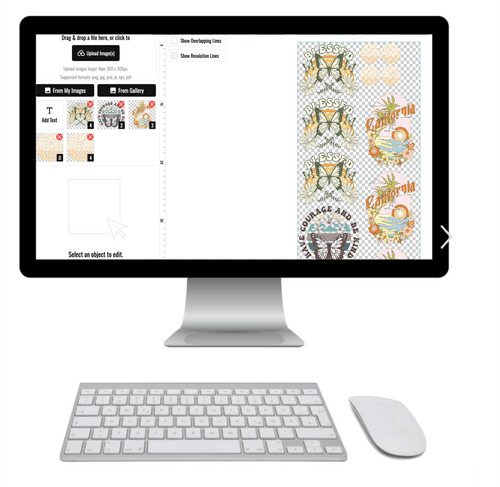
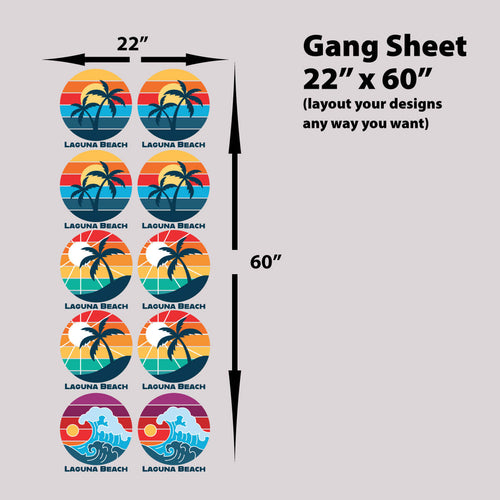
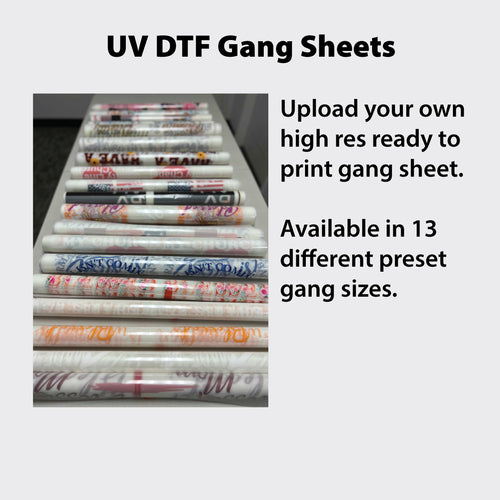
If you're ordering multiple logos, left-chest prints, sleeve hits, youth sizes, or small test graphics, a gang sheet is usually the most cost-effective route. The goal is simple. Fit as much usable artwork as possible onto one sheet without crowding or confusion.
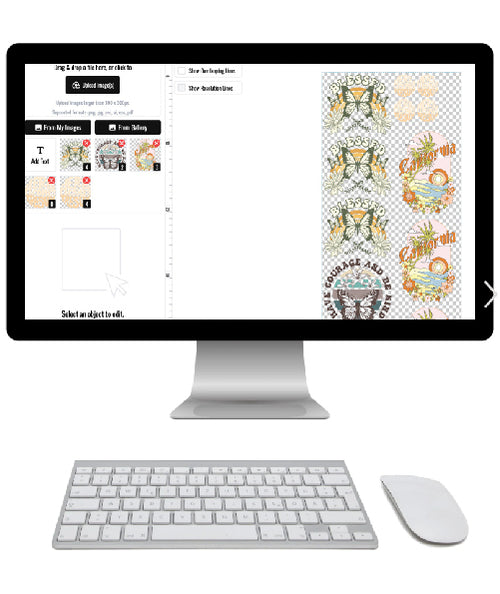
An Auto-build gang sheet builder makes a real difference. Instead of manually dragging every file into place and wasting time trying to squeeze out small gaps, the tool arranges uploaded designs for you. That helps reduce layout mistakes and makes better use of the sheet, especially when you're combining mixed sizes or a batch of small graphics.
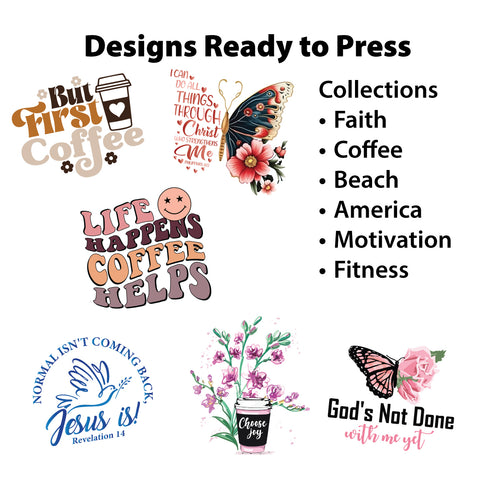
For buyers who want ready-to-press transfers without building every detail from scratch, custom DTF transfers ready to press gives a good reference point for how this workflow typically works.
Upload, review, then choose shipping
Once the gang sheet or single design is ready, the rest of the process is usually simple:
- Upload the artwork: Make sure the file matches the final size and has been cleaned up.
- Check the preview carefully: Names, mirrored elements, duplicates, and cropped edges cause avoidable mistakes.
- Select production and shipping speed: Match this to the deadline, not just the budget.
- Place the order and track progress: Keep an eye on production updates if the event date is tight.
Some shops also offer file review or validation before printing. If you're new, that's often worth it. If you're experienced and sending proven files, a direct upload path may be faster.
Don't treat shipping speed as an afterthought
A lot of people spend too much time comparing transfer prices and too little time comparing service levels. That's a mistake when the order is tied to an event, launch, or team delivery.
The right workflow is simple. Build the sheet efficiently, upload a clean file, choose the speed that matches the deadline, and only then worry about whether you saved a small amount on the print itself.
Pro Tips for Pressing and Long-Term Durability
The transfer can be excellent and the shirt can still come out wrong. Pressing is where many beginners lose quality they already paid for.

Focus on consistency, not guesswork
A good press result comes from repeating the same steps every time. Pre-press the garment to remove moisture and wrinkles. Place the transfer squarely. Use even pressure across the platen. Follow the supplier's peel instructions exactly.
If you want a practical walkthrough for application technique, how to press DTF transfers is a useful reference.
Small mistakes cause most pressing problems:
- Skipping the pre-press: Moisture and wrinkles interfere with contact.
- Uneven pressure: One side bonds well, the other lifts.
- Peeling too early or too late: This depends on the transfer type.
- Ignoring fabric behavior: Polyester and blends can react differently than cotton.
Press for the fabric in front of you
Even with a strong transfer, garment type still matters. Cotton usually gives you a forgiving surface. Polyester needs more care because heat management is more sensitive. Blends sit somewhere in between. If you run multiple blank brands, test one shirt before committing the whole batch.
Press one sample first when the order matters. That single shirt can save the whole run.
Supplier speed also matters here more than many buyers think. Market expectations have shifted, and providers now differentiate with same-day pickup, 24-hour printing, and next-day air, according to recent discussion of DTF turnaround expectations. If your order is deadline-driven, fast production can matter more than shaving a little off the transfer price.
Protect the print after the press
Long-term durability isn't only about the transfer itself. Care instructions matter too. Tell customers to wash garments inside out, avoid harsh treatment, and follow common-sense apparel care. You don't need to overcomplicate this. You just need the buyer to avoid abusing the print.
A post-press finishing step also helps. Many decorators do a second press with a cover sheet after peeling to settle the print and improve the hand feel. It's a small step, but it often produces a cleaner, more finished result.
Frequently Asked Questions About Printing DTF Transfers
Is DTF better than using a local screen printer for small runs
Often, yes. If your order is highly customized, full color, or a short run, DTF is usually the simpler fit. Screen printing still makes sense for some repeat bulk programs, but it has more setup friction.
Can I use a home iron instead of a heat press
You can try, but it's not a professional method. A heat press gives you even pressure and stable heat. An iron usually doesn't. If the result matters, use a press.
What's the difference between a regular DTF transfer and a UV DTF sticker
A standard DTF transfer is for fabric and gets applied with heat. UV DTF is typically used for hard surfaces and follows a different application method. Don't treat them as interchangeable products.
Should I order by sheet size or by individual design size
It depends on your artwork mix. If you have several small logos or multiple placements, gang sheets are usually the more efficient choice. If you only need one design at a specific size, by-size ordering can be simpler.
What matters most when deciding where to print DTF transfers
For most buyers, the priority order should be:
- Print consistency
- File support
- Turnaround reliability
- Ease of ordering
- Price
That order changes only if your job is extremely simple or extremely urgent.
What's the biggest mistake first-time buyers make
Sending weak artwork to a shop that doesn't review files. The supplier prints what they receive, the transfer arrives as expected, and the customer still ends up unhappy. Clean files and a reliable ordering process solve a lot of that.
If you need a practical place to order, Lion DTF Transfers offers print-ready transfers, gang sheets, and an Auto-build gang sheet builder that helps simplify layout and reduce wasted space. It's a workable option for businesses, creators, and shops that want an easier upload process, flexible ordering, and ready-to-press output without handling production in-house.