



You're probably here because the shirts need to happen fast. A school order got approved late, a client changed artwork after signoff, or your own merch drop is missing one final print file. So you search where to buy DTF transfers near me and expect the answer to be a shop a few miles away.
That search still matters. But the smart buy usually comes down to total cost of ownership, not just street distance or per-inch price. A transfer that's cheap upfront can become expensive if the file needs repair, the gang sheet is laid out badly, the white underbase is weak, or the supplier misses the promised ship window and forces a reprint.
The first supplier decision should solve three problems at once: speed, print reliability, and order friction. If one of those breaks, the whole order gets more expensive than it looked on the checkout page.
Why Near Me Means More Than Just Miles Away
The old version of “near me” meant local pickup and a quick handshake at the counter. In DTF, that's no longer the only useful definition.
DTF has shifted into a speed-first buying category, with providers publicly advertising same-day, 24–48 hours, and 1–2 business days instead of older, slower print cycles. Lion DTF orders ship in 24–48 hours and offer local pickups in Irvine, CA and Nashville, TN.
Two versions of near me
Those looking for where to buy DTF transfers near me are usually trying to solve one of two problems:
- True local emergency: You need pickup because the order is due now, and shipping adds risk.
- Fast fulfillment: You need a supplier with a disciplined print queue, fast shipping, and fewer bottlenecks.
A small local shop can be perfect for urgent pickup. It can also be overloaded, inconsistent on hours, or slow to respond when artwork needs correction. A specialized fast-ship operation might be farther away, but if its workflow is built around DTF volume, it can still get transfers into your hands sooner.
Practical rule: Don't ask “Who is closest?” Ask “Who can get correct transfers into my hands fastest with the fewest surprises?”
Why this matters to cost
Distance is only one line item. Delays create other costs:
| Cost driver | What it looks like |
|---|---|
| Rush pressure | You pay more later because a slow start forces expedited shipping or overtime pressing |
| Reprint risk | Bad artwork or poor adhesion means buying the same job twice |
| Downtime | Your press sits idle while you wait for corrected transfers |
| Customer friction | You spend time explaining delays instead of fulfilling orders |
That's why “near me” should include both local pickup shops and fast-shipping suppliers with proven turnaround discipline.
How to Find Potential DTF Transfer Suppliers
A basic map search gives you names. It doesn't tell you who runs a clean DTF workflow, who answers questions, or who has recent work worth trusting.

Start by building a shortlist. Don't order from the first shop that appears. You want a working list of a few vendors so you can compare how they communicate, how they present files, and whether they act like they handle DTF every day or only occasionally.
Search where real work shows up
Google Business profiles are useful, but they're only the start. A better local search stack looks like this:
- Instagram searches: Look for city-plus-service tags and recent posts. Suppliers often reveal more in their daily feed than on their homepage.
- Facebook groups: Local apparel decorators, print shops, and maker groups tend to share blunt opinions when a supplier misses deadlines.
- Business directories: These help uncover shops that don't rank well organically but do steady local production.
- Tagged customer posts: If customers are reposting finished garments, you can inspect line detail, color handling, and consistency.
Build a mixed shortlist
Don't fill your list with only local storefronts. Include both nearby printers and established online DTF specialists that serve your area quickly.
A good shortlist should answer questions like these:
- Do they show recent DTF work, not just mockups?
- Do they mention gang sheets, file setup, or artwork help?
- Do they offer pickup, shipping, or both?
- Do they make ordering simple for a first-time buyer?
If a supplier makes it hard to understand how to upload, size, and approve artwork, the order usually gets harder after checkout too.
What usually separates the good shops
The strongest candidates tend to make prepress visible. They explain how to upload, what file types work, whether they'll flag issues, and how they handle gang sheets. Weak suppliers often hide behind generic “upload your file” language and leave the buyer to discover problems after the print is produced.
That's the first filter. If a shop can't make the buying process clear before the order, don't expect clarity when something goes wrong.
Evaluating Suppliers on Quality Turnaround and Price
The next step is vetting. Here, a lot of buyers focus too hard on unit price and not hard enough on whether the transfer will press cleanly and hold up.

At Lion DTF, we ship within 24–48 hours window and/or same-day pickups options available for an extra rush charge.
What to test before a real order
You don't need a huge trial. You need a revealing one.
Ask for a sample or place a very small order that includes these elements:
- Fine text: Small lettering shows whether detail holds or fills in.
- Solid blocks of color: These expose coverage and white base quality.
- Mixed artwork types: Include both bold shapes and more delicate lines.
- The fabric you use: Press tests on your real blanks matter more than generic promises.
When the transfers arrive, inspect four things closely:
| Checkpoint | What to look for |
|---|---|
| Color handling | Colors should look intentional, not muddy or weak |
| Edge clarity | Fine lines should stay crisp without ragged edges |
| White underbase | Dark garments need coverage that doesn't look thin |
| Press behavior | Peel performance and final finish should feel controlled |
A useful comparison point is this guide on DTF suppliers that offer vibrant colors, which shows the kind of quality criteria buyers should review before scaling an order.
Turnaround means more than the posted window
A supplier can advertise a quick turnaround and still create delays. Ask direct questions:
- What's today's cutoff time for production?
- If my file needs correction, does that pause the queue?
- When do pickup notifications go out?
- Are ship times counted from file approval or from payment?
Those details matter more than the banner on the homepage.
Here's a useful visual checklist before you place a larger order:
Price that looks low can still cost more
Per-inch pricing is only part of the bill. The expensive DTF order is often the one that looked cheap at checkout.
Look for hidden costs like these:
- File cleanup time: If your art isn't ready, someone has to fix it.
- Bad layout waste: Poor gang sheet setup can leave paid film space unused.
- Reprints: A failed press or bad file usually costs more than buying from the right supplier once.
- Shipping mismatch: Cheap print pricing can get erased by the wrong freight choice.
Cheap transfers become expensive when they arrive wrong, late, or harder to press than expected.
The Hidden Value of Artwork Support and Gang Sheets
Most first-time buyers think the DTF supplier's job starts after upload. In practice, the order succeeds or fails long before the film hits the printer.

Many pages targeting where to buy DTF transfers near me barely explain how bad artwork ruins an order. Some sellers mention upload workflows, but only a few explicitly mention correction help or print-ready support. The business context around Quick Transfers notes that Lion DTF's offering includes vectorization, design help, and “We Build a Gang Sheet for You,” which reflects a real buyer need that many local pages miss.
Where buyers lose money
Most wasted DTF spend comes from preventable file issues:
- Low-resolution art: It may look acceptable on a phone screen and fail on film.
- Bad transparency handling: Halos and ugly boxes show up around the design.
- Wrong size assumptions: The buyer uploads one version and expects another.
- Weak gang sheet planning: Designs fit, but not efficiently.
These aren't rare edge cases. They're standard first-order problems.
Why gang sheets matter so much
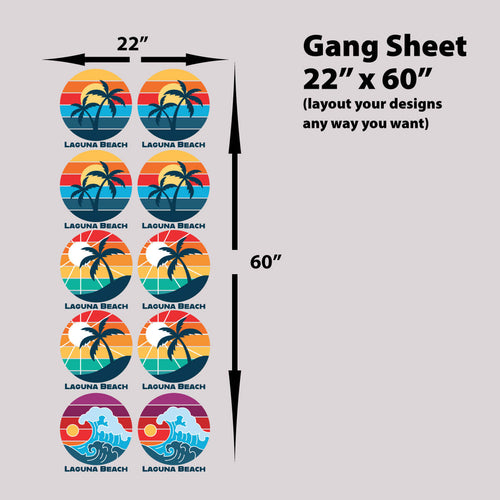
A gang sheet isn't just a convenience. It changes your effective cost.
If you place multiple logos, left-chest prints, neck labels, and full-front graphics on one sheet correctly, you reduce waste and simplify production. If you place them badly, you pay for dead space and create more cutting time at the press.
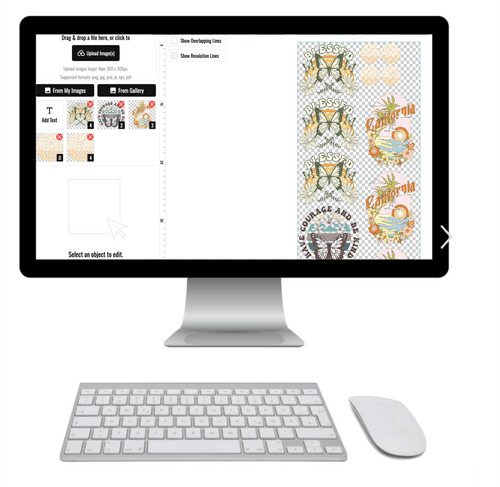
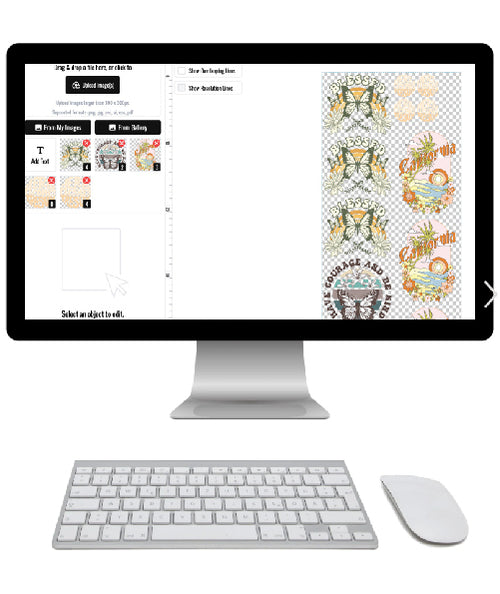
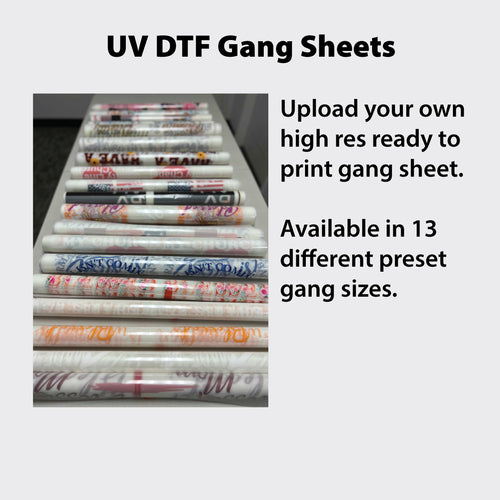
That's why an Auto-build gang sheet builder matters. It helps buyers arrange artwork faster and use film more efficiently, which usually lowers wasted space and reduces manual setup mistakes. For non-designers, that's not a nice extra. It's often the difference between a smooth order and a rework cycle.
For a closer look at how these layouts affect real ordering decisions, this guide on DTF gang sheets is a useful reference.
Support beats a slightly lower price
A supplier that helps you avoid a failed print is often cheaper overall than one with a lower sticker price and no prepress support.
That support can take several forms:
| Support type | Why it matters |
|---|---|
| Vectorization help | Cleaner edges and better scalability |
| Sizing guidance | Fewer surprises when the transfer arrives |
| Gang sheet assistance | Better use of paid film area |
| File correction feedback | Fewer preventable reprints |
Good artwork support doesn't just save time. It protects margin.
If you're buying DTF for a brand, an Etsy shop, a school order, or contract work for clients, file support should be part of your supplier decision, not an afterthought.
Choosing Between Local Pickup and Fast-Ship Specialists
This is usually the core decision, not whether DTF is the right decoration method. You're choosing an operating model.

Local pickup works when you need physical possession as soon as the order is done. Fast-ship specialists work when the supplier's production system is stronger than what's available nearby. If you need an option built around urgent service windows, a page like same-day DTF ordering shows what that model looks like in practice.
When local pickup wins
Use local pickup when these conditions are true:
- You need the order today
- You can drive there faster than shipping can move
- You need face-to-face clarification
- Your art is already ready to print
A local shop can also help if you want to inspect a transfer before leaving. That's valuable when the job is sensitive and there's no time for a shipping mistake.
When fast-ship specialists make more sense
A specialized remote supplier often fits better when:
- You need consistent repeat ordering
- You're scaling beyond occasional small jobs
- You want stronger artwork workflows
- You need predictable fulfillment, not just local convenience
The mistake is assuming local always means safer. It doesn't. A local printer with a backed-up queue, thin staffing, or weak prepress creates a slower and riskier order than a farther supplier with disciplined DTF operations.
Side-by-side decision view
| Factor | Local pickup | Fast-ship specialist |
|---|---|---|
| Best use case | Immediate emergencies | Repeatable production needs |
| Communication | Direct and personal | Structured and process-driven |
| Possession speed | Fast after completion | Depends on shipping method |
| Capacity confidence | Varies by shop | Often easier to assess from workflow and options |
| Prepress support | Can be limited | Often more formalized |
| Total convenience | Pickup required | Delivery to your shop or home |
The right choice depends on your bottleneck. If your problem is physical distance, local pickup helps. If your problem is workflow reliability, a fast-ship specialist usually solves more of the order.
Don't compare print time alone. Compare total fulfillment time from artwork upload to transfer in hand.
Placing a Test Order to Find Your Long-Term Partner
Once you've narrowed the list, don't jump straight into a large production run. The better move is a controlled test order.
Industry guidance recommends shortlisting suppliers that can handle your order volume, then comparing turnaround, pickup or shipping options, and customer feedback before placing a larger test order. That's the right sequence because it tests both the product and the process.
Use the test order to evaluate the full buying experience:
- Ordering clarity: Was upload and sizing straightforward?
- Prepress communication: Did they catch problems before printing?
- Packaging and labeling: Did the order arrive organized and protected?
- Press results: Did the transfers apply cleanly on your actual blanks?
- Repeatability: Would you trust them with a larger, deadline-driven run?
A supplier becomes a long-term partner when they reduce friction, not just when they print a decent transfer once. That's the ultimate goal behind searching where to buy DTF transfers near me. You're not just buying film. You're choosing who you want in your production chain when deadlines get tight.
If you want a supplier option that includes custom transfer ordering, artwork support, an Auto-build gang sheet builder, and services like “We Build a Gang Sheet for You,” take a look at Lion DTF Transfers. It's a practical fit for buyers who need more than a low per-inch price and want a smoother path from upload to press-ready transfers.