



You’ve probably been there. The design looks clean in Cricut Design Space, Photoshop, or Illustrator. On screen, the colors feel sharp, the layout feels balanced, and the shirt in your head already looks sellable.
Then the press comes down, the carrier peels, and the result misses. The red looks muddy. Fine lines close up. The edges don’t look as crisp as they did on your monitor. After a wash or two, the shirt starts telling the truth about the workflow that produced it.
That gap between a good idea and a good shirt is where most vinyl shirt designs fail. Not because the concept was weak, but because the file, the sizing, the material choice, and the pressing method weren’t built around the final garment.
A strong shirt design starts before you cut vinyl or upload a file. It starts when you think like a printer instead of only like a designer.
Beyond the Idea Your Print-Ready Design Mindset
A lot of hobbyists build vinyl shirt designs backward. They chase the graphic first, then try to force that graphic into production. That’s why a design can look polished on a laptop and still produce a shirt that feels amateur.
Print shops don’t work that way. They start with the finished shirt in mind. Fabric color, garment texture, viewing distance, press method, peel method, and wash performance all affect the design before the first line gets drawn.

Think in fabric, not just pixels
A shirt isn’t a flat artboard. It stretches across a torso, folds at seams, moves under arms, and changes shape once someone wears it. A design that feels balanced on a rectangle can look too low, too wide, or too dense on an actual tee.
That’s why experienced decorators ask practical questions early:
- What garment is this going on: A retail-fit tee, heavyweight cotton shirt, hoodie, or performance blend all carry graphics differently.
- How far away will people see it: A marketplace brand graphic needs instant readability. A close-up fashion piece can carry more detail.
- What method fits the art: Layered HTV, printable heat transfer, screen print, and DTF don’t reward the same design choices.
- How will it age: A shirt isn’t finished when it leaves the press. It’s finished when it still looks good after regular wear and washing.
Practical rule: If your design relies on tiny details, hairline outlines, or subtle color shifts to work, assume the shirt will expose every weak point.
Why this mindset matters now
Graphic tees became commercially viable because print technology finally caught up with creative intent. The invention of plastisol ink in 1959 enabled the first viable screen printing process for mass-producing vibrant, durable graphics on cotton t-shirts, and that breakthrough helped drive a 30% surge in custom-printed t-shirt sales between 1955 and 1960, laying groundwork that still shapes apparel decoration today, including modern DTF transfers that offer 100+ wash durability at costs as low as $0.017 per square inch according to this history of graphic tees and plastisol printing.
That matters because modern creators have more options than ever. You can still cut and weed HTV at home, and for some jobs that makes sense. But once you adopt a print-ready mindset, you start noticing where traditional vinyl adds friction. Layer limits. More labor. Greater room for pressing error. More compromise on detail.
The real shift
The job isn’t to make a nice design file. The job is to produce a shirt that presses cleanly, looks intentional, and keeps looking good after it leaves your workspace.
That shift changes everything. You stop asking, “Can I make this graphic?” and start asking, “Will this graphic press well, wear well, and scale well?”
That’s when your vinyl shirt designs start looking like finished products instead of craft projects.
Fundamentals of Effective Shirt Design
Good apparel graphics don’t win because they’re complicated. They win because they read fast, sit well on the body, and stay recognizable when someone sees them from across a room.
The first design test is simple. If the shirt is hanging on a rack or shown as a small product image online, does the message still come through? If it doesn’t, the problem usually isn’t your software. It’s the composition.
Simplicity carries farther
The best shirt graphics usually have one clear idea. That might be a phrase, a symbol, a mascot, or an illustration style. Once you add too many competing elements, the shirt stops feeling intentional and starts feeling crowded.
A few practical habits help:
- Use fewer focal points: One strong visual beats three average ones.
- Protect negative space: Empty space gives the eye a place to rest and keeps the design from turning into a solid block.
- Limit decorative clutter: Extra flourishes often look nice on screen and weak on fabric.
- Make text earn its place: If a line of text doesn’t strengthen the design, remove it.
If you want a useful design benchmark, this guide on what makes a good t-shirt design lines up well with what sells and presses cleanly.
Build around garment color
A shirt design never exists alone. The fabric color becomes part of the palette, whether you planned for it or not. Black shirts deepen contrast. Athletic heathers mute some combinations. Bright garments can fight with your ink colors if you don’t simplify the palette.
What usually works:
| Fabric color | Design direction that reads well |
|---|---|
| Black | High contrast light tones, bold accents, clean outlines |
| White | Strong dark graphics, controlled color use, sharper typography |
| Heather gray | Mid-contrast palettes, vintage styles, less color crowding |
| Navy | Warm highlights, cream tones, selective bright colors |
| Red | Minimal palette, strong neutrals, designs that avoid color conflict |
Balance matters more than symmetry
A shirt graphic doesn’t need to be perfectly symmetrical. It does need visual balance. A tall narrow design carries differently than a wide badge-style design. A left-heavy composition can still work if another element supports it.
Here’s where newer designers get tripped up. They center everything mathematically, but it still looks off when worn. That’s because the eye judges weight, not just measurement.
A shirt that feels balanced on a person will usually outsell one that was only centered on a screen.
Design for the market you want
A hobby design can be personal. A commercial shirt usually needs broader readability. That doesn’t mean generic. It means deliberate.
For custom gifts and one-offs, inside jokes and detailed references can work. For e-commerce, event merch, school apparel, and brand tees, cleaner concepts usually travel better. The customer should understand the shirt quickly, even in a small thumbnail.
Three questions help sharpen the concept:
- Who is this for
- Where will they wear it
- What should they notice first
If you can’t answer those fast, the design probably needs editing.
What usually fails
Designs tend to break down for the same reasons:
- Tiny script text that becomes hard to read on fabric
- Too many colors fighting for attention
- Weak contrast between design and garment
- Overbuilt layouts that don’t breathe
- Clip-art stacking with no clear hierarchy
Most shirts improve when you subtract. Remove a line. Increase contrast. Enlarge the main element. Give the art room.
That’s how vinyl shirt designs start feeling wearable instead of pasted on.
The Technical Blueprint for Flawless Print Files
A clean concept still won’t save a bad file. Most production problems show up long before the heat press. They start in the artwork setup.
If your file is built wrong, every later step becomes damage control. You can’t press your way out of low resolution, incorrect color setup, or sloppy transparency.

Choose vector or raster on purpose
The easiest way to explain this is simple. Vector art is built from paths. Raster art is built from pixels.
Vector works best for:
- logos
- bold typography
- simple illustrations
- art that needs resizing without quality loss
Raster works best for:
- photographs
- painterly textures
- distressed effects
- complex shading
If you’re building a chest logo in Adobe Illustrator, keep it vector as long as possible. If you’re creating a full-color vintage collage in Photoshop, raster may be the right call. Problems happen when people use a tiny raster file for artwork that should have been vector from the start.
A jagged edge on a shirt usually didn’t start at the printer. It started when someone enlarged a small web graphic and hoped for the best.
Resolution is not optional
For raster artwork, 300 DPI is the standard target for print-ready work at final size. A design can look decent on a bright screen and still print soft if the file resolution is low.
Here’s the rule most shops live by:
| File situation | Result on shirt |
|---|---|
| High resolution at final size | Sharp edges and cleaner detail |
| Low resolution enlarged later | Soft print and visible pixelation |
| Screenshot or web image | Unreliable quality and rough edges |
If the design will print at a larger size, build it at that size from the beginning. Don’t create a small file and scale up later.
Use CMYK expectations, even if you design on RGB screens
Your monitor shows color with light. Printing puts color onto fabric. That’s why a bright RGB blue on screen can print differently than expected if you never account for print output.
Even if your workflow starts in RGB, you should prepare with CMYK print expectations in mind and check colors before sending the file out. Neon-like screen color often needs adjustment. Gradients can shift. Deep saturated tones may print darker or flatter than they looked in design mode.
That’s one reason experienced decorators avoid overpromising based on monitor color alone. They evaluate how the design will reproduce, not just how it glows on a display.
Transparency has to be clean
One of the most common beginner mistakes is exporting artwork with a hidden background problem. The design looks isolated, but the file includes a white rectangle or stray edge noise.
Before export, check for:
- Transparent background: Especially if the art isn’t meant to be boxed.
- No accidental borders: Zoom in and inspect edges.
- No hidden layers: Turn off template layers and guides.
- Clean shadow handling: Soft effects can produce ugly halos if exported poorly.
A transparent PNG is a common choice for finished artwork when transparency matters. If you’re unsure which file type best fits the print method, this breakdown of what file format is best for printing is worth keeping bookmarked.
Send the file you want printed, not the file you hope someone else will fix.
Bleed, margins, and edge safety
Shirt graphics don’t usually need bleed the way paper print jobs do, but edge safety still matters. Text and important details shouldn’t sit too close to the outer edge of the design area, especially on transfers with irregular shapes or cut boundaries.
Think in zones:
- Core message zone for text and key art
- Support zone for secondary texture or shape
- Edge zone where small mistakes are most noticeable
That approach prevents crowded layouts and gives the final transfer room to breathe.
The final file checklist
Before you upload, check these points:
- Correct final size: Build at the size you intend to print.
- Adequate resolution: Keep raster artwork at 300 DPI at final dimensions.
- Transparent background: No unwanted white box.
- Readable details: Tiny lines and small text should be simplified if needed.
- Exported cleanly: Use the file format that preserves quality and transparency.
This is the stage where professional results get decided. The press only reveals what the file already contains.
Strategic Sizing and Placement for Apparel
Placement separates polished apparel from shirts that look slightly off, even when the artwork itself is good. Individuals often can’t explain why a shirt looks awkward, but they can spot it instantly.
A design that’s too low makes the chest look empty. A back print that’s too small feels timid. A left-chest logo that drifts too far inward looks like an alignment mistake instead of a brand choice.
Standard Design Sizing & Placement Guide
Use these dimensions as practical starting points, then adjust for the shape of the artwork and the cut of the garment.
| Placement Location | Standard Size (Width) | Vertical Position |
|---|---|---|
| Full front adult tee | 10 to 12 inches | About 3 inches down from the collar |
| Left chest | 3 to 4 inches | High chest area, visually aligned from collar and placket area |
| Full back adult tee | 10 to 12 inches | Upper back, typically a few inches below the collar seam |
| Youth full front | Smaller than adult full front, scaled to garment width | Slightly below collar with reduced drop |
| Hoodie full front | Adjust to avoid pocket interference | Higher visual placement above pouch pocket |
| Sleeve print | Narrow format sized to sleeve opening and length | Centered on sleeve panel |
These are shop-floor rules of thumb, not laws. A square badge design and a tall vertical graphic won’t use the same width the same way.
For more garment-specific guidance, this article on shirt design size is a useful reference when you’re deciding how large a print should be on the final piece.
Visual placement beats strict measurement
Good placement starts with measuring, but it ends with looking. Two designs can both sit the same distance below the collar and still feel different because of shape, density, and negative space.
A few examples:
- A tall design often needs to start slightly higher so the whole composition doesn’t feel like it’s falling down the shirt.
- A wide athletic graphic can sit a touch lower if the top edge is visually heavy.
- A small left-chest logo should look anchored, not floating near the center.
That’s why experienced press operators fold shirts, mark center lines, and still step back before pressing.
Don’t center the file. Center the artwork’s visual weight.
Garment type changes the decision
A retail tee gives you a straightforward front panel. Hoodies add seams, thicker fabric, drawstrings, and pockets. Performance shirts may stretch more and show placement mistakes faster. Youth garments need more restraint because oversized art can overwhelm the body.
A few placement adjustments that help:
- Hoodies: Keep front graphics clear of the pouch pocket and avoid fighting drawstrings.
- Youth sizes: Reduce width and simplify crowded artwork. What feels bold on adult apparel can look oversized on smaller garments.
- Long sleeves: Think vertically, not like a mini chest print turned sideways.
- Women’s fitted garments: Always evaluate the cut before locking placement. Shape changes where the design sits when worn.
Color separation used to slow this down
Traditional screen printing often requires manual color separation. That means breaking artwork into individual color components so each one can be printed through its own screen. For simple spot-color art, that’s manageable. For photographic detail, gradients, and rich multicolor graphics, it gets technical fast.
That’s one reason many creators hit a ceiling with older workflows. The art starts simple because the production method demands it.
Modern DTF changes that decision. Full-color graphics, fine transitions, and layered looks can move through production without forcing you to manually separate every color. If you come from an HTV or Cricut background, that’s a major upgrade. You can keep the design richness and spend less time engineering around process limitations.
A quick placement routine
Before any final press, do this:
- Lay the garment flat and remove wrinkles
- Find the visual center, not just the seam center
- Measure the top position from the collar area
- Step back and check overall balance
- Adjust for shape before committing heat
That extra minute saves more bad shirts than most software tricks ever will.
Build a Cost-Effective DTF Gang Sheet
One design per sheet is fine when you’re testing. It’s a bad habit when you’re producing orders, restocks, event shirts, or brand drops.
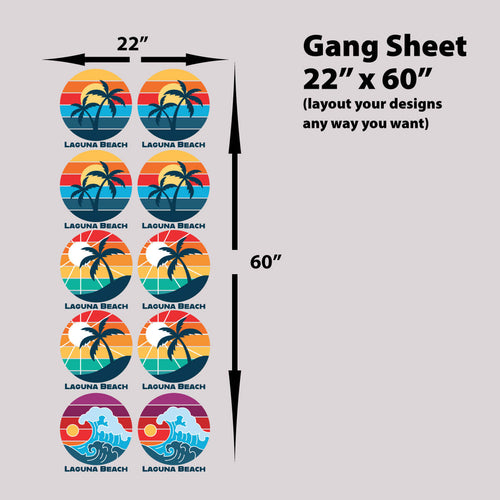
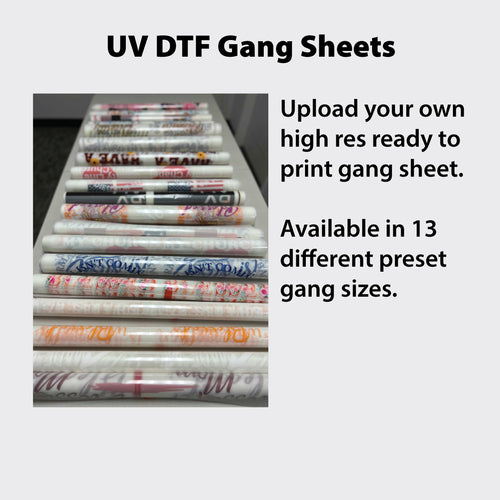
The minute you start printing multiple sizes, multiple graphics, or repeat logos, layout efficiency becomes part of your profit. A gang sheet fixes that by letting you place multiple designs on one larger sheet instead of treating every print like its own separate job.

Why gang sheets matter in real production
If you’re still arranging each print as a one-off, you’re spending time and material in the least efficient way possible. Gang sheets work because they let you combine artwork for different orders, placements, or garment sizes into one organized production file.
That matters for:
- Brand drops: Front logos, sleeve hits, and back graphics can live on one sheet.
- Event orders: Different names, roles, or designs can be grouped together.
- Small shops: You reduce waste and stop overbuilding simple jobs.
- Home press users: You press more shirts from one order without juggling separate transfer files.
The gain isn’t just material usage. It’s workflow clarity. Fewer scattered files. Fewer duplicate uploads. Less time rebuilding the same layout.
Manual ganging is where time disappears
Anyone who’s built gang sheets by hand knows the drag. You resize art, nudge designs around, rotate pieces to fill gaps, then recheck spacing because one bad overlap can wreck a whole sheet.
It’s a puzzle, and it gets worse as the order mix grows.
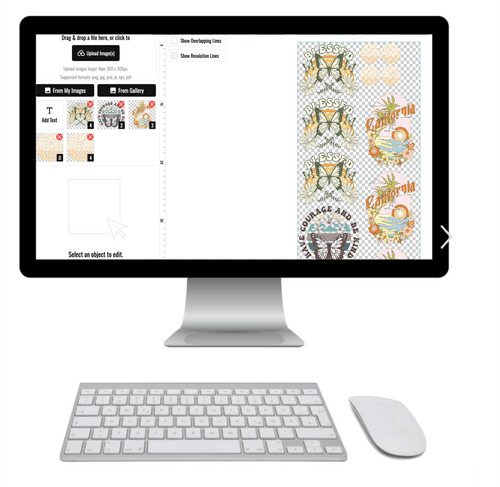
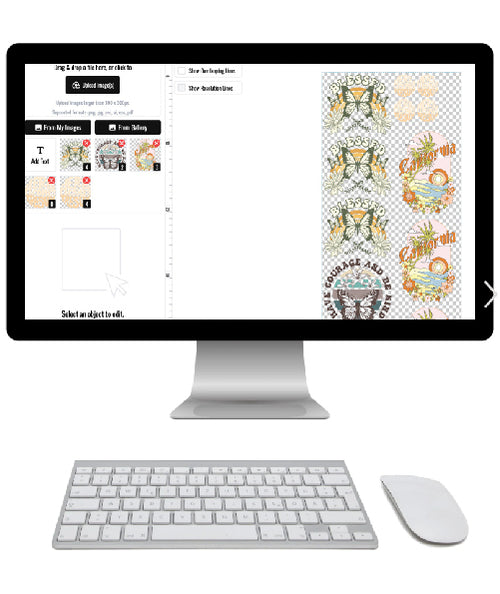
That’s why the Auto-build gang sheet builder matters. Instead of manually arranging every transfer, you upload your individual print-ready files and let the builder arrange them for efficient use of space. It’s easier to use, faster than hand-building layouts, and far more cost-effective when you’re trying to keep waste down.
For a lot of creators, that tool is the bridge between hobby workflow and production workflow. You keep control over the art, but you stop wasting labor on layout chores that software can handle better.
What to prepare before upload
The builder works best when your files are already clean. Don’t treat ganging as the stage where sloppy art gets fixed.
Make sure each file has:
- A transparent background
- Final intended print size
- Readable text and clean edges
- Consistent naming, especially if you’re batching many designs
- No duplicate hidden layers or accidental margins
If one design needs to print wider than another, size it properly before upload. Don’t assume the gang sheet stage is the place to guess.
Here’s a quick visual walkthrough that helps if you’ve never seen the process in action:
What works best on a mixed gang sheet
The smartest gang sheets aren’t random collections. They’re grouped with pressing in mind.
A strong mixed sheet often includes:
- Primary shirt graphics first. Full front or full back prints drive the sheet.
- Secondary placements next. Left chest logos, sleeve graphics, neck labels.
- Repeatables last. Small brand marks, restock logos, or commonly used icons that fill leftover space.
Shops squeeze more value out of every build. Dead space around a large front print can often hold small chest logos or sleeve designs you know you’ll use.
If you leave blank areas on a gang sheet, fill them with artwork you’ll press later. Future-you will be glad you did.
Export habits that keep things clean
Once your layout is set, keep the file simple. A clean PNG with transparency is usually the easiest route for transfer-based workflows. Don’t flatten onto a white background. Don’t save a layered working file and assume production will interpret it the way you intended.
Gang sheets reward discipline. Clean files in. Efficient layout. Fewer mistakes at press time.
That’s the point where vinyl shirt designs stop being single-project crafts and start becoming repeatable apparel production.
Pressing, Durability, and Common Issues
This is where nice artwork either becomes a good shirt or turns into a return problem. Pressing looks simple from the outside. Put transfer on shirt, apply heat, peel. In practice, the final result depends on a small set of variables that have to work together.
For HTV, the margin for error is tighter than many beginners realize. Most HTV requires 300 to 320°F, firm pressure, and 10 to 15 seconds, with hot-peel and cold-peel behavior affecting how fast you can work and how the final bond performs, as outlined in this complete guide to HTV printing. That same guide notes that a temperature deviation of even 10 to 15°F can lead to adhesion problems or vinyl shrinkage.

The three variables that decide the press
People usually focus on temperature. That’s only one-third of the job. The full press result depends on temperature, time, and pressure working together on the actual garment.
If one is off, the others usually can’t rescue it.
- Temperature activates adhesive or transfer bonding.
- Time gives the material enough exposure to set properly.
- Pressure creates the physical contact needed for an even bond.
Too little pressure is one of the most common hidden problems. A transfer can look attached right after peeling and still fail later because the adhesive never fully seated into the fibers.
Hot peel versus cold peel changes workflow
Peel method matters more than most hobby users think. Hot peel products move faster because you can remove the carrier immediately after pressing. That speeds up batch work. Cold peel products force a wait, but some decorators prefer them for certain fabric types and bonding behavior.
This isn’t just convenience. It affects rhythm, throughput, and consistency at the press. If you’re doing volume, waiting for every shirt to cool adds friction.
That’s one reason many shops prefer modern hot-peel DTF for production. The process is more efficient, especially when compared with layered HTV jobs that require separate cuts, weeding, alignment, and repeated presses.
Why some shirts crack and peel
Most failures come from a small list of causes:
| Problem | Likely cause |
|---|---|
| Edges lifting | Not enough pressure, poor fabric prep, or under-pressing |
| Shriveling vinyl | Too much heat |
| Cracking after wear | Material mismatch, poor bond, or rigid layered build |
| Peeling after wash | Incorrect press settings or weak initial adhesion |
| Dull finish | Wrong temperature or poor transfer quality |
A lot of users blame the material when the issue was process control. Moisture in the garment, inconsistent platen pressure, seams interfering with contact, or a rushed peel can all create failure points.
Pressing is mechanical, not magical. If the setup is sloppy, the shirt will show it.
Durability is where method choice becomes obvious
This is the part many hobby tutorials skip. They explain how to cut and press vinyl, but they don’t spend enough time on how the shirt holds up after repeat washing and wear.
One of the biggest gaps in common vinyl shirt designs advice is long-term durability comparison. The verified data for this article notes that standard HTV often fades after 20 to 50 washes under standard conditions, while DTF transfers demonstrate 100+ wash resistance in accelerated tests, with DTF also listed at $0.017 per square inch versus HTV at $0.50 to $1 per square inch in the provided background data tied to this referenced durability discussion.
That doesn’t mean HTV has no place. It does. It’s useful for simple names, numbers, single-color personalization, and small custom runs where cutting in-house is practical. But once you care about full-color art, repeatability, lower labor, and wash longevity, DTF is the stronger production choice.
Shop-floor habits that improve results
Before pressing any transfer, do these consistently:
- Pre-press the garment: Remove wrinkles and moisture.
- Use a firm, even surface: Pressure inconsistency causes random failures.
- Keep seams and collars off the main press area: Uneven contact ruins bond quality.
- Follow the transfer provider’s instructions exactly: Generic settings are only a starting point.
- Let the finished shirt rest before washing: Don’t rush it into use.
If a transfer lifts during peel, stop. Re-cover it, repress, and correct the variable that caused it. Don’t keep peeling and hope it settles later.
The best-looking shirt is usually the one made by someone who treated pressing like part of production, not the easy last step.
Frequently Asked Questions
Can I still use my Cricut design skills in a DTF workflow
Yes. The design habits transfer well. You still need strong composition, readable text, good sizing, and clean file prep. The difference is that you’re no longer limited by weeding complexity, layering constraints, or the labor of cutting each color separately.
Should I choose HTV or DTF for simple shirt projects
If the job is a basic name, number, or one-color phrase and you want to make it immediately in-house, HTV can work well. If the design includes multiple colors, texture, gradients, or small detail, DTF is usually the cleaner route.
What file type is best for vinyl shirt designs
For many transfer-based jobs, a transparent PNG works well when the artwork is already finalized. If you’re still editing logos or shape-based artwork, keep a vector master file in Illustrator or EPS format so you can resize without quality loss.
Why does my design look centered on the table but off on the shirt
Because garment placement is visual, not only mathematical. The shirt’s cut, the design’s shape, and the space around the artwork all affect how centered it feels when worn. Always step back and judge balance before pressing.
Do I need to mirror every design
For cut HTV, yes, mirroring is standard because the material is cut from the back side. For transfer workflows, follow the provider’s file requirements instead of assuming the same rule applies.
What’s the easiest way to lower waste when ordering many designs
Build gang sheets instead of ordering single designs one by one. Better yet, use an Auto-build gang sheet builder so the layout is arranged for ease of use and cost effectiveness without wasting time manually nudging artwork into place.
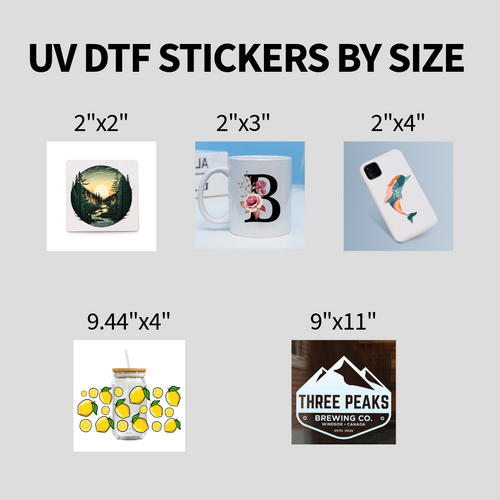
If you’re ready to turn your vinyl shirt designs into faster, cleaner, more durable transfers, Lion DTF Transfers makes that process simple. You can upload print-ready artwork, order by size, or use the Auto-build gang sheet builder to pack multiple designs efficiently and keep costs under control. For small shops, e-commerce brands, and makers who want professional hot-peel results without the headaches of manual vinyl production, it’s a practical next step.