


You’re probably looking at a product idea right now that works on a shirt but not on a tumbler, candle jar, phone case, or acrylic sign. That’s where many small brands get stuck. They can design well, they can sell, but they do not have a practical way to decorate hard goods without ordering large runs or settling for decals that look temporary.
A uv dtf printer solves that gap. It gives print shops, crafters, and product-based businesses a way to produce full-color graphics for non-fabric items without the setup burden of older methods. The key question is not just what the machine does. It is whether buying one fits your workload, product mix, and tolerance for maintenance, or if outsourcing makes more sense.
The Future of Customizing Hard Goods Is Here
A common scenario goes like this. A maker launches custom stainless tumblers for bridal parties, local businesses, or school fundraisers. The artwork looks great on screen. Then production starts, and the problems show up fast.
Screen printing feels too rigid for short runs. Vinyl works for simple shapes but can look layered and less polished on premium products. Direct printing onto each item can be limiting when the order includes mixed shapes and different blank sizes. A few mugs, a few bottles, some candles, and a small sign order can turn into a setup-heavy week.
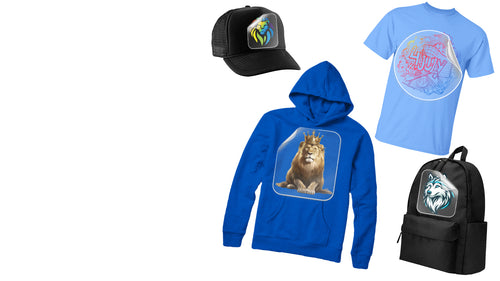
That is why UV DTF has become so useful. Instead of printing directly onto the object, the shop creates a durable transfer and applies it to the final surface. That changes the economics for small mixed orders.

The broader market reflects that shift. The UV DTF printer market reached USD 1.67 billion in 2024, driven by its ability to print for surfaces such as glass, plastic, metal, and leather, according to Growth Market Reports’ UV DTF printer market report.
Why shops are paying attention
Three things make UV DTF stand out in day-to-day production:
- Mixed product lines: One artwork file can move across tumblers, jars, keychains, acrylic, and coated hard surfaces.
- Small runs: You do not need the same kind of setup commitment that makes short orders painful in older workflows.
- Retail-ready finish: The result feels closer to a decorated product than a craft sticker.
For crafters, that means more sellable products. For print shops, it means they can add hard goods without rebuilding the whole business around direct object printing.
Tip: UV DTF makes the most sense when your order board includes variety. If every job is the same flat item, another process may fit better.
Where it opens new opportunities
A UV DTF workflow is especially practical for:
- Promotional products: water bottles, branded gift items, packaging add-ons
- Small-batch retail: candles, cosmetic jars, seasonal cups, accessory boxes
- Event work: wedding favors, team merch, sponsor gifts
- Local business branding: glass doors, counter displays, office accessories
The appeal is not hype. It is flexibility. A shop that could only profitably customize apparel can now move into hard goods with far less friction.
What Exactly Is a UV DTF Printer
A simple way to describe a uv dtf printer is this. It creates an advanced sticker without the usual background look. You print the design onto film, cure it with UV light, laminate it, then transfer only the printed graphic onto the final item.

If you are new to the category, this overview of what UV DTF is gives a clear visual starting point.
How the process works
Most UV DTF setups follow a film-to-transfer workflow:
- The printer lays down the image on Film A using UV-curable inks.
- Many setups also build the image in layers, often including white and a clear or varnish layer.
- The UV lamp cures the ink immediately on the film.
- The printed sheet is bonded to Film B through lamination.
- The finished transfer is peeled and pressed onto the hard surface.
- The top carrier film is removed, leaving the cured graphic behind.
That is why people often describe UV DTF as a peel-and-stick process, but that phrase can be misleading. It is not the same as a casual sticker. The finished transfer is designed to look more integrated with the object.
What makes it different from a regular decal
A regular decal often leaves you with a visible shape, edge, or background. UV DTF is closer to a printed decoration layer. The image itself becomes the transferred element.
That matters in products where the finish sells the item:
- a boutique candle label that should not look mass-produced
- a metallic water bottle that still needs a clean, premium appearance
- a branded jar where fine detail and white opacity matter
Key takeaway: UV DTF is less about making a sticker and more about making a transferable printed surface.
Why the layered build matters
That layered approach is what gives UV DTF its distinct look and handling. White helps the design stand out on dark or transparent backgrounds. A varnish or clear layer can add depth, protection, and a slightly raised feel.
The practical result is strong opacity, bright color, and a finish that looks more expensive than cut vinyl on many hard goods. This is significant value for a small business owner. You can sell decorated hard goods that do not feel improvised.
UV DTF Compared to Other Printing Methods
Many buyers confuse UV DTF with standard DTF because both use film. In actual production, they solve different problems. One is for hard goods. One is for apparel. Direct-to-object UV sits in a third lane.
Here is the cleanest way to compare them.
| Attribute | UV DTF (Hard Goods) | Traditional DTF (Apparel) | Direct-to-Object UV |
|---|---|---|---|
| Primary use | Hard, non-porous items | Fabric and garments | Hard items printed directly |
| Transfer method | Printed transfer applied by pressure | Heat press transfer with adhesive powder | No transfer, print goes straight on object |
| Best substrates | Glass, plastic, metal, coated surfaces | Cotton, blends, many textiles | Flat or fixture-friendly hard goods |
| Setup flexibility | Good for many shapes and mixed runs | Good for apparel production | Strong on repeat jobs with consistent item positioning |
| Handling of irregular items | More forgiving than direct printing | Not intended for hard goods | Can be awkward without jigs |
| Production feel | Decal-style application with printed finish | Garment transfer workflow | Object-by-object printing |
UV DTF versus traditional DTF
Traditional DTF belongs in the garment world. It uses a distinct bonding method and is built around fabric. If your core business is shirts, hoodies, and totes, standard DTF is the right tool.
UV DTF is for hard goods. It does not replace apparel DTF. It complements it.
That distinction matters because buyers often assume one machine can do both. In practice, the workflows, inks, and final use cases are different enough that you should treat them as separate production lanes.
UV DTF versus direct-to-object UV
This is the more useful comparison for many shops. Direct-to-object UV can look excellent, especially on repeat jobs with simple fixtures and flat or predictable surfaces. But it gets more demanding when you need to print a mix of products, especially curved or awkward ones.
UV DTF gives you a transfer first. That means you do not need to solve object positioning at the printer for every item shape.
According to ColDesi’s UV DTF printer overview, some UV DTF models use three print heads for simultaneous CMYK, white, and clear ink application with instant UV curing, and they achieve 12 to 15 m²/hour. In a working shop, that translates to a faster print phase and fewer interruptions than slower, more manual decoration methods.
What usually works best
Use UV DTF when:
- Your catalog includes variety: tumblers, jars, signs, plastic accessories
- You run short orders: many SKUs, low quantities, fast custom work
- You want one transfer workflow: instead of direct-print setup on each item
Use traditional DTF when the job is apparel.
Use direct UV when your items are consistent, your setup is stable, and printing straight to the object creates less handling overall.
Practical rule: If the same art needs to go on many different hard goods, UV DTF is often the cleanest path.
The UV DTF Workflow and Common Applications
The workflow is easier to understand once you think like an operator instead of a machine buyer. Your goal is simple. Create a transfer that applies cleanly, bonds well, and does not fight you during placement.

For finished-transfer ordering and application context, these UV DTF transfers examples are useful if you are comparing in-house printing to ready-made output.
The basic production flow
In a normal shop routine, the process looks like this:
- Start with the art: Clean vector art and sharp raster files matter because hard goods show detail clearly.
- Print onto Film A: The machine builds the image and cures it immediately.
- Laminate the transfer: Film B captures the printed layer so it can be handled and applied.
- Trim and position: Cut only what you need for the item.
- Apply with pressure: A squeegee or firm hand pressure helps the adhesive bond evenly.
- Peel the carrier: Do it slowly so the graphic stays down cleanly.
The application surface needs to be clean and dry. Oils, dust, and handling residue create more failures than many beginners expect.
Materials that usually work well
UV DTF is attractive because one workflow can cover many product categories:
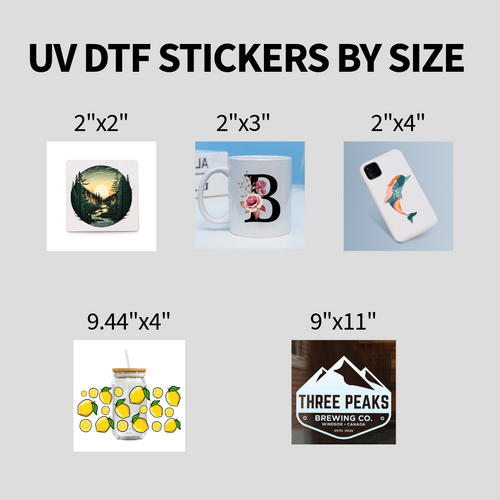
- Glass: cups, jars, candle vessels, display panels
- Metal: tumblers, flasks, nameplates, small signs
- Plastic: phone cases, storage containers, accessories
- Ceramic: mugs, tiles, decorative items
- Treated wood and leatherette: branded gift products and packaging accents
Curved items can work very well, but placement discipline matters more. A rushed application on a rounded bottle will show mistakes faster than a flat acrylic sign.
Here is a quick visual of the application flow in action:
Where beginners usually slip
Most failed applications come from one of four habits:
- Touching the adhesive area too much
- Applying to a dusty or textured surface
- Rushing the squeegee pass
- Peeling the carrier too aggressively
Tip: On curved drinkware, work from the center outward and avoid trapping air at the edges. A careful first pass saves rework.
UV DTF becomes commercially useful for small businesses at this point. You can decorate hard goods without heat presses, object-specific print fixtures, or long setup cycles for each SKU.
Understanding Quality Durability and Maintenance
A good UV DTF print stands out in three ways. It looks sharp, it feels deliberate, and it holds up in use. When people say a transfer looks “premium,” they usually mean the edge is clean, the white is solid, and the finish has some body instead of looking flat and disposable.
What quality looks like in practice
Higher-end machines can produce more than basic color. According to the Printium P604U UV DTF printer specifications, top-tier UV DTF printers can reach 720x1800 dpi, and the varnish layer can improve scratch resistance by up to 5x compared to standard DTF prints.
That matters for products people handle every day:
- drinkware that gets washed and gripped
- cosmetic packaging that rubs against shelves or bags
- branded accessories that should not look worn after light use
The varnish layer also changes the feel. It can add a slight raised effect that gives the print more presence, especially on logos, line art, and bold packaging graphics.
Durability depends on more than the printer
The machine matters, but so do the film, ink, artwork prep, and application habits. A strong print can still fail if the transfer is applied poorly or put on the wrong surface.
What tends to hold up well:
- smooth, clean hard goods
- artwork with sensible line thickness
- proper pressure during application
- patient carrier removal
What tends to create trouble:
- dusty surfaces
- highly textured blanks
- rushed edge burnishing
- bargain materials that do not release or bond consistently
Maintenance tests ownership.
Many people focus on print samples when shopping for a UV DTF printer. The better question is whether they are willing to maintain the machine consistently.
Daily and routine care usually includes:
- Head cleaning: Prevents small defects from becoming a wasted production run.
- White ink management: White channels need attention because neglect shows quickly in output quality.
- Dust control: UV workflows punish dirty environments.
- Profile discipline: Changing speed or ink settings without a reason often creates more problems than it solves.
A machine that prints beautifully in a demo can become frustrating if the operator treats maintenance like an optional task.
The curved-surface issue most buyers miss
Curved goods are profitable, but they also expose setup mistakes. One under-discussed issue is print head gap management. The verified guidance notes that improper gap calibration on curved surfaces can cause a 25% drop in print quality, as discussed in this print head gap management video reference.
That does not mean curved products are a bad fit. It means they demand more discipline.
Key takeaway: If your product line includes pens, bottles, or rounded promotional items, operator skill matters almost as much as the printer itself.
Buying a Printer vs Outsourcing Your Prints
The decision to buy or outsource matters most for a small business. A UV DTF machine can open new revenue, but ownership only pays off when the workload is steady enough and the team can manage the process without constant disruption.

When buying makes sense
Buying usually fits shops that already know hard goods are a core category, not an experiment.
Ownership is easier to justify when you need:
- frequent reprints
- fast internal proofing
- direct control over production timing
- custom finishes on a regular basis
It also helps if your staff already understands print maintenance and color workflow. High-end UV DTF machines often use Epson I3200 printheads with 3200 nozzles, and those setups can produce tactile 3D relief effects and support premium finishing such as gold and silver hot-stamping, according to this UV DTF printer machine overview using Epson I3200 technology.
That level of capability is useful. It is also wasted if your order volume is inconsistent or your shop does not have the time to dial in the process.
When outsourcing is the smarter move
For many Etsy sellers, local makers, and smaller print operations, outsourcing is the more practical path. You skip machine maintenance, avoid learning through wasted material, and get access to production capacity without making the printer payment first.
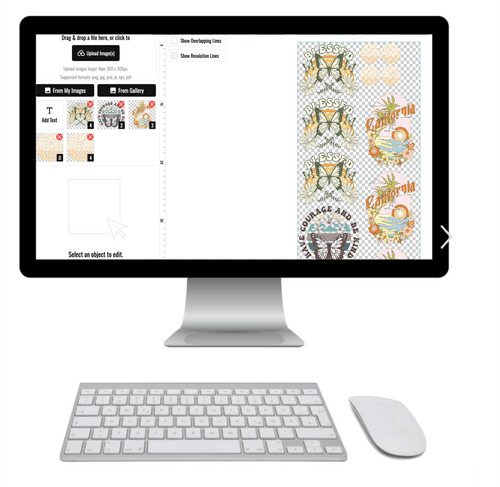
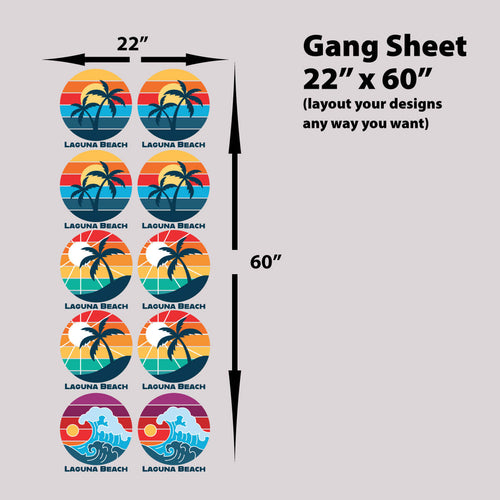
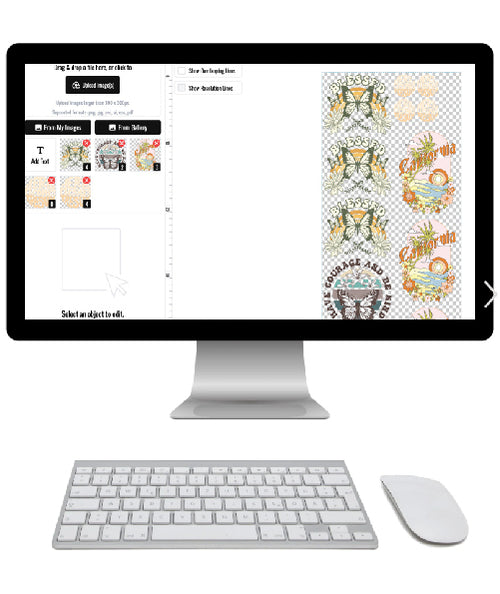
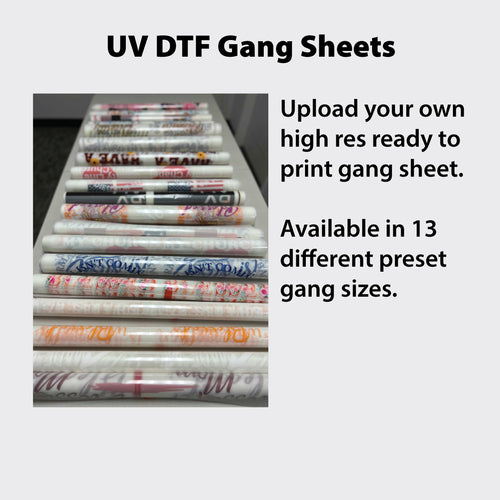
If you are outsourcing, layout efficiency matters. Gang sheets often decide whether the economics work. An Auto-build gang sheet builder is useful because it packs multiple designs onto one sheet quickly, reduces unused space, and makes small mixed orders easier to price profitably.
One option in that lane is Lion DTF Transfers’ guide to the best DTF printer for small business, which is helpful if you are still comparing ownership to outsourcing.
A simple decision filter
Ask yourself these questions:
| Question | Buy a printer if yes | Outsource if yes |
|---|---|---|
| Do you have steady hard-goods demand? | Yes | No |
| Can you handle maintenance without delaying orders? | Yes | No |
| Are you still testing product ideas? | No | Yes |
| Do you need broad variety more than production control? | No | Yes |
If you are still validating your market, outsourcing usually protects your cash and your time. If hard goods are already a stable part of your business, buying may become the better long-term move.
Your Next Steps with UV DTF Printing
UV DTF works because it fills a specific production need. It decorates hard goods cleanly, handles short runs well, and gives small brands access to products that used to be awkward or expensive to customize.
The buying decision is less about hype and more about fit. If you have consistent volume, the staff to maintain equipment, and a hard-goods line that keeps the machine busy, ownership can make sense. If you are testing products, juggling mixed order sizes, or trying to avoid production headaches, outsourcing is often the more profitable move.
One detail is worth keeping in mind before you commit to equipment. Improper print head gap management on curved surfaces can reduce print quality by 25% when height differences are not calibrated correctly, as noted in the earlier video reference. That is the kind of issue that separates a promising sample from a reliable production workflow.
Start with your actual order pattern, not the machine demo. If your business is still building demand, use outsourced UV DTF transfers and an Auto-build gang sheet builder to keep costs tight while you learn what sells.
If you want to test hard-good customization without committing to a machine, Lion DTF Transfers offers UV DTF options, custom gang sheet ordering, and an Auto-build gang sheet builder that helps pack multiple designs efficiently for small runs and mixed-product orders.