


You already know the conversation. A customer orders shirts for a team event, then asks for matching tumblers, phone cases, sponsor plaques, and a few branded gift boxes. If your shop only handles fabric well, you either turn down that work or send it somewhere else.
That is where uv dtf changes the math.
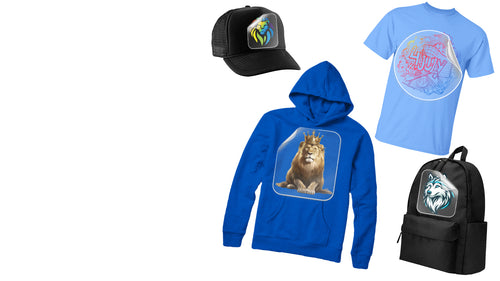
It gives a small shop a practical way to move into hard goods without taking on the full complexity of direct-to-object production for every item shape that walks through the door. Instead of staying boxed into apparel, you can sell coordinated merch sets, promotional items, packaging decals, event favors, and retail-ready branded pieces that fit the same client account.
The business case is simple. The global direct-to-film market is experiencing significant growth, and UV DTF is helping push that market into non-apparel products. For small shops, that matters because custom hard goods like branded tumblers and electronics can carry 200 to 400% markups (industry trends for UV DTF and non-apparel customization). If you have ever looked at a shirt order and thought, “We should be selling the rest of the merch too,” this is the lane.
The Next Frontier for Your Print Shop Beyond Fabric
A lot of shops hit the same ceiling. They get good at shirts, hoodies, tote bags, and uniforms. Then customers start asking for the rest of the package.
A school wants water bottles for staff gifts. A realtor wants branded glass jars for a closing basket. A wedding planner wants names on mirror signage, candles, and favor boxes. A local coffee brand wants labels for cups, lids, and retail packaging. These are good jobs. They also expose the gap between fabric printing and everything else.
UV DTF fills that gap.
It lets you decorate hard surfaces with full-color transfers that apply without a heat press. That matters because many of the products customers want are not flat garments. They are curved, glossy, rigid, awkward, and often low-quantity. Standard apparel workflows do not serve that well.
Where the money usually shows up first
Most shops do not add uv dtf because they want another machine to babysit. They add it because clients already buy these categories:
- Corporate gifts: Tumblers, bottles, notebooks, desk accessories, and packaging sleeves.
- Event merch: Welcome gifts, sponsor items, awards, name gifts, and short-run drinkware.
- Retail add-ons: Candles, jars, cosmetic packaging, phone accessories, and boutique hard goods.
- Team and school gear: Coach gifts, spirit shop extras, and fundraiser items beyond apparel.
A shirt sale is often a one-category order. A merch bundle is a larger conversation.
Tip: The easiest uv dtf sales are not cold sales. They come from existing apparel clients who already trust you and want matching hard goods.
Why shops hesitate
The usual objections are fair. Hard goods feel inconsistent. Application looks manual. Curved surfaces can go wrong. File prep mistakes can eat margin.
All of that is real.
But the shops that handle uv dtf well do one thing right. They treat it like a product line, not a novelty. They choose repeatable blanks, standardize art setup, and target categories where customization speed matters more than mass production.
That is when uv dtf stops being “those cool stickers” and starts acting like a profit tool.
Understanding UV DTF vs Standard DTF Printing
The fastest way to explain uv dtf to a new employee is this: it is a durable printed transfer for hard surfaces, closer to a premium decal than a shirt transfer. The finish can look like direct print, but the application method is peel-and-stick rather than print straight onto the object.
Standard DTF is different. It is built for textiles. UV flatbed is different again. It prints directly onto an item, but the object has to physically fit the machine and cooperate with the setup.

The chemistry decides the job
UV DTF works on hard surfaces like wood, plastic, ceramic, metal, and glass, and it is not suitable for fabric. That comes from the ink system and adhesive structure. UV-curable ink relies on light activation, while standard DTF uses heat-activated binders meant for textiles (material compatibility and technical specs for UV DTF).
That one difference answers a lot of shop-floor questions:
- Why does UV DTF shine on tumblers and jars? Because it is built for rigid surfaces.
- Why not use it on shirts? Because the ink chemistry is wrong for flexible fabric.
- Why not just use flatbed for everything? Because not every object is easy to fixture, position, or fit.
What changes in production
UV DTF typically prints in reverse on a release film, cures instantly under UV light, then gets transferred with a second carrier film. Standard DTF prints for heat pressing onto apparel. UV flatbed skips the transfer step and prints directly on the object.
That means uv dtf is often the middle path. It gives you hard-goods capability without requiring every object to sit perfectly inside a flatbed workflow.
UV DTF vs Standard DTF vs UV Flatbed
| Attribute | UV DTF (Stickers/Transfers) | Standard DTF (Fabric Transfers) | UV Flatbed (Direct-to-Object) |
|---|---|---|---|
| Primary use | Hard-surface decoration | Apparel and fabric items | Direct printing onto rigid objects |
| Best materials | Glass, metal, plastic, ceramic, wood, coated items | Cotton, blends, many textile products | Rigid items that fit bed size and height limits |
| Application method | Peel-and-stick transfer | Heat press transfer | Printed directly onto object |
| Heat press needed | No | Yes | No |
| Ideal order profile | Short-run merch, curved items, mixed hard goods | Shirts, hoodies, bags, teamwear | Repetitive direct object jobs with stable setups |
| Strength | Versatility across irregular hard goods | Fabric productivity and soft-goods focus | Direct print look without transfer application |
| Trade-off | Not for fabric, application technique matters | Limited to textiles | Setup constraints, object-fit limitations |
Where each method wins
Use standard DTF when the order lives in apparel.
Use UV flatbed when you have repeatable rigid items that are easy to position and worth direct-print setup.
Use uv dtf when customers want hard goods in varied shapes, smaller runs, or mixed-product bundles.
Key takeaway: UV DTF is not a replacement for standard DTF. It is the missing category that lets a fabric-focused shop sell into hard goods without rebuilding the whole business around flatbed production.
Your UV DTF Workflow From Design to Application
Good uv dtf work starts before anything prints. Most failures come from bad file prep, weak layout discipline, or rushed application on the wrong surface.

Start with file prep that respects the process
A clean-looking mockup can still become a bad transfer if the art is built wrong.
Precise file preparation matters in uv dtf. A spot white underbase with a 0.1 to 0.2 mm choke helps prevent white halos and can cut edge defects by 40 to 50%. Also, while 300 DPI is a common baseline, fine lines under 1 mm often need 1200 DPI vector input to print cleanly (file preparation guidance for UV DTF artwork).
Three practical rules keep reprints down:
- Watch thin detail: Hairlines, tiny script, and micro-icons often look fine on screen but fail during print or transfer.
- Control the white layer: Full-flood white behind everything is a common rookie mistake.
- Build for gang efficiency: Leave space that makes cutting, peeling, and handling easier.
Use gang sheets like you mean it
On hard-goods work, margin often comes from layout discipline, not artistic genius.
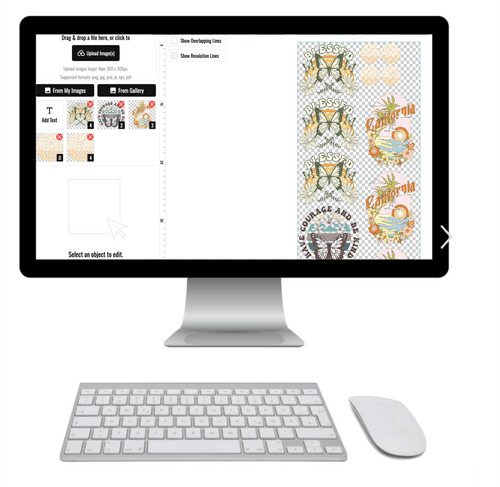
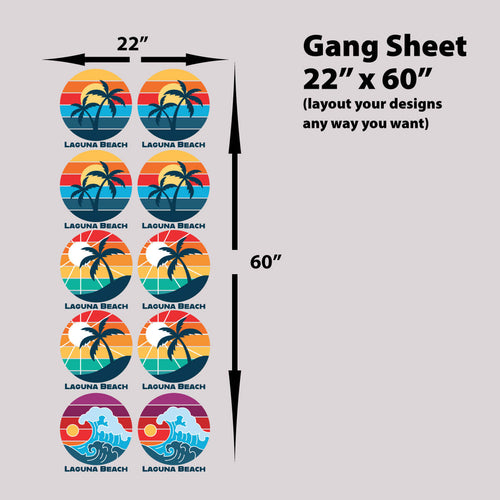
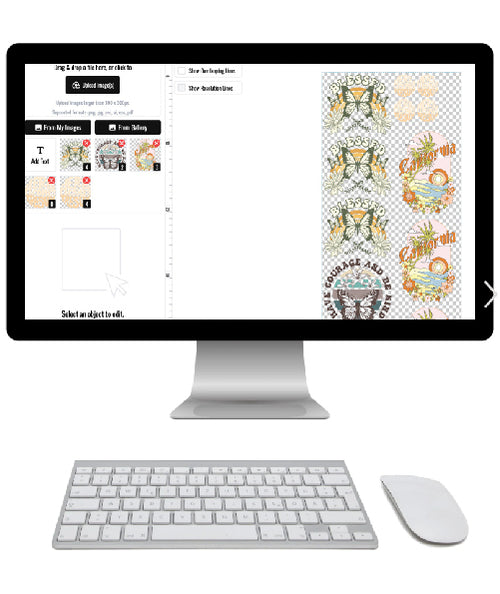
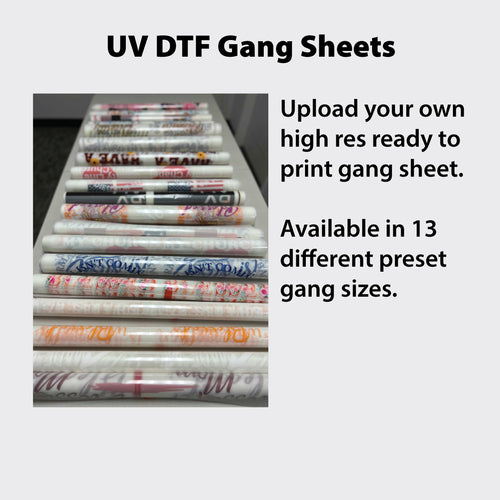
Gang sheets let you batch logos, names, left-chest-size marks, bottle decals, packaging badges, and one-off personalization into one production run. That is why an auto-builder matters. Instead of manually nudging art around a sheet and wasting printable space, a tool that packs pieces efficiently makes the order easier to price and easier to repeat.
If you want a practical example of how shops organize this workflow, the uv dtf gang sheet approach is built around fitting multiple designs onto one sheet for easier ordering and better material use. For busy shops, an Auto-build gang sheet builder is one of the simplest ways to keep uv dtf cost effective, especially when jobs include mixed-size decals.
The production sequence
The physical process is straightforward once the artwork is right:
- Print on A-film: The design is printed in reverse onto the release film.
- UV cure the ink: The printer cures the ink during production.
- Laminate with B-film: This creates the transfer structure you will apply.
- Trim and stage by order: Keep client jobs separated early. Mixed decals get confusing fast.
- Apply to the product: Peel, position, press firmly, then remove the carrier carefully.
The expensive errors are rarely dramatic. They are small and repetitive.
- Oversized art on curved products: The transfer fights the shape and lifts at the edges.
- Tiny unsupported details: Small islands of ink do not always survive handling.
- Crowded gang sheets: Good for material savings. Bad if you cannot weed, trim, or track items cleanly.
- Dirty substrates: Dust, oil, and residue kill adhesion before the customer even sees the item.
Shop-floor habit: Test one decal on the exact blank before running a full client batch. A tumbler coating, jar finish, or plastic texture can change the result more than the artwork does.
Expanding Your Product Line with UV DTF
Most shops start uv dtf with one product in mind, usually tumblers. That is fine. The true upside appears when you stop thinking in single products and start thinking in sales packages.
A booster club does not just need shirts. They also need coach gifts, water bottles, award items, and fundraiser add-ons. A local skincare brand does not just need labels. They need jars, boxes, inserts, testers, and retail presentation pieces that all carry the same branding.

Products that tend to sell well
The strongest uv dtf product lines usually share one trait. They are hard goods customers already expect to customize.
- Drinkware and jars: Great for event merch, retail bundles, and personalized gifts.
- Phone cases and tech accessories: Small footprint, easy upsell, strong perceived value.
- Glass and acrylic signage: Wedding, retail, and pop-up event work.
- Awards and plaques: Good fit for schools, corporate recognition, and local leagues.
- Packaging accents: Boxes, lids, candle vessels, cosmetic containers, and branded sleeves.
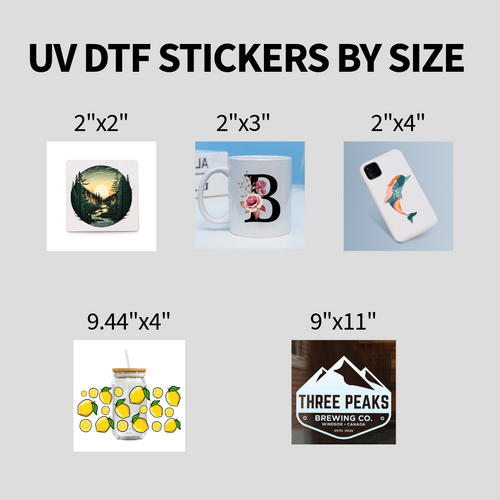
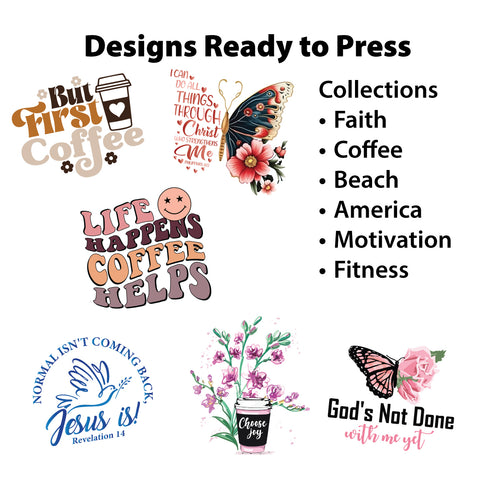
If you need inspiration on where that format fits, these kinds of uv dtf stickers are commonly used across promotional and custom merch work where a direct-looking finish is needed on non-fabric goods.
Where uv dtf opens doors
A fabric-only shop often has to say no to these requests:
- “Can you match the shirts with gift boxes?”
- “Can we put each person’s name on the bottle?”
- “Can you do a short run for a launch event?”
- “Can we brand the packaging too?”
With uv dtf, the answer becomes yes more often.
The better sales move
Do not pitch uv dtf as a technical process. Clients do not care how clever the transfer is. They care that you can deliver a coordinated set of branded items without sending them to three vendors.
Sell the outcome:
- Staff welcome kits
- Event sponsor bundles
- Boutique retail sets
- Team banquet awards
- Wedding favor collections
That is where hard-goods decoration stops being an add-on and starts becoming a category.
Ensuring Durability and a Flawless Finish
Customers judge uv dtf by two things fast. First, how it looks when it lands. Second, whether it still looks right after handling, wiping, carrying, and normal use.
The reason uv dtf can perform well on hard goods is technical, not magical. UV light at 365 to 405 nanometers instantly cures the ink and creates a cross-linked polymer network that resists scratches and chemicals (technical explanation of UV DTF curing and durability). That instant cure is the core reason these transfers feel tougher than non-cured inks on hard surfaces.

What durability really depends on
Shops get into trouble when they hear “durable” and assume “bulletproof.”
Durability depends on the substrate, the surface prep, the amount of curvature, and whether the design itself respects the shape of the object. UV DTF has real staying power, but not every blank behaves the same.
The weak points are usually predictable:
- Glossy contaminated surfaces: Finger oils and residue interfere with adhesion.
- Aggressive curves: Large decals fight compound curves and can lift.
- Fine unsupported edges: Thin edges catch wear faster than compact shapes.
- Bad application pressure: Inconsistent pressure leaves tiny channels for lift.
Application habits that prevent callbacks
A few habits save a lot of remake work.
- Clean first: Use a consistent cleaning routine before any application.
- Match design size to the blank: Bigger is not always better on bottles and jars.
- Press deliberately: Work from the center outward, especially on curves.
- Peel slowly: Fast carrier removal can pull detail back up.
- Test problem substrates: New blanks should prove themselves before client production.
Practical rule: If a decal starts to lift during application, do not force the peel. Re-burnish the area, slow down, and let the adhesive set before trying again.
Understand the limitations
UV DTF has a constraint many newcomers miss. The printer itself has a maximum printing height of 2 to 3 mm, which is why this process is built around flat transfer production rather than direct printing onto thicker three-dimensional objects. It also relies on Film A and Film B in a transfer sequence, not a one-step direct print process, as outlined in this overview of uv dtf transfers.
That limitation is not a flaw. It is what makes the process useful. You create the transfer on film, then apply it to objects that would be awkward, oversized, or impractical to print directly.
Finish quality comes from restraint
The best-looking uv dtf jobs are rarely the busiest designs.
Bold logos, clean typography, controlled detail, and artwork scaled to the object tend to apply better and last better. When you try to force tiny decoration into deep curves or textured surfaces, the blank usually wins.
A flawless finish is less about heroics and more about discipline.
Investing in UV DTF for Your Business
If you are serious about adding uv dtf, you have two paths. Buy production capability in-house, or buy finished transfers and focus on selling and applying them.
Both paths can make sense.
Path one: buy the printer
A UV DTF printer typically costs $7,500 to $12,000 upfront, and businesses focused on high-margin promotional items and personalized goods often report ROI in 6 to 12 months thanks to the no-heat, instant-cure workflow (UV DTF printer cost and ROI overview)).
That cost range makes the category accessible. It does not make it effortless.
Owning the printer means you also own:
- material inventory
- maintenance responsibility
- color management
- failed test runs
- production scheduling
- operator training
If your shop already has disciplined file handling and enough steady hard-goods demand, in-house production can be the right move.
Path two: order transfers and apply them
For many shops, the smarter first step is simpler. Order uv dtf transfers, then focus on product selection, customer acquisition, application consistency, and fulfillment.
That route reduces the complexity of entering the category. You can validate demand before taking on equipment, maintenance, and print troubleshooting.
It is also where an auto-builder matters again. On custom orders with names, logos, mixed sizes, and multiple product types, an Auto-build gang sheet builder keeps your film use efficient and your quoting cleaner. That is one of the easiest ways to protect margin when you are still learning what kinds of uv dtf orders your market wants.
How to choose the right path
Ask direct questions:
| Question | If the answer is yes | Better path |
|---|---|---|
| Do you have recurring hard-goods demand already? | You can feed a machine consistently | Buy production capability |
| Are you still testing products and markets? | You need flexibility more than control | Buy transfers first |
| Is your team strong in print setup and maintenance? | You can manage another production system | In-house may fit |
| Do you mostly need fast market entry? | You want to start selling now | Outsourced transfers |
The wrong reason to buy a printer is excitement. The right reason is repeatable demand.
The Future of Your Print Shop with UV DTF
A resilient print shop does not stay locked into one substrate. Customers buy brands, events, launches, gifts, and merch systems. Apparel is one piece of that. Hard goods are the next obvious step.
That is why uv dtf matters. It lets a shop move beyond fabric without abandoning the speed and flexibility that make short-run customization profitable. You can serve schools, local businesses, event planners, e-commerce sellers, and promotional buyers with more complete product offerings, not just more print methods.
The shops that win with uv dtf usually do not chase every possible blank. They choose a focused product mix, clean up their file standards, use gang sheets intelligently, and build repeatable offers around items customers already request.
If you want to add hard goods without overcomplicating the operation, start there. Add a few products that fit your existing client base. Tighten the workflow. Learn what applies cleanly. Then grow from proven demand, not guesswork.
If you want an easy first step into hard-goods customization, explore Lion DTF Transfers for UV DTF options, including gang-sheet ordering and an Auto-build gang sheet builder that helps pack artwork efficiently for cost-conscious production.