


You need shirts. Maybe it's for a brand drop, a school event, a contractor crew, a gym launch, or a client store that can't afford mistakes. The design is ready, the deadline is close, and suddenly you're sorting through screen printing, DTG, transfers, gang sheets, file specs, press settings, and fabric questions that all sound simple until money is attached.
That's where most tee printing decisions go sideways. People compare decoration methods as if they're buying a single print. In practice, you're choosing a workflow. The winning workflow is the one that keeps art clean, ordering simple, production flexible, and finished shirts consistent without turning every order into a custom engineering project.
Why Your Tee Printing Choice Matters More Than Ever
Tee printing isn't a side hobby anymore. The global custom T-shirt printing market was valued at $5.16 billion in 2024 and is projected to reach $9.82 billion by 2030, with projected 11.5% CAGR from 2025 to 2030, according to BlueCotton's T-shirt market overview. That scale changes how you should think about your printing decision.
When a market grows that quickly, buyers expect more. They want faster turnaround, more garment options, shorter runs, cleaner artwork, and less tolerance for production errors. A shop or brand that still chooses a print method based only on “what we've always done” usually ends up wasting time in setup, rework, or inventory.
The real decision is operational
A lot of new apparel sellers think the main question is visual quality. That matters, but it's only one part of the job.
You also need to answer practical questions:
- Fabric range: Will this method handle cotton today and polyester tomorrow?
- Order size: Does it make sense for a single reorder, a mixed-size team order, or a larger merch run?
- Artwork type: Are you printing flat spot-color art, soft gradients, or detailed full-color graphics?
- Production flow: Can the job move from upload to press without constant manual fixes?
Practical rule: Good tee printing starts before the press turns on. Most production problems show up in artwork setup, garment choice, or method mismatch.
Historically, this industry grew out of older textile-printing techniques. Screen printing traces back to China between AD 221 and the Song Dynasty (960–1279 AD) and later evolved into serigraphy in 1930s New York, before becoming suitable for mass-market production in the 1960s. The T-shirt itself was first marketed in 1904 as a “bachelor undershirt” and became a mainstream graphic canvas later as screen printing matured, as outlined in Everpress's history of screen printing. That history matters because it explains why older methods still dominate some shops, even when newer workflows fit modern ordering better.
For most buyers, the three methods that matter are screen printing, DTG, and DTF. If you need a broader primer before choosing, this guide to modern T-shirt printing methods is a useful starting point.
Comparing Screen Printing vs DTG vs DTF Transfers
Screen printing, DTG, and DTF all produce wearable graphics. They do not solve the same production problem.
Screen printing works like a stencil system. Ink is pushed through prepared screens, usually one color at a time. DTG works more like a fabric printer. The design is printed directly onto the garment. DTF is a transfer workflow. The art is printed onto PET film with water-based inks, then powder adhesive is applied, melted, and bonded to the garment under a heat press. That process lets DTF decorate cotton, cotton blends, polyester, fleece, and nylon, as explained in Printful's DTF method guide.

What each method is good at
Screen printing still makes sense when the art is simple and the quantity is stable. If you're printing a straightforward design on a predictable garment and the order is large enough to justify setup, it remains a practical production method.
DTG is useful when you want direct printing onto cotton garments and need detailed, full-color art in small quantities. The catch is that DTG is more fabric-sensitive, and shops often end up maintaining a narrower garment catalog if they rely on it heavily.
DTF is usually the most flexible operational choice. It separates print creation from garment application, which makes it easier to handle mixed orders, stage transfers ahead of time, and decorate different apparel types without changing your core art workflow.
Tee Printing Method Comparison
| Attribute | Screen Printing | Direct-to-Garment (DTG) | Direct-to-Film (DTF) |
|---|---|---|---|
| How it works | Ink pushed through screens onto garment | Ink printed directly onto fabric | Design printed to film, adhesive applied, then heat pressed |
| Best fit | Larger runs with simpler artwork | Small runs on cotton-focused garments | On-demand orders, mixed garments, broad product catalogs |
| Artwork style | Strong for bold graphics and fewer colors | Strong for detailed digital artwork | Strong for detailed, multi-color artwork |
| Fabric flexibility | Often strongest on cotton and blends | Best on cotton or high-cotton garments | Works across cotton, blends, polyester, fleece, and nylon |
| Setup style | More front-loaded setup | Lower setup, garment-by-garment production | Transfer prep first, then fast application flow |
| Operational downside | Setup can feel heavy on smaller or variable jobs | Fabric limitations and slower scaling on mixed orders | Requires disciplined transfer handling and press consistency |
Screen printing is usually a production choice. DTG is often a garment choice. DTF is a workflow choice.
That distinction matters. If you only compare print feel or color style, you miss the hidden labor. Shops lose time when they have to rebuild art, split orders by fabric type, or stop production because one garment style doesn't cooperate with the chosen method.
If you're weighing digital methods more closely, this breakdown of DTF vs DTG printing helps clarify where each one fits.
The Business Case for Direct to Film Printing
The strongest argument for DTF isn't that it's new. It's that it simplifies the parts of apparel production that usually create friction.
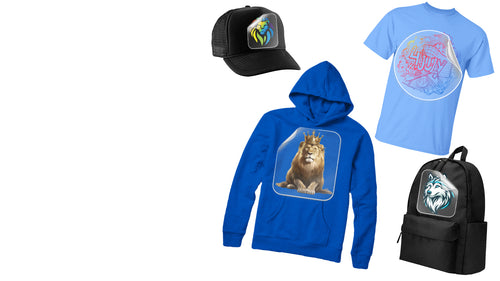
A modern apparel business rarely sells one shirt style in one color to one audience. Most sellers need short runs, reorders, seasonal designs, staff uniforms, promo pieces, and occasional oddball garments that don't fit a narrow production setup. That's where DTF wins. Because the transfer can be applied across a wide range of fabrics, one decoration system can support more of your catalog without forcing you into separate print workflows for each garment type.

Why it changes the economics
DTF supports a cleaner on-demand model. You can order what you need, press what sold, and avoid piling up printed inventory for sizes or styles that may never move. That matters for online stores, event merch, test launches, and custom client work where demand is uneven.
It also changes labor. Printing to film first means production can be staged. Art can be organized in batches, transfers can be prepared before garments arrive, and pressing can happen closer to ship time. That's a more stable system than rebuilding every order from scratch.
Where shops usually feel the gain
- Broader SKU coverage: One art file can move across tees, hoodies, fleece, and other compatible garments with less method switching.
- Better reorder handling: If a customer comes back for a few replacement pieces, you don't need to treat it like a full production restart.
- Less dead inventory risk: You can decorate closer to demand instead of pre-printing everything.
- Easier outsourcing: A shop without a full print floor can still run a serious apparel business by sourcing transfers and focusing on pressing, fulfillment, and customer service.
For businesses building around transfer workflows, resources like how to grow your T-shirt business with DTF transfers are useful because they focus on how orders move, not just how prints look.
Preparing Print-Ready Files for Flawless Tees
Most bad prints don't start at the press. They start with files that looked fine on a laptop and were never built for production.
For tee printing, 300 DPI at final output size is the working standard. If the graphic will print at a typical 10–12 inch front width, the file needs to hold that resolution at that actual size. Otherwise it can look sharp on screen and still print soft, blurry, or pixelated, as noted in VistaPrint's print file guidance.

Build the file at output size
Don't design small and assume the printer will fix it. If the chest print should be large, build it large from the start.
A reliable prepress routine looks like this:
-
Set final dimensions first
Decide the actual print size before export. Don't send a small file with a note asking production to enlarge it. -
Use vector art when possible
Logos, text, line art, and spot-style graphics stay cleaner in vector format. Edges remain sharp, and edits are easier. -
Keep raster files high quality
If the job includes photos, textures, or painted artwork, use a high-resolution raster file at final size.
Fix the mistakes that slow production
A lot of uploaded files aren't unusable. They're just messy. That still creates delays.
- Outline your text: Fonts can substitute or break when another system opens the file.
- Check transparency: A fake transparent background often prints as a box.
- Clean stray pixels: Tiny leftovers around the art become visible on press-ready transfers.
- Match the color workflow: Screen printing often follows CMYK/Pantone planning, while digital workflows may use printer-specific conversion. If you ignore that, color surprises are more likely.
If your art has to be explained in an email, it probably isn't production-ready yet.
A simple file-prep checklist
| Checkpoint | Why it matters |
|---|---|
| Final size is set correctly | Prevents soft prints caused by enlarging low-res art |
| Resolution is adequate | Keeps detail from breaking down in print |
| Background is truly transparent | Avoids unwanted boxes or edges |
| Fonts are outlined or flattened | Prevents font substitution problems |
| Colors are prepared for the print method | Reduces unexpected shifts |
When the file is clean, the whole workflow gets easier. Approval is faster, gang sheets are easier to build, and the press operator can focus on application instead of repair work.
How to Maximize Value with DTF Gang Sheets
A common bottleneck shows up after the art is approved. The files are ready, but now someone has to turn a stack of small graphics into a layout that prints cleanly, trims cleanly, and keeps the press moving. That step decides whether DTF feels like an efficient production system or just another task pile.
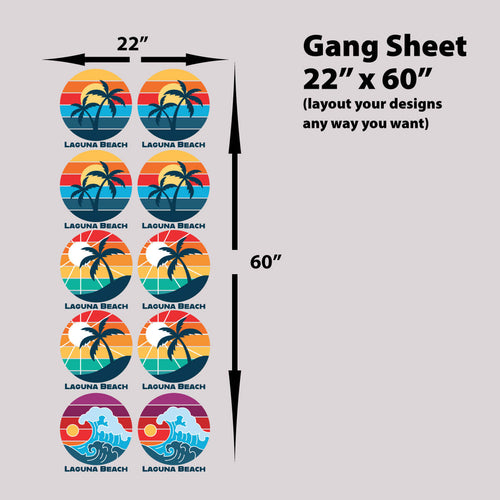
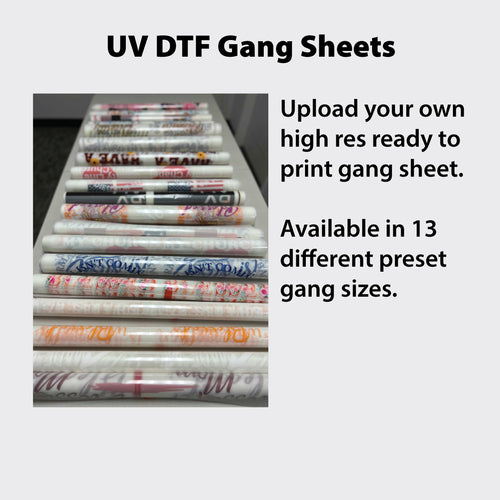
Gang sheets matter because they compress prep time, film use, and press organization into one decision. Instead of buying or printing every logo, neck label, sleeve hit, and left chest separately, you combine them on one sheet and build the job around how it will be produced. For on-demand apparel, that usually means fewer interruptions between file prep and final application.

Why manual gang building becomes a bottleneck
Manual gang building looks simple until order volume rises. A shop or brand manager starts nudging artwork around, checking scale, leaving enough room for trimming, exporting revised versions, and fixing layout mistakes that should have been settled once. None of that improves print quality. It just adds handling time.
That wasted time shows up in real places. Approvals take longer. Reorders depend on whoever built the last sheet. Press operators spend more time sorting transfers and less time pressing garments. If the goal is fast-turn apparel with small batches and frequent repeats, manual layout becomes an expensive habit.
Where Auto-build helps
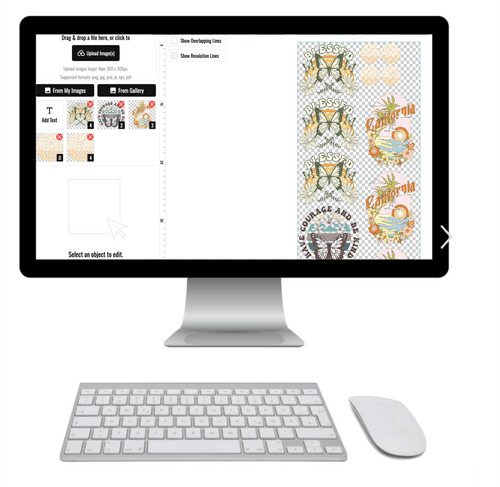
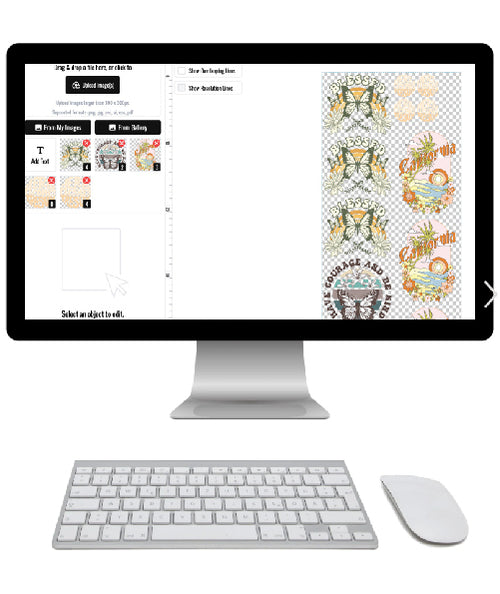
An Auto-build gang sheet builder reduces that layout labor by standardizing the packing step. You upload the artwork, set the sheet format, and let the system place the pieces with more consistency than can be managed by hand during a busy production day.
Lion DTF Transfers offers an Auto-build gang sheet builder for shops, crafters, and brand owners running DTF workflows. The practical benefit is straightforward. It shortens prep, helps use film space more efficiently, and makes repeat jobs easier to rebuild without starting from scratch.
The value usually shows up in three areas:
- Better film usage: Tighter layouts leave less dead space on the sheet.
- Faster pre-production: Staff spend less time arranging art and more time approving jobs, pressing, or shipping orders.
- More consistent repeats: Saved layout logic reduces variation from one order to the next.
Here's a quick look at the workflow in action:
Smart ways to use gang sheets
The best gang sheets are built around production flow, not just available space on the film. A crowded sheet can still be inefficient if it creates sorting errors at the press.
Use one sheet for one release when you are printing a brand drop with front hits, back prints, and neck tags. Build by client for contract work so artwork and approvals stay separated. For event apparel, keep sponsor marks and secondary placements grouped by garment program, not mixed across unrelated jobs. For sampling, combine test sizes and alternate versions on one sheet so the team can compare results before committing to larger runs.
Good gang sheet strategy lowers cost, but the bigger win is control. The file is prepared once, the layout is built with purpose, and the press stage gets simpler. That is where DTF stands out. It supports a full workflow that fits modern, on-demand tee printing instead of forcing extra labor between each step.
Troubleshooting Common Tee Printing Issues
When a shirt goes wrong, the problem usually falls into one of three buckets: placement, application, or expectations. The fix depends on identifying which bucket you're in before you start blaming the transfer or the garment.
Placement problems
A frequently overlooked issue is consistent placement across different garment sizes and styles. Generic rules like “3 inches below the collar” or “three fingers down” don't account for collar depth, plackets, seams, youth sizing, oversized blanks, or visual center changes, which is why decorators use more specific placement guides and sometimes alternate platens or surface-raising methods, as discussed in this placement-focused printing video.
What works in production is visual consistency, not rule-of-thumb consistency.
- On basic tees: A standard chest location may work well.
- On polos or button plackets: The visual center shifts because the garment structure interrupts the print field.
- On larger sizes: The same measured distance can look too high because the shirt proportions change.
Pressing and peel issues
Peeling, edge lift, and surface inconsistency often come from poor application discipline. Shops get into trouble when they mix transfer types, rush peel timing, or use one heat routine for every fabric.
Hot peel, warm peel, and cold peel aren't interchangeable habits. They're part of the transfer's operating instructions. In production, consistency matters more than speed alone. If you change pressure, dwell, or peel timing from operator to operator, results drift fast.
A transfer that fails on press was often mishandled before it was blamed after the wash.
Screen-to-shirt color mismatch
A monitor is not a shirt. Backlit color on screen won't look identical once it's printed on fabric. If the customer approved a glowing RGB preview and nobody translated that expectation into a print-ready workflow, disappointment is predictable.
The practical fix is simple. Approve realistic art, use the right color workflow for the method, and keep garments consistent when color matching matters.
Choosing the Right Tee Printing Solution
The right tee printing method depends on what kind of work you need to produce repeatedly, not what sounds impressive in a sales pitch.
A practical decision filter
If you need a larger run of simple graphics on a stable garment choice, screen printing is still a good fit.
If you need highly detailed art on cotton garments in small quantities, DTG can make sense.
If you need flexibility across garment types, want to decorate on demand, or expect mixed orders with changing fabrics and quantities, DTF usually gives you the cleanest operational path.
Use the workflow, not just the print, to decide
Ask these questions before you place the order:
- Will this design need reorders in small quantities later?
- Will the same art go on more than one garment type?
- Does the order include mixed fabrics or uncertain volume?
- Do you want to hold printed inventory, or decorate closer to demand?
If most of those answers point toward flexibility, DTF is usually the stronger choice. It reduces method switching, supports a wider catalog, and fits the way many modern apparel businesses sell.
A good print method should make your business easier to run. It shouldn't force every order into a narrow production model.
If you want a simpler DTF workflow for tee printing, Lion DTF Transfers offers print-ready transfers, gang sheets, and an Auto-build gang sheet builder that can help move jobs from artwork to heat press with less manual setup.