



You're probably here because the clock is already running. Maybe you need shirts for a school event, a last-minute staff order, a family trip, a pop-up, or a merch drop, and you typed t shirt printing near me because local sounds faster and safer.
That instinct makes sense. Custom apparel is no longer a niche purchase. The global custom t-shirt printing market was valued at about $5.16 billion in 2023 and is projected to reach $10.15 billion by 2030 (market projection noted in the provided data). More local options is good news for buyers, but it also means two shops on the same map can produce very different results.
The biggest mistake new buyers make is choosing a printer based only on distance or price. A nearby shop can still be the wrong fit if it uses the wrong print method for your garment, accepts weak artwork without warning you, or says “same day” when they really mean “we'll look at your file today.”
Your Guide to Finding the Best Local T-Shirt Printing
A smart order starts with one question: What are you trying to get made? Not just shirts, but the full job. Quantity, shirt color, fabric, design style, deadline, and pickup needs all change which local option makes sense.
If you're ordering a few black shirts with a full-color logo, your best choice may be different from someone ordering event tees in one ink color. If you need pickup this afternoon, logistics matter more than browsing polished mockups. If you're printing merch to sell, hand feel and consistency matter more than the lowest quote.
What local buyers should focus on first
Use this quick filter before you contact any shop:
- Quantity: One shirt, twelve shirts, or a larger run all price differently depending on method.
- Garment color: Dark garments create different print challenges than white or light shirts.
- Fabric: Cotton, polyester, and blends don't all behave the same way.
- Artwork style: Photo-style art, simple logos, and bold spot-color graphics need different handling.
- Deadline: “Need it this week” is different from “need it for pickup by 3 p.m.”
Practical rule: Don't ask “How much for shirts?” Ask “What method would you use for this design on this garment, in this quantity, by this deadline?”
That one question tells you a lot about the shop. Experienced printers answer with specifics. Weak shops answer with vague promises.
What works and what doesn't
What works is choosing a printer the way you'd choose a contractor. You want clear communication, realistic timelines, and method-specific advice.
What doesn't work is sending a blurry screenshot, asking for “whatever is cheapest,” and hoping the finished shirt matches the idea in your head. Most order problems start before the press ever turns on.
DTF vs DTG vs Screen Printing What Is the Difference
Most local shops offer one or more of these methods, but many buyers never get a clear explanation of what changes from one to the next. That's where bad fit happens.

DTF for flexible small runs
DTF, or direct-to-film, is one of the most practical options for local buyers who want full color, solid opacity, and flexibility across garment types. It works especially well when you need small runs, left chest logos plus full backs, or mixed garments in one job.
A big reason buyers like it is simple. It handles dark shirts well and doesn't force you into the setup logic of screen printing for very short runs. It also gives you a clean option for cotton, polyester, and blends when you want one process across different blanks.
For a more technical side-by-side view, this DTF vs DTG printing guide is useful if you're comparing output and workflow.
DTG for detailed cotton prints
DTG, or direct-to-garment, prints directly onto the shirt and can be a good fit for detailed artwork, especially on cotton. It's often the method people imagine when they want a photographic or highly shaded print.
The tradeoff shows up on dark garments. Neutral industry guidance notes that DTG on dark fabrics requires pretreatment and a white-ink underbase to keep colors vibrant, which adds process complexity and can affect feel, turnaround, and cost (AlphaGraphics on direct-to-garment printing).
If you're ordering one to twenty shirts on black cotton or blends, ask the printer why they chose DTG, DTF, or screen printing. The answer should be about garment color, fabric, and quantity, not just what machine they own.
Screen printing for repeatable volume
Screen printing is the classic choice for straightforward graphics and larger runs. It's reliable, durable, and often the right call when the design is simple and the quantity is high enough to justify setup.
Where buyers get tripped up is using screen printing for tiny orders with lots of color variation. Setup is part of the process, so it usually makes more sense when the job can spread that labor across more garments.
Quick buyer comparison
| Method | Usually makes sense for | Watch out for |
|---|---|---|
| DTF | Small to medium runs, dark garments, mixed fabrics, full-color logos | Poor artwork prep will still show |
| DTG | Detailed art on cotton, especially one-offs or short runs | Dark garments need pretreatment and white underbase |
| Screen printing | Larger runs, simple artwork, repeat orders | Setup can make very small orders less practical |
If you want the shortest version, use DTF when you want versatility, DTG when cotton detail is the priority, and screen printing when quantity makes setup worthwhile.
How to Find and Vet Local T-Shirt Printers
Typing t shirt printing near me into Google is a starting point, not a decision. Map results tell you who is nearby. They don't tell you who communicates well, who catches file problems before print, or who can hit your deadline.

Search like a buyer, not just a browser
Broaden the search terms. Try your city plus terms like custom apparel, DTF transfers, shirt printing, rush shirt printing, or event shirts. That often surfaces shops that are better at your exact job than the most visible map listing.
Then look for signs of operational clarity. Some local printers compete heavily on speed, and providers in this category advertise fulfillment ranging from very fast local service to one-business-day output. Some also charge rush fees, including $75 per print location for up to 2 colors and $150 per print location for 3 or more colors in one published example (same-day custom t-shirt printing details). That tells you something important. In local printing, turnaround time is often a major cost driver.
Questions that reveal whether a shop knows what it's doing
Ask these before you place the order:
- Which print method would you use for my job? A real printer should explain why.
- What file format do you prefer? Good shops care about artwork quality before they talk production.
- Will I receive a proof or mock-up? If placement matters, proofing matters.
- What happens if the print doesn't match the approved proof? You want a clear answer, not a shrug.
- Can I see examples on the same garment color or fabric? Dark shirts and poly blends expose weak process control fast.
- What does your turnaround promise include? File check, proof approval, print, and pickup are not the same milestone.
A local search can also be expanded with resources like reliable DTF transfer printing services near me if you're comparing shops that offer transfers versus finished garments.
Red flags to notice early
A printer who says “send whatever you have” before asking about shirt color, fabric, size of print, or deadline is telling you they're not managing the job carefully.
Another warning sign is a quote that arrives with no discussion of print locations. Front only, front and back, sleeve hit, and left chest plus full back aren't the same job.
Preparing Your Artwork for Flawless Printing
Most print disappointments start with artwork, not with the press. Buyers think the problem was “bad printing,” but often the file was too small, had the wrong background, or wasn't built for the garment color.

Know the two file types that matter
Vector files are ideal for logos, text, and clean graphic shapes. They scale without getting blurry. If your design is mostly lettering or simple branding, vector art is usually the cleanest starting point.
Raster files include PNG, JPG, and similar image formats. These can print well if they're built at high enough resolution, but they don't magically improve when enlarged. A tiny social media graphic won't become production-ready just because you drag it bigger.
If you're not sure what your printer wants, this guide on what file format is best for printing covers the basics in plain terms.
Simple file prep rules that save orders
Use these as your baseline:
- Send the largest original file you have: Don't screenshot your own artwork and resend it.
- Use a transparent background for logos: A white box around the art is one of the most common avoidable problems.
- Match the file to the print size: A design meant for a small chest hit won't always work for a full front print.
- Outline or flatten special fonts if needed: Missing fonts can alter the design at output.
- Check edge detail: Fine lines and tiny text may need adjustment depending on method and size.
Buyer shortcut: If the artwork only looks clean when viewed small on your phone, it may not be ready for a full-size shirt print.
Gang sheets are one of the easiest ways to cut waste
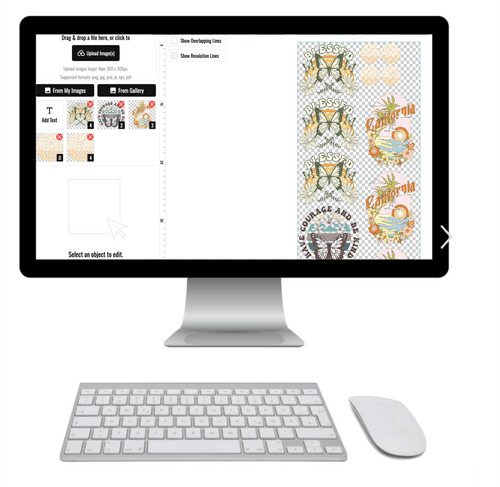
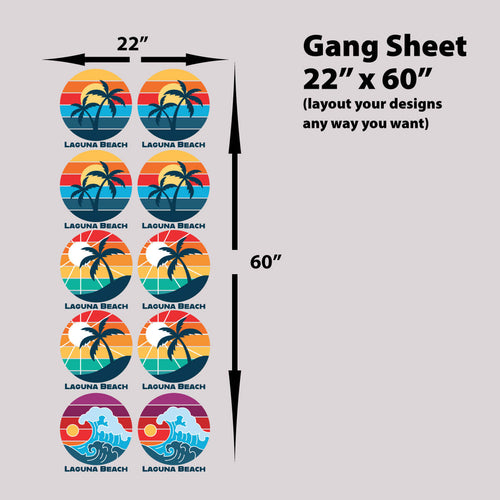
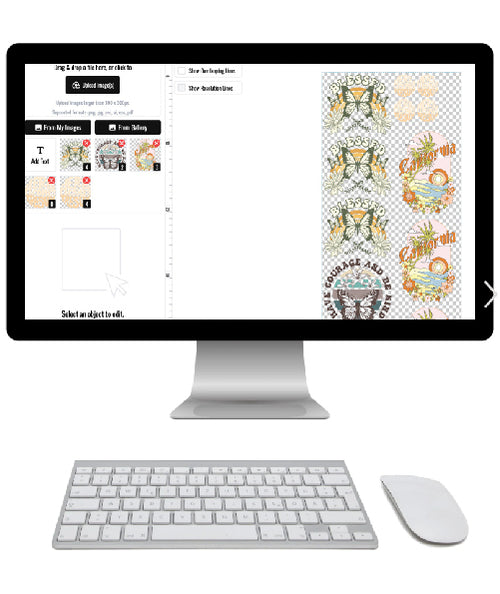
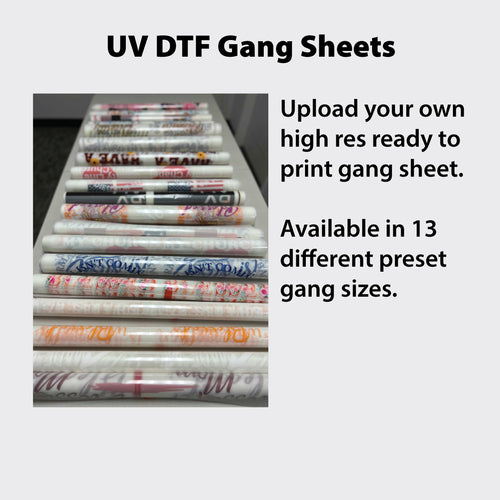
If you're ordering multiple logos, sleeve hits, neck labels, or several small graphics, a gang sheet can be more efficient than treating every piece of art like a separate order. Instead of leaving dead space around individual prints, you place multiple designs on one transfer sheet.
That's where an Auto-build gang sheet builder helps. Rather than manually arranging every file, it can place multiple uploads onto a sheet in a way that uses space more efficiently and keeps the ordering process simpler. For buyers juggling several logos or mixed sizes, that's often the easiest route to better sheet usage and lower waste. If you don't want to build the layout yourself, a We Build a Gang Sheet for You option is the practical fallback.
The one thing no tool can fix is weak source art. Clean inputs still matter.
Understanding Turnaround Times Pricing and Pickup Options
A t-shirt quote isn't just “shirt plus ink.” Price moves based on the blank garment, print method, number of print locations, artwork readiness, quantity, and whether you're asking the shop to interrupt its normal queue.
That's why two local quotes can look far apart even when the shirt appears similar. One may include proofing, garment sourcing, and finishing. Another may assume you're providing press-ready art and basic blanks with no rush.
What same-day really needs to mean
Many local printers advertise same-day service, but the term is often vague. One common buyer problem is that same-day might refer to file intake, production start, or unfinished print status, rather than a completed shirt in your hands. That ambiguity is a real friction point for deadline-driven orders, which is why you should ask for cutoff times and ask whether the promise covers the full process from file submission to finished product (same-day custom shirt printing page).
Don't leave this verbal. Get the deadline in writing with the exact handoff point.
A better way to ask for a quote
Use this format:
- Garment: Brand or style if you know it, plus color
- Quantity: Total count and size breakdown
- Print locations: Front, back, sleeve, left chest, neck label
- Artwork status: Print-ready or needs cleanup
- Deadline: Date and actual time needed
- Fulfillment: Pickup or shipping
That gives a printer enough context to quote the actual job instead of a placeholder number.
Pickup versus shipping
Local pickup feels like the obvious benefit of a near-me search, and sometimes it is. If the printer is organized and your file is approved early, pickup can remove transit uncertainty.
But don't assume local always means faster. Some local shops have limited production windows or backlog issues. In some cases, ordering transfers from a specialist and pressing locally, or using a provider with a tighter production workflow, is the simpler route. The right answer depends on where the delay sits: file approval, production queue, or final handoff.
Your Pre-Order Checklist for a Smooth Process
Before you pay, run one final check. At this stage, experienced buyers prevent avoidable mistakes.

The checklist
- Artwork is final: You've sent the correct file, with transparency if needed, and you're not relying on a screenshot.
- Garment details are locked: Shirt style, fabric, color, and size breakdown are confirmed.
- Print method fits the job: You know why the printer chose DTF, DTG, or screen printing.
- Placement is defined: Front, back, sleeve, and print size are clearly written down.
- Proof has been reviewed: If the shop provides a mock-up, you've checked spelling, placement, and scale.
- Timeline is specific: You have a real production date and either a pickup time or shipping plan.
- Total cost is clear: You understand whether artwork cleanup, rush handling, or extra print locations affect the final bill.
If you're pressing transfers yourself
Technique matters more than people think. For heat-applied transfers, the three variables that matter are time, temperature, and pressure. Industry educators note that pressure is the most often overlooked variable, and a proper pre-press step helps remove moisture and wrinkles, which improves adhesion and durability (heat transfer application guidance).
Pressure gets overlooked all the time. A transfer can have the right temperature and dwell time and still fail early if pressure is off.
That's especially important for anyone applying transfers at home or in a small shop. If a shirt has residual moisture, steam can interfere with the bond. A short pre-press is simple, and it solves a lot of problems before they happen.
What a smooth order usually looks like
A clean job usually follows a clean sequence:
- You send usable art.
- The printer confirms method and garment.
- You approve the mock-up.
- Production starts after approval, not before.
- Pickup or shipping details are confirmed clearly.
That process isn't fancy. It's just disciplined. And in custom apparel, disciplined orders almost always turn out better than rushed, vague ones.
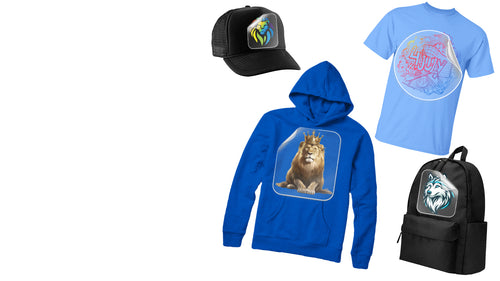
If you need transfers rather than finished shirts, Lion DTF Transfers offers custom DTF transfers, gang sheets, and an Auto-build gang sheet builder that can help organize multiple designs on one sheet for easier ordering and more efficient use of space.