


You've probably been there already. The artwork looked bright on your screen, the mockup looked clean, and then the finished shirt arrived looking flatter, duller, or heavier than you expected.
That gap between file and finished print is where most frustration lives.
If you want to print full color on tees, hoodies, performance wear, tote bags, or promo pieces without wrestling with color limits, DTF is one of the most practical methods available. It gives small businesses a way to run detailed graphics, gradients, and multi-color logos without setting up a screen for every color. But getting professional results still depends on a few decisions upstream, especially file setup, white underbase control, and how the transfer is arranged on the sheet.
This guide breaks that down in plain language so you can make better artwork decisions, order more efficiently, and avoid the two complaints people mention most often: dull color and that plastic-feeling print.
What Full-Color DTF Printing Really Means
A customer sends over a logo with a sunset gradient, small white text, and a photo element. On screen, it looks rich and crisp. On the shirt, those same details only look professional if the print process builds color in the right order and supports it with the right base.
That is what full-color DTF means in practice.
With direct-to-film printing, “full color” is not just the ability to accept a complex file. It means the transfer can reproduce a wide range of tones, blends, and small details on finished garments, including dark ones, with consistency. For a small business, that matters because the test is not the artwork on your monitor. It is whether the pressed transfer still looks bright, clean, and comfortable to wear.
How the color gets built
Modern DTF printers use a CMYK + white ink configuration, printing CMYK colors first and then white ink in reverse order onto coated PET film so the white layer sits beneath the colors after transfer. Lawson's DTF FAQ explains that print order and why it helps color stay strong on dark garments.
The white underbase works like primer under paint. Without it, the shirt color changes what you see. With it, the printed colors have a clean surface to sit on, so reds stay red, yellows stay bright, and pale tones do not disappear into black or navy fabric.
That single detail explains a lot of the gap between a good file and a disappointing print.

Why DTF handles so many garment types
DTF uses a transfer process instead of printing straight onto the garment. The design is printed onto film, adhesive powder is applied, and the transfer is cured before pressing. That setup is one reason DTF is widely used across cotton, polyester, blends, and many hard-to-print items that can create limits for other methods.
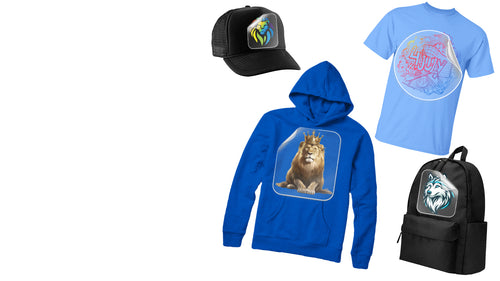
For a shop owner, that flexibility solves a very practical problem. You may need the same full-color artwork to work on a ringspun tee, a performance hoodie, and a nylon bag in the same order. DTF makes that possible without changing to a completely different decoration system for each product type.
In the Lion DTF workflow, smart file prep and sheet planning gain importance. The printer can reproduce a wide range of color, but the final feel and finish still depend on how much ink coverage the artwork requires and how well the design was built before upload.
Practical rule: Full color means controlled color supported by a clean white base and artwork prepared for transfer, not just a file with many colors.
What makes a full-color DTF print look professional
Professional results usually show up in three places first:
- Color strength on dark garments because the underbase keeps the fabric from muting the image
- Clear edges and readable small details because film transfer can hold fine linework well
- Smooth blends and photo transitions when the artwork has enough resolution and clean color data
There is also a feel component, a source of frustration for many buyers. A full-color print can look bright but still feel heavier than expected if the design lays down a large solid block of ink and adhesive. That “plastic feel” is often less about DTF as a category and more about artwork choices, underbase use, and how much printed area sits on the garment.
Where confusion usually starts
Buyers often hear “full color” and assume it means any design will print perfectly on any shirt with the same finish. Real production is more specific than that. The file, the white underbase, the amount of solid coverage, the fabric, and the press application all affect what you get in hand.
So the better definition is simple. Full-color DTF is a process for reproducing detailed, multi-tone artwork on many garment types with strong opacity and durability, provided the design is prepared for transfer rather than only for screen viewing.
That difference is why one print looks bright, flexible, and polished, while another looks flat or feels too heavy even though both started from colorful artwork.
Comparing Your Full-Color Options
Choosing how to print full color isn't really about the print method name. It's about the job in front of you. Fabric type, garment color, quantity, artwork detail, and the feel you want all matter.
If you run a small business, the wrong method usually shows up in one of three ways. The print looks weak on dark fabric, the setup cost makes a short run hard to justify, or the method doesn't work well across the garments your customers buy.
Full-color print method comparison
| Method | Fabric Compatibility | Vibrancy on Darks | Feel/Hand | Durability | Best for Small Runs |
|---|---|---|---|---|---|
| DTF | Works across cotton, polyester, blends, and many specialty fabrics | Strong, because of the white underbase | Can range from soft to heavier depending on ink coverage and artwork treatment | Durable when produced and applied correctly | Yes |
| Screen printing | Broad, but process changes based on fabric and ink system | Strong on darks with proper underbase setup | Often very good for simpler designs | Reliable for repeat production | Less ideal when artwork has many colors |
| Sublimation | Best on polyester and light garments | Not suitable for black or dark garments in standard use | Very soft because dye goes into the fabric | Good when used on the right substrate | Limited by garment type and color |
| DTG | Best known for cotton and cotton-rich garments | More limited depending on fabric and pretreat workflow | Often soft on suitable garments | Good when the garment and pretreat are right | Can work for short runs, but less versatile across fabrics |
What business owners usually care about first
For many shops, fabric compatibility is the first filter. If you're decorating cotton tees one day and polyester performance shirts the next, DTF saves time because you don't need to switch your whole decoration strategy.
The next issue is dark garments. A lot of branded apparel is black, navy, charcoal, or deep team colors. Sublimation can't solve that in standard use because it depends on a light base. DTF can, because the white underbase creates the platform that color sits on.
A print method can look perfect in a sample video and still be the wrong fit for your real order mix.
Where screen printing still fits
Screen printing still makes sense when you have repeat jobs, simpler art, and a quantity that supports setup time. If your design uses a few spot colors and you're printing the same shirt over and over, it can be efficient and give a very appealing hand.
But once you move into full-color logos, gradients, photos, or short custom runs, setup gets harder to justify. That's where DTF often becomes the more workable option for small and medium orders.
The feel question
Buyers become cautious. They want color, but they don't want a stiff chest print.
That concern is fair. A large solid block of ink can feel heavier than a fine-line graphic. The useful question isn't whether DTF feels good or bad in general. It's whether the artwork was built in a way that controls ink coverage. When it is, the print can feel much better than many people expect.
A practical decision shortcut
If your jobs involve these conditions, DTF is usually worth serious consideration:
- Mixed fabrics: You decorate more than one garment type regularly.
- Dark apparel: Your customers prefer black, navy, or other deep colors.
- Detailed artwork: You need gradients, photo elements, or multi-color logos.
- Shorter runs: You don't want color count to make small orders awkward.
If your orders are mostly large, repeat designs with limited colors, screen printing may still be the better production fit.
How to Prepare Designs for Perfect Full-Color Prints
Most full-color problems start before anyone presses a shirt. They start in the file.
A design can look crisp on a laptop and still print poorly if the resolution is too low, the color mode is wrong, or the background isn't transparent. If you want professional DTF results, these are the basics to lock down first.
Start with resolution, not hope
To achieve full-color print fidelity in DTF, a minimum resolution of 720 DPI is required for basic logos and text, but high-end photographic and gradient designs need 1440 DPI or higher to avoid pixelation and keep transitions smooth, according to MTU Tech's DTF printer specification guide.
That doesn't mean every art file you touch needs to be rebuilt from scratch. It does mean you should stop trusting screenshots, web graphics, and compressed images for print.

The three settings that matter most
Here's the checklist I'd use before sending any file to production.
- Resolution Use artwork that holds detail at print size. Basic text and simple logos are more forgiving. Photos, soft shadows, and gradients are not.
- Color space Build for print, not for screen. If you're unsure how those differ, this breakdown of CMYK vs RGB for apparel artwork gives a practical explanation.
- Transparent background If you want only the design pressed, the file background must be transparent. A white box in the file becomes a white box problem later.
Why CMYK matters in DTF
One of the biggest reasons full-color prints come back dull is that the art was designed in RGB and never checked for print gamut. Screen colors can appear brighter than what printing can reproduce, especially with neon-like tones and very luminous blues or greens.
DTF color workflows also depend on RIP settings and white underbase behavior. DTF Ghost's troubleshooting guide notes that visible white ghosting can come from an unchoked underbase, and incorrect powder application can cause color blooming that reduces vibrancy by up to 40%. The same guide says artwork should be built in CMYK with gamut warnings, not just RGB, and points to a 10 to 20 second cold-peel wait when calibrating white ink density.
If your file is bright but your process isn't calibrated for white and CMYK output, the shirt won't match the screen.
File types that make life easier
Different shops accept different formats, but these are the common practical choices:
- PNG: Good for raster artwork with transparency, especially finished graphics.
- AI or vector formats: Better when the design includes logos, shapes, and type that may need scaling.
- High-quality layered artwork: Useful if adjustments are needed before production.
The main goal is simple. Send a file that won't force the printer or shop to guess.
A quick preflight before upload
Use this short review before you order:
- Check print size: Don't enlarge a small file and expect it to stay sharp.
- Zoom in on edges: Jagged curves and fuzzy outlines show up fast in print.
- Inspect soft effects: Glows, shadows, and fades need enough resolution to remain smooth.
- Remove hidden backgrounds: Some files only look transparent because the art-board is white.
- Review color intent: If exact brand color matters, say so early.
One more thing buyers overlook
Pantone matching in digital apparel methods isn't always perfect, but DTF can reach 90% Pantone color accuracy, which matters for brand consistency in merch and apparel. That's useful for logos and coordinated campaign graphics, especially when you're trying to keep a business identity looking consistent across multiple garments.
The key is giving production a file that supports that outcome. Good printing can't rescue weak source art.
The Simple Workflow from Upload to Press
Ordering custom transfers feels complicated until you see the process once. After that, it's mostly a matter of choosing the right sheet format, uploading clean artwork, and setting yourself up to waste as little space as possible.
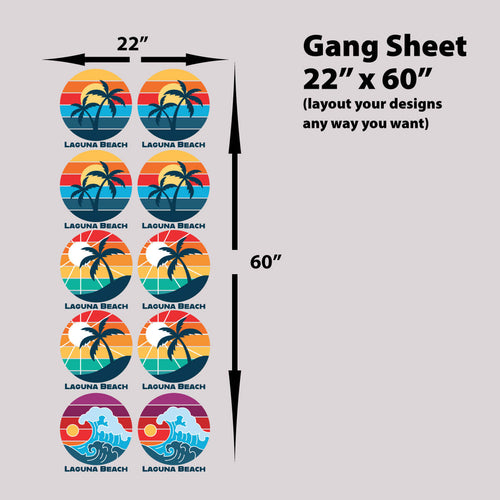
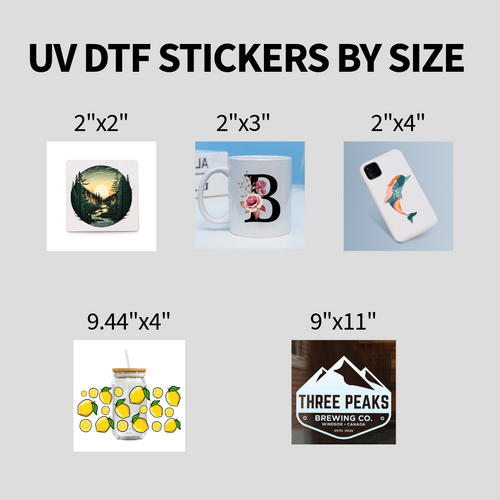
For most small businesses, there are two basic ordering paths. You either order by individual design size, or you combine multiple designs onto one sheet.

A typical order path that saves time
A shop owner lands on the site with several graphics to print. Maybe it's a left chest logo, a full front print, a sleeve hit, and a few extra replacements for mis-presses. Ordering each one separately can work, but it often leaves money on the table if the layout isn't optimized.
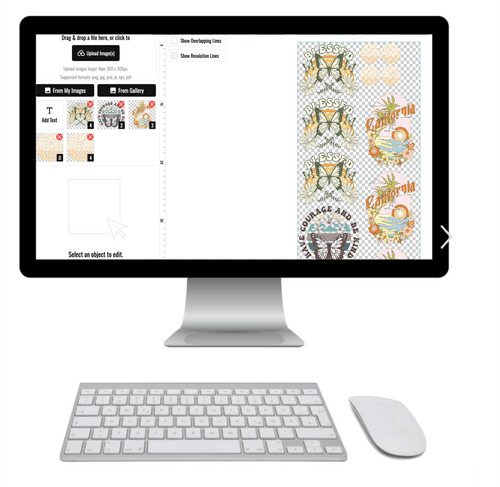
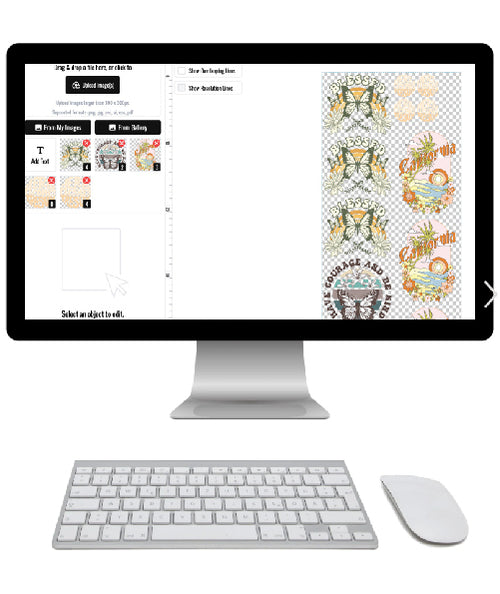
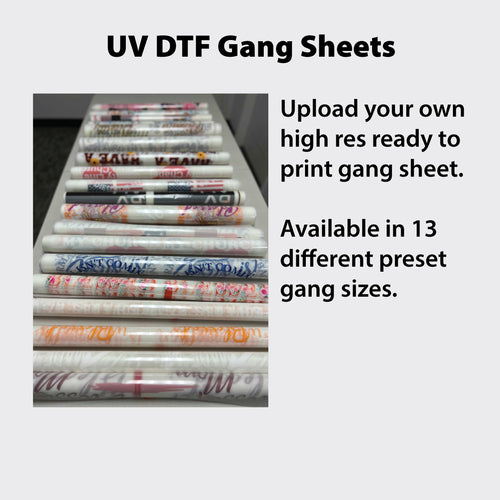
That's where an Auto-build gang sheet builder is useful. Instead of manually arranging every piece from scratch, you can use it to place multiple graphics efficiently on one sheet. That helps with both ease of use and cost effectiveness, especially when you're combining sizes, placements, or several SKUs in one run.
When to order by size and when to use a gang sheet
Order by size when:
- You have one design: A straightforward chest print or single logo.
- You need quick reorders: The same graphic, same dimensions, minimal setup.
- You want simple pricing: No layout decisions to make.
Use a gang sheet when:
- You have multiple placements: Front, back, sleeve, pocket, and tag graphics.
- You're batching orders: Several customer jobs can share one sheet if timing lines up.
- You want tighter material use: Less unused film usually means better efficiency.
One option among current online ordering workflows is Lion DTF Transfers, which supports upload-based ordering along with custom gang sheet building. For shops that don't want to arrange every graphic manually, the Auto-build gang sheet builder can simplify the layout step.
What happens after upload
Once the file is uploaded and the layout is set, production prints the artwork to film, applies adhesive powder, cures it, and prepares it for pressing. At your end, the job becomes straightforward if your press settings and garment prep are consistent.
This is also where having clean file names and organized art helps. If you're running multiple SKUs, label your designs clearly before upload so the wrong left chest logo doesn't end up on the wrong sweatshirt stack.
Here's a quick walkthrough that shows the kind of process many buyers find useful:
The pressing side stays simpler when the sheet is smarter
A well-built gang sheet does more than save film space. It also makes the production table easier to manage. You can cut the pieces in sequence, stage them by garment, and reduce the chance of grabbing the wrong print during a busy run.
Shops often focus on artwork quality and forget layout efficiency. Both affect cost.
If you're fulfilling team orders, event merch, or online shop assortments, that matters. The Auto-build gang sheet builder is useful because it reduces one of the most annoying parts of DTF ordering: manually trying to nest artwork tightly without creating a mess for yourself later at the press.
Troubleshooting Durability and Final Quality
Two complaints come up more than any others with full-color transfers. The first is that the print looks muted. The second is that it feels too heavy.
Both issues are fixable, but the fix usually isn't a single magic setting. It comes from combining better artwork choices with cleaner production habits.
If the print looks dull or gray
Dull output often traces back to one of these issues:
- RGB artwork was sent for print: Screen color doesn't translate cleanly to print color.
- White under-base problems: If the under-base isn't controlled properly, it can create ghosting or muddy edges.
- Powder or cure problems: Bad application can affect clarity and color separation.
Advanced DTF systems address one part of this mechanically. ColDesi's overview of DTF transfer printers explains that Raw Machine Output with dual print heads lays down CMYK blends first, then a precisely aligned white under-base on top, which helps prevent white peeking and keeps edges crisp.
That matters because not every dull print is an art problem. Some are alignment problems.
If the print feels too plastic
Many beginners overbuild the artwork. They leave large solid areas untouched, then wonder why the final graphic feels like a patch.
A practical fix is half-toning. According to this DTF halftone walkthrough, strategic half-toning can reduce ink coverage by 50%+ while maintaining vibrancy. The same source points to round dot patterns set around 22.5° to 45° and roughly 25 to 35 LPI as a way to simulate transparency and reduce that heavy feel. It also notes that 68% of consumers reject heavy ink builds on apparel.
That's especially useful for fashion-leaning graphics, oversized back prints, and designs with broad filled areas.
The softest-looking full-color print usually isn't the one with the most ink. It's the one with the smartest ink distribution.
Durability is part of quality, not a separate issue
A print that looks good on day one but fails after a few washes isn't a good value. Industry standards require quality DTF transfers to withstand at least 50 washes without significant fading or cracking, and premium providers such as Lion DTF test transfers to last 100+ washes, according to Transfer Kingz on DTF durability standards.

If you want a deeper look at wear life, this guide to how long DTF transfers last is a useful companion read.
What to check before blaming the transfer
Use this short troubleshooting review:
- Artwork density: Large solid fills will usually feel heavier than half-toned or broken-up graphics.
- Color mode: CMYK-prepared files reduce avoidable surprises.
- Under-base handling: White choking and alignment affect vibrancy and edge cleanliness.
- Application consistency: Uneven pressing can create adhesion problems.
- Garment care: Washing and drying habits affect longevity after the press stage.
The long-term value angle
When you print full color well, you don't just get a nicer shirt. You get fewer remakes, fewer complaints about fading, and less waste from jobs that should have worked the first time.
That's why the file-to-finish gap matters so much. A strong design file, a sensible gang sheet layout, controlled ink coverage, and proper pressing all stack together. When one part is off, buyers tend to blame the whole method. When the workflow is dialed in, DTF becomes one of the most practical ways to deliver vivid, durable apparel without overcomplicating production.
If you want an easier way to order press-ready transfers, gang sheets, and full-color graphics for apparel, Lion DTF Transfers offers upload-based ordering, an Auto-build gang sheet builder for cost-effective layouts, and workflow options that help small shops, brands, and makers move from file to finished garment with less friction.