



If you've ever felt the frustration of weeding vinyl or dealt with iron-on transfers that crack and peel after a few washes, you know that not all custom apparel methods are created equal. Getting that professional, "store-bought" feel is the goal, and modern iron on transfers t shirt like Direct-to-Film (DTF) are how you get there.
This guide is your roadmap to creating durable, soft-to-the-touch custom shirts that look and feel like high-end merch.
From Blank Tee to Professional Merch

Turning a plain T-shirt into a piece of professional-grade apparel is more accessible today than ever before. Gone are the days of wrestling with transfers that feel like a plastic shield on your chest. Technology, especially Direct-to-Film (DTF), has completely changed the game for everyone from weekend crafters to full-scale print shops.
Our focus here is to give you the practical skills to produce apparel that not only looks incredible but actually lasts. We'll walk through everything from file prep to the final press, making sure you know how to create a product that feels soft and integrates perfectly with the fabric. It’s time to move past amateur results.
The Evolution of T-Shirt Customization
The custom tee has a pretty cool history. The 1970s and 80s were a golden age for heat transfers, turning basic shirts into wearable billboards for bands, brands, and sports teams. These iron-ons were a big step up from earlier DIY decals, offering full-color vibrancy on 100% cotton—something other methods struggled with.
During that time, improvements in thermoplastic glues and thermal printing made transfers more durable and detailed. The T-shirt became a cultural staple; in the US alone, over 95% of Americans were wearing them to make a statement. This boom in accessible customization paved the way for the advanced methods we use today, which you can read more about in this history of heat printing.
Why DTF Is the Modern Choice
Today, DTF technology stands on the shoulders of those early methods, delivering far superior quality and efficiency. Unlike the transfers of the past, DTF offers a combination of benefits that make it the go-to for serious creators.
- Vibrant, Full-Color Prints: DTF nails detailed, multicolor designs that look incredible on any fabric color, including black.
- Exceptional Durability: When applied correctly, our premium DTF transfers are tested to withstand 100+ wash cycles without fading or cracking.
- Soft Hand Feel: The ink becomes one with the fabric, creating a flexible, soft finish that doesn't feel heavy or plastic-like.
- Fabric Versatility: DTF works on a huge range of materials—cotton, polyester, blends, and more—giving you total creative freedom.
The real game-changer is combining these high-quality transfers with smart, cost-saving tools. For instance, our Auto-build gang sheet builder lets you pack multiple designs onto a single sheet, which drastically lowers your cost per print and makes every dollar count.
This blend of top-tier quality and production efficiency makes professional results achievable for anyone. Whether you're launching a brand, outfitting a team, or just creating for fun, knowing how to use modern iron on transfers t shirt is the key. We'll show you exactly how.
Prepping Your Designs for Perfect Prints
Every great iron on transfers t shirt starts long before you even turn on the heat press. The quality of your digital file is everything—it’s the foundation for a sharp, vibrant print that looks professional and lasts. Nailing this step is how you avoid the most common printing mistakes and make sure what you see on screen is what you get on the shirt.
The first, non-negotiable rule is resolution. Your artwork absolutely must be 300 DPI (dots per inch). Think of DPI as the pixel density of your image. A low-resolution file, like a 72 DPI image you might grab from a website, will look blurry and pixelated when printed. It’s a dead giveaway of an amateur job.
Just as important is transparency. Unless you intentionally want a solid box printed behind your graphic, your design file needs a transparent background. With DTF, any pixel that isn't transparent gets printed. Getting rid of that background gives you a clean, standalone graphic that looks like it belongs on the shirt.
File Format Best Practices
For the best results, you need to save your designs in a format that handles high-resolution graphics and transparency. The most reliable options are PNG, PDF, and AI.
- PNG (Portable Network Graphics): This is the workhorse for most creators. It supports high resolution and, most importantly, transparent backgrounds. It’s also a "lossless" format, which means it won’t degrade in quality each time you save it.
- PDF (Portable Document Format): PDFs are fantastic for locking in all your design elements, especially text and vector shapes. Just make sure you embed your fonts and save it with a transparent background enabled.
- AI (Adobe Illustrator): If your design is vector-based, an AI file is the top choice. Vector artwork is built from mathematical paths, so it can be scaled to any size—from a small chest logo to a full back print—without ever losing a drop of quality.
For a deeper look at creating print-ready artwork, check out our guide on custom heat transfer designs, where we cover more advanced techniques.
Maximizing Value with Gang Sheets
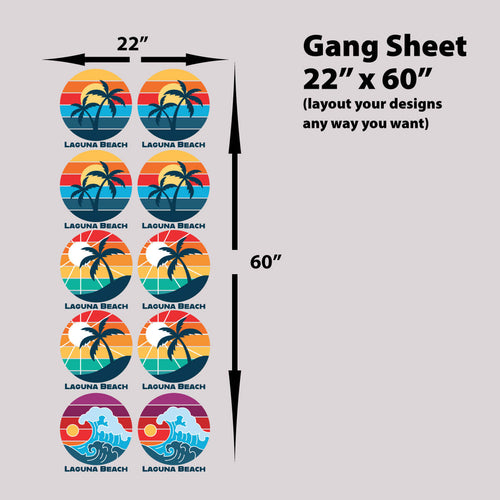
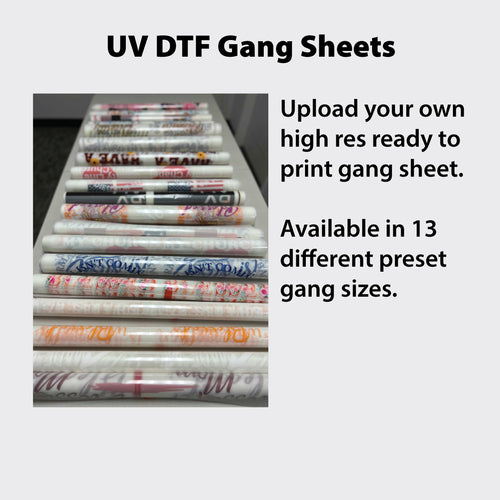
Once your designs are prepped, it’s time to think about efficiency and cost. This is where gang sheets become a total game-changer for any serious brand or printer. A gang sheet is one large transfer sheet where you "gang up" multiple designs together. Instead of paying for each design individually, you just pay for the sheet, which drastically cuts your cost per transfer.
This is a must-use strategy for small businesses and serious hobbyists. For instance, on a single 22x60 inch sheet, you could easily fit a few large front-and-back designs, a dozen smaller pocket logos, and a handful of sleeve or tag prints. You’re using every last square inch of the film.
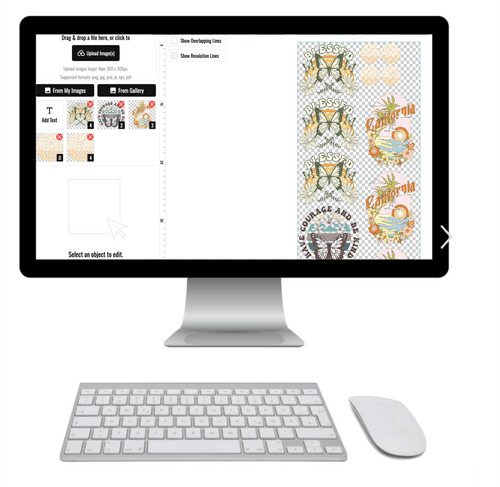
The most efficient way to do this is with our Auto-build gang sheet builder. This tool takes all the guesswork out of it. You just upload your individual PNG files, and the software automatically nests them together to minimize waste and maximize your print run.
Time-Saving Production Options
The best part about the gang sheet system is its flexibility. It works whether you’re a pro with Adobe Illustrator or just getting started. If you're comfortable with design software, you can build your own sheet in a program like Canva or Adobe Illustrator and upload the ready-to-print file. For maximum ease of use and cost-effectiveness, however, our Auto-build gang sheet builder lets you simply upload your designs and have them arranged automatically.
But we know not everyone has the time or the software to build their own sheet. For anyone who needs a hand, our “We Build a Gang Sheet for You” service is the perfect answer. Just send us your separate design files, and our team will professionally lay them out for you, making sure everything is optimized for a perfect print. This service makes efficient, cost-effective production accessible to everyone, no matter your design skill level.
Mastering Your T-Shirt Pressing Workflow
This is where the magic happens. All your design work comes down to this moment—transferring that print from the film onto the shirt. A good press is what separates a homemade-looking shirt from a professional one. It’s not about luck; it's about following a solid process that works every single time.
First things first: the pre-press. Before you even think about placing your transfer, press the blank shirt for 5-10 seconds. This quick step is non-negotiable. It smooths out wrinkles and, more importantly, steams out any hidden moisture in the fabric that could ruin your application. Skipping this can cause steam pockets and prevent the adhesive from bonding properly.
With the shirt prepped, it’s all about placement. Lay your transfer on the garment, taking a moment to get it perfectly centered and straight. Here’s a pro tip: fold the shirt in half vertically and give it a quick press to create a faint centerline. You can gently fold your transfer (film side out) to find its center, too. Line up the two center marks, and you’ve got foolproof alignment.
The Right Settings for Your Fabric
You can’t use the same settings for every shirt. Different fabrics react differently to heat, and getting the temperature and time right is crucial for a great press. Using the wrong settings can leave you with a damaged shirt or a transfer that peels right off.
Here are my go-to settings for the most common fabrics we see:
- 100% Cotton: This is your most forgiving material. Set your heat press to 280°F and press with medium-heavy pressure for 10 seconds.
- Polyester & Blends: Polyester is more sensitive. You’ll want to drop the temperature to 240-250°F and press for 7-10 seconds with medium pressure. This helps you avoid scorching the fabric or leaving that dreaded press box outline.
- Tri-Blends and Delicates: For sensitive fabrics like 50/25/25 tri-blends, always start low and slow. I recommend starting at 260°F for about 8 seconds and adjusting from there if needed.
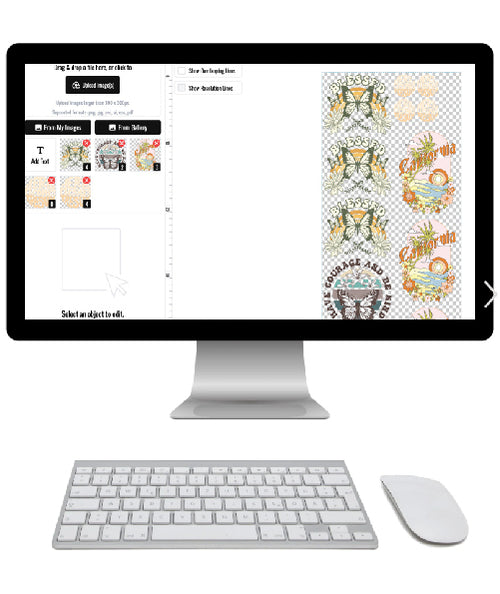
The journey from a digital file to a finished sheet is pretty straightforward. This is how we think about it.

This simple process shows how individual designs are arranged and uploaded, which is exactly how our Auto-build gang sheet builder helps you get the most out of every single sheet you print for superior ease of use and cost-effectiveness.
Mastering the Hot Peel Technique
The moment your press opens is critical. Lion DTF transfers are hot peel, which means you need to peel the clear film off immediately while the design is still steaming hot. Don't hesitate.
Start at a corner and peel the film back in one smooth, confident motion. Keep it low and pull it almost parallel to the shirt, not straight up into the air. This quick, decisive action is what helps the ink settle deep into the fabric fibers, giving you that soft feel everyone wants. If you wait and let it cool, the transfer will stick to the film, not the shirt.
A hot peel is a huge step up from the old cold-peel transfers. It’s way faster, letting you produce more shirts in less time, and it gives you a much better finish that feels like it’s part of the fabric instead of a plastic sticker sitting on top.
Can You Use a Home Iron?
Look, a heat press will always give you the best, most consistent results. But if you're just starting out, you can get by with a home iron—you just have to be extra careful.
To make it work, you need to compensate for the iron’s lack of even heat and pressure.
- Work on a Hard Surface. Ditch the ironing board; its padding will absorb all the pressure. Use a sturdy table or countertop with a Teflon sheet or thin towel.
- Max Heat, No Steam. Crank your iron to its highest setting (usually "Cotton") and make sure the steam function is completely turned off.
- Press, Don't Iron. This is the most important part. Plant the iron on one section of the design and press down with your body weight for 10-15 seconds. Do not slide it around like you're ironing a wrinkled shirt.
- Lift and Repeat. After 30 seconds, lift the iron straight up and move to an overlapping section. Repeat this process until you’ve pressed the entire transfer.
The biggest challenge is getting consistent heat and pressure everywhere. It’s why we have a whole guide on how to use a heat press machine for professional results. It really does make all the difference.
Finishing Touches for Long-Term Durability

A great application is one that lasts. After that initial rush of peeling the film and seeing your design come to life, there are a couple of small steps that separate good results from truly professional ones. These finishing touches are what give your iron on transfers t shirt its long-term durability and premium feel.
The most important of these is the "second press." It's a quick, final press that locks the transfer in, improves how it feels on the shirt, and gives it a perfect matte finish. This is a simple trick that makes a world of difference in the final product's quality.
The Second Press for a Professional Finish
Once you've done the hot peel, you'll probably notice the design has a slight sheen. To get rid of that gloss and push the ink deeper into the fabric's fibers, you'll want to do a quick follow-up press.
Here's how it's done:
- Cover the Design: Grab a Teflon sheet, a piece of parchment paper, or even just a thin piece of cotton fabric and lay it over the entire design.
- Press Again: Press the shirt for just 5-7 seconds, using the exact same temperature and pressure as you did the first time.
This one little step does two crucial things. First, it gives the adhesive a final cure, creating an even stronger bond with the garment. More importantly, it knocks out any remaining shine, leaving a soft, matte finish that looks like it's part of the shirt instead of sitting on top of it.
This second press is a non-negotiable step for professionals. It’s the secret to getting that premium, retail-quality look and feel that will make your customers come back.
Essential Washing and Care Instructions
The life of a custom shirt doesn't end at the heat press; it depends on how it’s cared for afterward. Giving your customers clear washing instructions is the key to making sure their new favorite tee lasts. Following these best practices is how you achieve high-quality DTF transfers.
The goal here is to be gentle on the design, mainly by cutting down on heat and friction during laundry.
These are the core instructions you should always share:
- Turn Inside-Out: This is the single most important rule. Washing the garment inside-out protects the transfer from rubbing against other clothes, zippers, and buttons in the machine.
- Wash in Cold Water: Hot water can weaken the transfer's adhesive over time. Always recommend washing on a cold, gentle cycle.
- Use Mild Detergent: Harsh detergents, bleach, and especially fabric softeners can break down the ink and adhesive. A simple, mild detergent is all you need.
- Hang Dry or Tumble Dry Low: The high heat of a standard dryer is the number one enemy of a custom shirt. For the absolute best results, hang the garment to air dry. If you have to use a machine, make sure it’s on the lowest heat setting available.
By passing this advice on to your customers, your custom iron on transfers t shirt will stay vibrant and crack-free for years. To really understand the science behind it, you can learn more about how long DTF transfers last in our detailed article. Sharing this kind of knowledge builds trust and proves that your hard work can stand the test of time.
Troubleshooting Common Transfer Problems
Sooner or later, it happens to everyone. You follow all the steps, but when you go to peel the film, something’s not quite right. The good news is that most issues with iron on transfers t shirt applications are easy to spot and fix once you know what to look for.
Nearly every failed transfer comes down to one of three things: time, temperature, or pressure. Dialing in these three elements is the secret to getting a perfect press every time. Let's walk through the most common problems and get them sorted out.
Why Your Transfer Is Not Sticking
There’s nothing worse than peeling back the film to see the design—or just parts of it—still stuck to the carrier sheet. When a transfer doesn't stick, your first instinct should be to check your heat and pressure.
Budget-friendly heat presses are notorious for inaccurate temperature displays. You might have it set to 270°F, but the platen could be sitting at a chilly 255°F, which isn't hot enough to properly melt the adhesive.
- Confirm Your Heat: The only way to know for sure is to use an infrared heat gun. Point it directly at the metal platen to get a true reading and adjust your settings from there.
- Add More Pressure: If the temperature is on point, not enough pressure is the next likely culprit. Our transfers need firm, even pressure to bond correctly. Give your pressure adjustment knob a quarter-turn to tighten it and press the shirt again.
- Always Pre-Press: Don't skip the 5-10 second pre-press. Fabric holds moisture, which turns into steam under the press and can prevent the adhesive from making a clean bond.
Dealing with Peeling Edges or a Faded Look
Have you ever pressed a design where the center looks great, but the edges are lifting? That’s a classic sign of uneven pressure. This is a constant battle for anyone using a home iron, but it can also plague heat press users if the lower pad is worn out or if thick seams get in the way.
When using a heat press, watch out for collars, zippers, or pocket seams. These raised areas can prevent the platen from making full, even contact with the transfer. A simple pressing pillow can lift the print area above these obstacles, ensuring consistent pressure across the entire design.
If your finished design has a glossy or shiny look, you probably used too much heat or pressure. Don't worry, it's an easy fix. Just do a quick second press for 5-7 seconds with a Teflon sheet or parchment paper over the design. This will give it that professional matte finish.
A Quick Guide to Fixing Common Problems
Even experienced printers run into issues. The key is to diagnose the problem quickly so you can get back to creating. Here’s a simple table to help you identify what’s going wrong and how to fix it fast.
| Problem | Likely Cause | Solution |
|---|---|---|
| Transfer won't stick at all | Temperature too low or not enough pressure. | Use a heat gun to verify your press temperature. Increase pressure and re-press. Always pre-press the garment to remove moisture. |
| Edges are lifting or peeling | Uneven pressure. | Check for seams or collars interfering with the press. Use a pressing pillow to create an even surface. For home irons, apply more force to the edges. |
| Design looks faded or cracked after peeling | Peeled while too hot (for a cold-peel film). | Let the film cool completely to room temperature before peeling. Rushing this step pulls the ink before it can set. |
| Print has a shiny, plastic-like finish | Too much heat or excessive pressure. | Do a quick post-press for 5-7 seconds with a Teflon sheet or parchment paper to achieve a matte finish. |
| Adhesive residue is left on the shirt | Temperature is too high. | Lower your heat press temperature by 5-10°F. A little too much heat can cause the adhesive to "squish" out from behind the design. |
This table covers the vast majority of issues you'll encounter. By working through these simple checks, you can save your garments and get back to pressing with confidence.
How Far We've Come From Old-School DIY
The minor hiccups we troubleshoot today are nothing compared to what early DIY creators faced. Back in the 1960s and 70s, iron on transfers t shirt became a cultural phenomenon, letting people wear their favorite bands and slogans. These simple decals, often found as prizes in cereal boxes, used basic thermoplastic inks that a hot home iron could fuse to a shirt.
By 1977, the trend was so big that McDonald's was giving away free cheeseburgers to anyone wearing a Ronald McDonald transfer. Studios like RoAcH perfected the model, allowing for on-demand custom tees with minimal inventory. You can read more about this creative era and its impact on the history of t-shirt decals on MentalFloss.
Those early struggles paved the way for incredibly reliable solutions like Lion DTF. Today, you can get vibrant, wash-tested designs that last many washes and ship out in just 1-2 days. And with tools like our Auto-build gang sheet builder, ordering dozens of different designs is now incredibly cost-effective, letting you spend more time creating and less time troubleshooting.
Frequently Asked Questions
When you're getting your hands dirty with a new process like DTF, questions are going to pop up. It's all part of the learning curve. We get a lot of the same questions from new and experienced printers alike, so we’ve put together some straight-to-the-point answers to help you get professional results right out of the box.
Can I Really Use a Home Iron for Professional Results?
Honestly, while a dedicated heat press is always going to give you superior results, you can make a home iron work in a pinch if you're careful. The trick is knowing its limitations and working around them.
First, set your iron to the highest setting—usually 'Cotton' or 'Linen'—and make sure the steam is completely turned off. Don't use an ironing board; they're designed to be soft and will absorb all the pressure you need. Instead, press on a hard, flat surface like a sturdy table or even the floor.
You'll need to press down hard using your body weight for a solid 15-20 seconds in one spot before lifting the iron completely and moving to an overlapping section. The biggest risk is getting inconsistent heat and pressure, which is the number one cause of peeling transfers. For anyone running a business or even just a serious side hustle, a quality heat press is the single best investment you can make.
A heat press is to an iron what a professional bakery oven is to an Easy-Bake Oven. Both might technically work, but only one is built to deliver consistent, professional-grade results every single time.
What Is a Gang Sheet and Why Is It So Cost-Effective?
A gang sheet is simply a large sheet of transfer film where you group—or "gang up"—multiple designs to be printed at the same time. Instead of paying for each design individually, you just pay for the total film area. This is, by far, the most effective way to drive down your cost-per-print.
Think about it: on one 22x60 inch sheet, you could fit a few big designs for the back of a hoodie, a dozen smaller left-chest logos, and a handful of sleeve graphics. You're using every square inch of the material, which saves you a ton of money.
Our Auto-build gang sheet builder takes all the guesswork out of this. You just upload your design files, and the tool automatically nests them together to minimize waste. If you're printing more than a few designs at a time, this is the only way to order. It shifts your costs from "per-piece" to "per-area," unlocking huge savings.
What Is the Difference Between Hot Peel and Cold Peel?
The name says it all—it's about when you peel the clear film off the shirt after pressing.
-
Hot Peel: With a hot peel transfer, you peel the film off the second the heat press opens while everything is still piping hot. This is way faster, which is great for production. It also allows the ink to really settle into the fabric fibers, leaving a much softer feel that customers love.
-
Cold Peel: Cold peel transfers force you to wait until the shirt and the design have completely cooled down. This can seriously slow down your workflow and often leaves the design feeling thicker and more like plastic sitting on top of the shirt.
For both speed and that premium soft-hand feel, hot peel is the modern standard for professional shops.
How Do I Ensure My Colors Print Accurately?
Getting your colors right starts with your design file. For the most predictable results, you should always design and save your artwork in a CMYK color profile. Your monitor screen shows colors in RGB (Red, Green, Blue), which has a much wider color range than the CMYK (Cyan, Magenta, Yellow, Black) inks used for printing. Designing in CMYK from the start helps you avoid any major color shifts.
Here at Lion DTF, we use advanced color-matching tech to get as close as possible to your original design. If you have a brand logo that needs to be a very specific color, providing the Pantone (PMS) color codes in your file helps us nail it.
If color is absolutely critical for a big job, the smartest move is to order a small test print first. You can even build a small gang sheet using our Auto-build gang sheet builder with your main designs and a little color chart. This lets you see exactly how the colors look on actual fabric before you commit to a huge order, making sure the final product is perfect.
Ready to create durable, professional-quality custom apparel with unmatched ease and cost-effectiveness? The team at Lion DTF Transfers is here to make it happen. With our Auto-build gang sheet builder, premium hot-peel transfers, and industry-leading turnaround times, you have everything you need to bring your designs to life. Start building your next project today at https://liondtf.com.