




You can spot a makeshift pressing setup fast. The press is too heavy for the desk, the cord hangs where your feet go, the lower platen sits either too high for your shoulders or too low for your back, and every press cycle feels a little different.
A lot of new decorators treat the stand like an accessory. In practice, it’s the platform that decides whether your heat press works like production equipment or like a hot appliance balanced on furniture. If you’re running DTF transfers, pressing gang sheets, or trying to keep up with repeat orders, the stand changes more than storage. It changes stability, body position, workflow speed, and how confidently you can repeat the same result all day.
Why Your Heat Press Stand Is More Than Just a Table
The first bad setup often attempted is a spare desk. The second is the floor. Neither one holds up for long.
A desk often flexes when you close a manual press, especially a swing-away. The floor solves wobble but creates a different problem. You end up hunched over a hot machine for every pre-press, every alignment, every peel, and every repress.

If you work with DTF and want a quick refresher on the pressing side itself, this overview of why a heat press is used for DTFs gives helpful context. But the press only performs as well as the surface under it.
A proper heat press stand does three jobs at once:
- It stabilizes the press so pressure goes into the platen, not into a shaking tabletop.
- It sets working height so you’re not lifting your shoulders or folding your back all day.
- It gives the press a dedicated footprint so your production flow stops competing with everything else in the room.
That’s why serious shops stop calling it “something to put the press on.” They treat it like part of the press.
Practical rule: If your setup moves when you close the press, your stand is already part of your print quality problem.
The difference shows up in small things first. Straighter placement. Easier peeling. Less ghosting from rushed handling. Fewer moments where you’re holding a garment with one hand and trying to steady the machine with the other.
A stand won’t fix wrong settings or bad transfer handling. It will remove one of the biggest causes of avoidable inconsistency.
Decoding Key Specs for Your Heat Press Stand
A product listing can look impressive and still be wrong for your shop. Don’t buy a stand based on shelf count or photos alone. Read it like you’d read press specs.
Load capacity comes first
Ignore style for a minute. Start with the weight your stand must carry.
The HPN Universal Heat Press Stand is a useful benchmark because its published specs are specific: 32.5" L x 21.5" W x 28" H, built from heavy-duty steel and aluminum, with locking caster wheels and a 300 lbs maximum load capacity on the top shelf. That top-shelf rating exceeds the weight of most commercial heat presses and is intended to prevent vibration-related misalignment during pressing.
That last part matters more than people think. A stand isn’t just holding static weight. It’s absorbing force every time you open, swing, or clamp the press.
When you look at any stand, ask:
- What does my press weigh?
- Does closing the press add side force or downward force?
- Will I store anything else on the same structure that changes balance?
A stand can “hold” a machine and still be a bad fit under production use if it twists during operation.
Footprint matters more with swing-away presses
A clamshell mostly loads force in one direction. A swing-away introduces side movement and changing center of gravity.
That means a compact stand can be fine for one press style and miserable for another. If the base is too narrow, the machine may feel stable when idle but less stable when the platen is swung out and you’re dressing garments quickly.
Look for a stand that gives the press room to operate without crowding your body position. You want access to the front and enough side clearance for the motion of the arm.
A quick way to think about footprint:
| Spec area | What to check | Why it matters |
|---|---|---|
| Base size | Stand width and depth | Wider base resists rocking |
| Press overhang | Whether the press edges extend past the stand | Heavy overhang can make operation feel top-heavy |
| Operator clearance | Space for your stance and hand placement | You need room to load, align, and peel safely |
Height is not a comfort feature
Height is a production feature.
A stand that places the lower platen around a natural working zone lets you apply pressure, load shirts, and peel transfers without constant shrugging or bending. That doesn’t just feel better. It helps you stay consistent through long runs.
If you’re shopping presses too, this guide to a heat press machine for t-shirt printing helps you match stand choice to the machine style you’re planning to use.
Here’s the field test I use. Stand at the machine with your elbows relaxed. If you already feel like you’ll need to lift your shoulders to work the press or bow forward to see alignment, the height is wrong before you even start production.
A heat press stand should let your body stay quiet. If your shoulders, wrists, and lower back are doing extra work, the setup is costing you twice.
Materials and frame design
Steel usually wins for rigidity. Aluminum helps with weight and corrosion resistance. A combination frame can work well if the load-bearing parts stay stout and the joints don’t loosen under repeated use.
What you don’t want is a thin frame that feels fine empty but shifts once the press heats up and the day gets busy. Assembly quality matters too. The strongest materials in the world won’t help if the stand racks because the design is weak at the corners.
Check for:
- Reinforced corners that resist side sway
- Cross-bracing if the stand is tall or mobile
- Flat top support so the press base sits fully and evenly
- Hardware access so you can retighten bolts after use
Casters are either a blessing or a headache
Wheels help in real shops. They let you clean under the station, reconfigure space, or move a press out of the way. But mobile doesn’t mean unstable if the caster system is done right.
Locking casters are the minimum for a serious setup. You want the stand to roll when you choose, then stay planted when the press is hot and active.
Fixed legs can feel more solid in some spaces, especially if the station never moves. But many home shops and mixed-use workrooms benefit from mobility, as long as the locks are strong and the frame doesn’t wobble on them.
Shelf layout matters for how you actually work
The second shelf is useful, but only if it supports your workflow. Good uses include lower-volume blanks, a pad protector, a cover sheet stack, or tools you need often. Bad uses include overloading one side or storing anything that interferes with your footing.
The best stand spec is the one that matches the way you press, not the one with the most features on paper.
Choosing Your Stand Mobile Carts vs Dedicated Cabinets
Some buyers want one answer. There isn’t one. The right heat press stand depends on how often you move it, how heavy your press is, how much side storage you need, and whether your room is a workspace or a shared space.

Here’s the cleanest way to compare the three common formats.
Heat Press Stand Comparison
| Feature | Mobile Cart | Dedicated Cabinet | Folding Stand |
|---|---|---|---|
| Portability | Excellent | Low | Good |
| Stability | Good if well-built and locked | Best | Fair to limited |
| Storage capacity | Moderate | High | Minimal |
| Footprint | Moderate | Largest | Smallest when stored |
| Best use | Flexible shop layouts | Fixed production stations | Hobby or occasional use |
| Main trade-off | Can feel less planted than a fixed station | Takes up permanent space | Usually the least rigid option |
Mobile carts work best in real-world mixed spaces
A mobile cart makes sense when the room does double duty. Garage shop by day, family space by night. Spare room during the week, packing station on weekends. It also helps when you’re still refining layout and don’t want to commit to one station forever.
The upside is obvious. You can reposition the press near garments, near shelving, or near packing depending on the order type.
The downside is equally obvious. Cheap carts rarely stay square under a heavy manual press. If the caster locks are weak or the frame has too much flex, the machine will remind you every cycle.
Mobile carts are strongest when you need:
- Layout flexibility because your room changes purpose
- Easy cleaning access under and behind the press area
- Modular workflow where stations move as your volume changes
Dedicated cabinets suit repeat production
A cabinet-style base is usually the most confidence-inspiring option. More mass, more storage, less movement. If you run the same press in the same spot every day, that fixed feel is a real advantage.
This style is especially useful when the press station also needs to hold accessories, protective sheets, tape, extra pads, and garment stacks. The storage isn’t just convenience. It reduces searching and side trips during runs.
There is a trade-off. Cabinets take room, and they claim it permanently. In a tight shop, a cabinet can become the center of the room whether you want it to or not.
If your press station handles steady daily volume, the best stand often isn’t the most portable one. It’s the one nobody has to think about once the day starts.
Folding stands solve space problems, not production problems
A folding stand can be the right answer for occasional pressing, classes, or a home crafter who has to pack everything away after use. It’s a convenience choice.
It’s rarely the best choice for a heavy swing-away or for long DTF runs. Folding mechanisms introduce movement points, and movement points are where confidence disappears. Even when the stand doesn’t outright fail, a little flex changes how safe and professional the setup feels.
Use a folding stand when storage is the top priority. Avoid it when pressing time, machine weight, or operator comfort matter more.
How to decide fast
If you’re stuck between categories, sort your needs by what you can’t compromise on.
Choose a mobile cart if your workspace must stay flexible.
Choose a dedicated cabinet if your press stays put and your workflow depends on built-in storage.
Choose a folding stand only if you press occasionally and need compact storage more than rigid support.
One more point that gets missed. Storage can become clutter. A stand with too many tiers can create a habit of piling random tools around the hot zone. If you buy a cabinet, use the storage intentionally. Keep only pressing tools at the station. Everything else belongs somewhere else.
Optimizing Your Workspace for DTF Production
A good stand becomes valuable when it’s part of a complete flow. That matters most with DTF, where the press station isn’t handling one isolated transfer at a time. It’s part of a repeatable path from blank to finished item.

The biggest mistake I see is treating the stand like the endpoint. In a working shop, it’s the center of a station with inputs on one side, outputs on the other, and enough clearance to handle film without awkward turning.
Build the station around movement
Place the stand where you can approach the press naturally. Then assign simple zones around it.
- Blank zone for shirts, hoodies, or other undecorated items
- Transfer zone for cut pieces or gang sheet sections waiting to press
- Hot zone at the stand itself
- Finished zone for cooled, stacked, or inspected items
That sounds basic, but the payoff is huge. You stop crossing your own path.
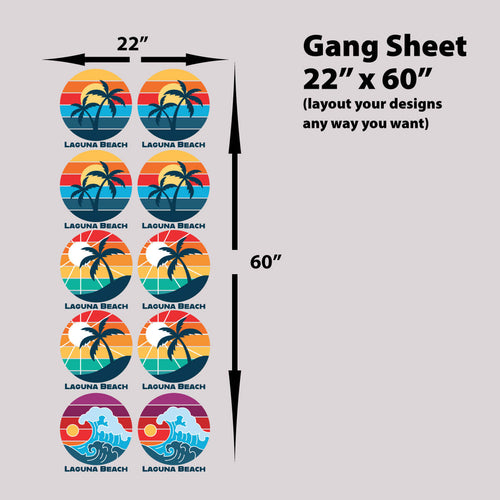
For DTF users handling gang sheets, layout matters even more. One verified industry claim notes that integration of heat press stands with DTF-specific workflows is undercovered, even though the DTF market grew 25% in 2025, and that handling large gang sheets may require layouts that accommodate sheets up to 24x36", enabling quick swaps and potentially boosting efficiency by up to 2x when the station is organized for that use case (Heat Press Nation collection reference).
Level the stand before you press anything
Assembly isn’t done when the bolts are tight. It’s done when the stand sits flat and the press base is fully supported.
If the floor is uneven, compensate for that before production starts. A tiny amount of rocking can create a surprising amount of irritation during repeated presses. It also makes alignment feel less trustworthy, which slows operators down even when the actual settings are correct.
Check these before your first job:
- The stand doesn’t rock corner to corner.
- The caster locks fully engage if wheels are installed.
- The press base sits flat with no unsupported edge.
- The lower shelf load is balanced, not stacked to one side.
Give gang sheets a place to land
Disorganization often plagues many stations. Users have room for the press, but nowhere for film.
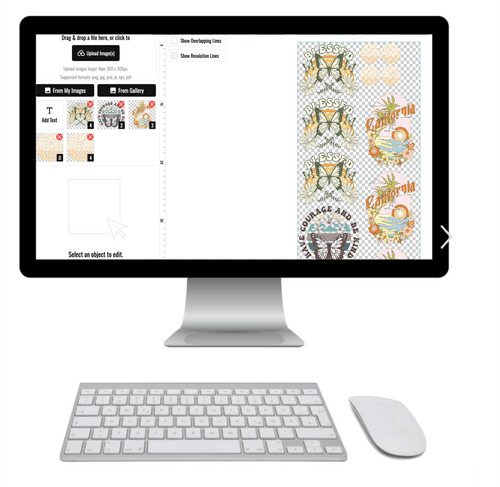
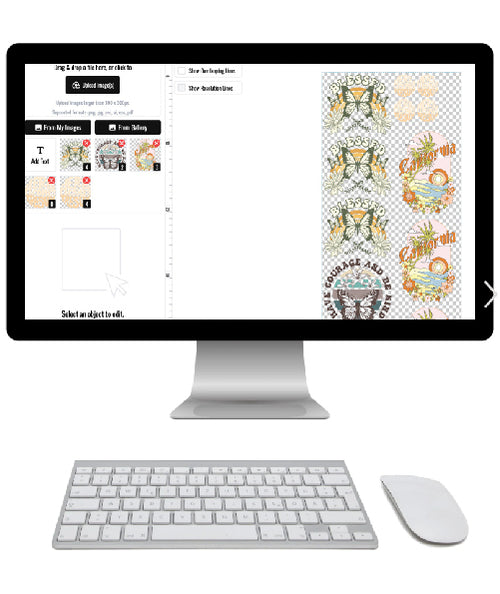
If you’re using an Auto-build gang sheet builder because it’s fast and cost-effective, plan your station to match that production style. Gang sheets save money and reduce setup friction, but they also create larger working pieces that need clean handling. Don’t force them onto a tiny side stool or a dusty shelf.
A practical setup includes one nearby flat surface where gang sheet sections can rest while you trim, sort, and stage transfers. The stand remains the press platform. The adjacent surface supports the pace of the job.
Here’s a good visual example of station flow in action:
Small changes that improve throughput
You don’t need a giant shop to press efficiently. You need less wasted motion.
Try this arrangement:
| Area | Placement idea | What it prevents |
|---|---|---|
| Blanks | Non-dominant side | Reaching across the hot platen |
| Transfers | Slightly forward and to your dominant side | Twisting while aligning |
| Finished pile | Behind or opposite the blank stack | Mixing decorated and undecorated garments |
Keep the stand for the press, not for overflow. The moment the top area becomes storage, loading and unloading gets slower and less safe.
A clean DTF station feels boring in the best way. Same motions, same reach points, same handoff every cycle. That’s what turns pressing from effort into rhythm.
Essential Safety and Maintenance for Your Pressing Station
The shops that stay productive for years usually look calm. That isn’t luck. It comes from routines that protect the operator and the equipment at the same time.
Safety around a heat press stand isn’t separate from quality control. If the operator is overreaching, stepping around cables, or bracing a shaky station with one foot, mistakes become much more likely.
Ergonomics protects output, not just your body
A common reason operators get sore isn’t the heat press itself. It’s the repeated body position the setup forces on them.
One verified ergonomic claim is worth paying attention to: adjustable-height workstations can reduce the risk of repetitive strain injuries by 40-60%, and over 70% of manual press users report shoulder fatigue (Freesub guide reference). That’s exactly why stand height deserves serious attention in any small shop.
A few habits help immediately:
- Stand square to the press instead of reaching from an angle.
- Keep elbows close when loading and peeling.
- Set staging surfaces nearby so you’re not twisting with hot garments.
- Take short resets during long runs, especially with manual swing-away presses.
Heat and electrical safety are shop habits
Most press injuries don’t come from dramatic failures. They come from routine shortcuts.
Keep the hot area clear. Don’t let extra sheets, tape rolls, or shipping supplies creep onto the stand. Route the cord where nobody drags a foot through it. If the stand is mobile, make sure movement doesn’t pinch or pull the cable path.
Use the station the same way every day. Predictability is a safety feature.
A clean pressing station isn’t about appearance. It gives your hands and feet fewer chances to make the wrong move around a hot machine.
If you also want a simple maintenance reference for the press itself, this walkthrough on how to clean a heat press is useful.
The maintenance checks that actually matter
You don’t need a long checklist. You need a short one that gets done.
Weekly checks
- Tighten hardware: Vibration and repeated opening cycles can loosen fasteners.
- Check caster locks: If a wheel lock slips, the whole station feels worse.
- Wipe the stand surface: Dust, adhesive debris, and shirt fibers build up fast.
Monthly checks
- Inspect for frame sway: Push lightly at the corners and feel for looseness.
- Review shelf loading: Remove tools or stacks that made their way into bad positions.
- Look at the floor contact points: Uneven wear can change stability over time.
Anytime you move the stand
- Recheck level.
- Recheck wheel locks.
- Recheck cable routing.
Maintenance for the press is usually performed only after an issue is perceived. The stand deserves the same attention. It supports heat, force, and repetition all day. That’s real work.
The Best Heat Press Stand for Your Business Type
The best stand for a home hobbyist would frustrate a growing shop. The best stand for a mobile seller might be a terrible fit for a garage production room. Match the stand to the business model, not to the prettiest product photo.

The buyer pool for manual presses is large. The global heat press machine market was valued at USD 638.1 million in 2022, and the manual heat press segment held over 52.0% of market share. The same verified source states that 80% of small custom apparel businesses start with a manual press, which is why stand choice is such a foundational decision early on (heat press industry statistics summary).
The home hobbyist
This user usually has limited floor space, limited storage, and a setup that may share a room with non-business life.
The right stand here is usually a small mobile cart or compact stand with a clean footprint. Not the flimsiest option. Just one that doesn’t dominate the room.
Good priorities:
- Easy to move
- Simple shelf layout
- Enough rigidity for a smaller manual press
- Safe height without turning the room into a permanent production area
Bad fit: oversized cabinet bases that eat the whole workspace.
A hobbyist often benefits from restraint. Buy enough stand for the press you have now, with a little room to grow, but don’t buy a giant station just because it looks “pro.”
The growing e-commerce shop
This is the operator filling repeat orders, staging blanks, running longer press sessions, and trying to eliminate wasted motion.
The right answer is usually a dedicated cabinet or heavy mobile production stand. Stability and organization matter more here than compact storage.
This business type should care about:
| Need | Best stand trait |
|---|---|
| Repeatable alignment | Rigid frame |
| Faster turnaround | Dedicated station layout |
| Less setup time | Built-in tool and supply storage |
| Better operator endurance | Proper working height |
This is also where workflow around gang sheets becomes more important. If your order mix includes multiple logos, left chest placements, back prints, or youth and adult size runs, a stand has to support that pace. The station should make sorting and pressing feel deliberate, not improvised.
The mobile event vendor
Live pressing and on-site personalization create a different problem. Portability matters a lot, but not at the cost of safety. The stand still has to feel trustworthy when the crowd is watching and the schedule is tight.
The best match is often a strong mobile cart with locking wheels and a simple profile. Avoid anything too bulky to transport or too delicate to feel planted on an unfamiliar floor.
What matters most for this user:
- Fast setup
- Reliable locks
- Manageable transport
- Minimal pieces to assemble and reassemble
Storage is less important than packability. Mobility doesn’t excuse instability, though. If the stand flexes at an event, every press cycle feels slower because the operator loses confidence.
Buy the stand for the way you work on your busiest day, not the way your setup looks on a quiet afternoon.
A quick final match guide
If you press occasionally in a shared space, stay compact.
If pressing is part of your daily revenue, go heavier and more permanent.
If you travel with the setup, prioritize mobility with real locking support.
That’s the practical filter. It keeps you from overbuying decorative features or underbuying the support your press needs.
Investing in a Stand Is Investing in Your Business
The stand is easy to postpone because the press feels like the main purchase. In daily use, that logic falls apart.
A purpose-built heat press stand affects the things that decide whether a setup feels professional. Stable pressure. Cleaner handling. Better body position. Less wasted movement. Fewer avoidable frustrations around a hot, heavy machine.
It also changes how you grow. A good stand gives your press a fixed role inside a repeatable workstation. That’s what lets you move from occasional projects to reliable production without rebuilding your process every week.
The smart buy usually isn’t the cheapest option or the biggest cabinet. It’s the stand that matches your press style, your room, your workload, and the way you move during a run.
If you’re setting up for DTF, think bigger than the stand itself. Build the whole station around flow. Keep blanks in one place, transfers in another, and the hot zone clean. If you’re planning gang sheets, a cost-effective Auto-build gang sheet builder makes even more sense when the press station is organized enough to handle those jobs efficiently.
A better stand won’t make you a better printer by itself. It will remove a lot of the problems that keep good operators from working at their best.
Frequently Asked Questions About Heat Press Stands
Can I use a DIY bench instead of a heat press stand
Yes, if it’s rigid, level, properly sized, and built for the press weight and operating force. In practice, many DIY benches are too tall, too shallow, or too weak at the joints. If you build one, treat it like shop equipment, not furniture.
Do small craft presses need a dedicated stand
Not always. Smaller presses can work on a strong worktable if the height is right and the surface stays stable. Once you start pressing often, a dedicated station still helps with safety and organization.
Are wheels worth it on a heat press stand
Usually, yes. Wheels help with cleaning, layout changes, and shared spaces. The key is strong locking casters. A rolling stand without dependable locks becomes annoying fast.
What should stay on the stand and what should stay off
Keep pressing essentials nearby. That includes cover sheets, basic tools, and items you use every run. Don’t turn the stand into general storage. Extra clutter around a hot press slows you down and creates risk.
Is a lower shelf always useful
Only if it doesn’t interfere with your stance or become a pile of unused supplies. Good storage supports workflow. Bad storage attracts clutter.
A well-built pressing station makes every transfer easier to place, press, and repeat. If you’re ready to pair that setup with fast, professional-quality transfers, explore Lion DTF Transfers. Their gang sheets, hot-peel DTF transfers, and Auto-build gang sheet builder make it easier to keep costs under control while running a cleaner, faster workflow.