



A Friday deadline has a way of stripping away theory. The team needs jerseys, the merch drop is already announced, or the client just approved artwork after lunch, and suddenly DTF Oklahoma City stops being a search phrase and becomes a race against bad files, slow shipping, and avoidable reprints. In a market as large and varied as Oklahoma City, the key question isn't whether DTF works, it's whether you can get the right transfers fast enough, with enough consistency, at a total cost that still makes sense.
Why Oklahoma City Businesses Choose DTF Transfers
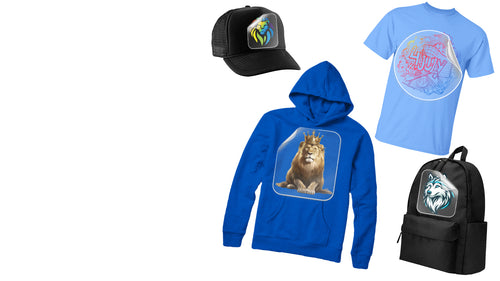
A local coach gets a roster change on Wednesday and needs names and numbers on 50 jerseys by Friday. An Etsy seller wakes up to a bulk order and needs transfers before the weekend market. Those aren't edge cases in Oklahoma City, they're the normal kind of pressure that pushes buyers toward DTF transfers because they handle short runs, full color, and mixed garment needs without forcing a big setup investment.
The city's economy helps explain why this matters. Oklahoma City is a large, diversified metro with major industries in oil and gas, aviation, shared services, and health care according to Greater Oklahoma City Economic Development, and it spans a broad market footprint with a reported 621 square miles of land area and a population of 681,054 on that same facts page. That kind of spread creates lots of small, time-sensitive orders, not just a few oversized industrial ones.
Where DTF beats the usual alternatives
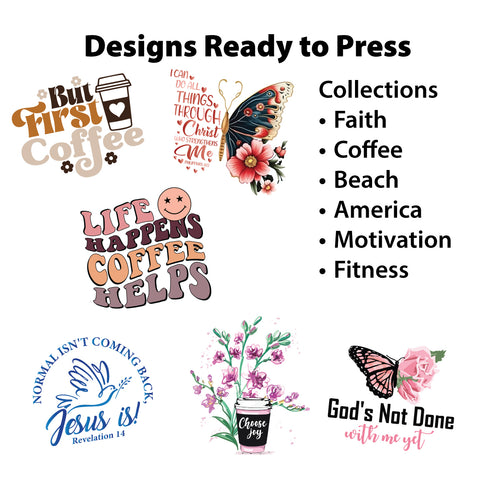
DTF earns its place when the order is too small for screen printing to feel efficient, too varied for a single decoration method, or too fast for a longer production setup. It also handles full-color art without asking you to simplify the design just to fit the process. For apparel sellers, school spirit wear, and promo teams, that flexibility usually matters more than chasing the lowest per-piece line item.
Practical rule: If the order is varied, rushed, and likely to repeat in different sizes, DTF usually fits the workflow better than methods that depend on heavier setup.
That's why DTF shows up so often in local production conversations around school gear, event merch, and custom brand runs. It's not trying to replace every decoration method. It's solving the jobs that need speed, detail, and moderate volume without a lot of prep overhead.
Understanding DTF Technology and Print Quality
DTF works like a high-precision inkjet system that prints onto film instead of paper, then turns that film into a transfer you can press onto fabric. The process is simple to describe and unforgiving to do badly. If the file is weak, the color management is sloppy, or the curing is rushed, the transfer will show it immediately on press.
A useful benchmark comes from independent production guidance, which recommends a minimum of 300 DPI for basic logos and text, and 1440 DPI or higher for detailed artwork, with typical throughput between 10 and 25 square meters per hour depending on mode and resolution MTU Tech's DTF printer specification guidance. That trade-off matters in Oklahoma City because same-day work often forces a choice between sharper detail and faster output. If a shop promises quick turnaround but can't explain where resolution drops, the buyer is the one who absorbs the risk.

What hot-peel changes in real production
Hot-peel workflows are popular because they remove a little friction from the shop floor. The transfer can move from press to peel without waiting through a colder release step, which can help keep the line moving when the order queue is stacked. That doesn't mean the result is automatic, because heat, pressure, and dwell still have to be right, but it does mean fewer unnecessary pauses.
Color quality is the other half of the equation. Good DTF production uses consistent color handling so repeat orders don't drift from one run to the next. If you're printing uniforms, brand merch, or event shirts that need to match across multiple drops, that consistency is worth more than a cheap transfer that looks fine only on the first sheet. For deeper quality tuning, the practical guidance in this print-quality improvement guide is worth a close read.
Maximizing Value with the Auto-Build Gang Sheet Builder
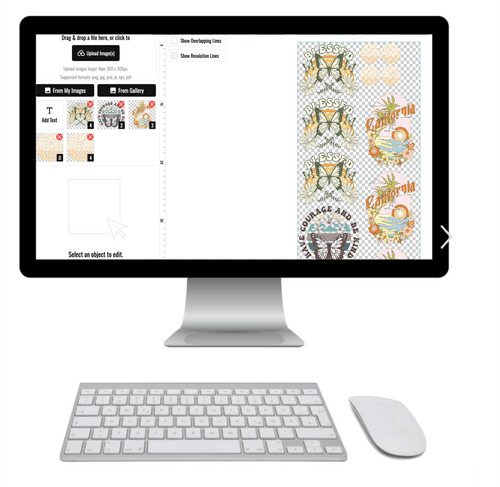
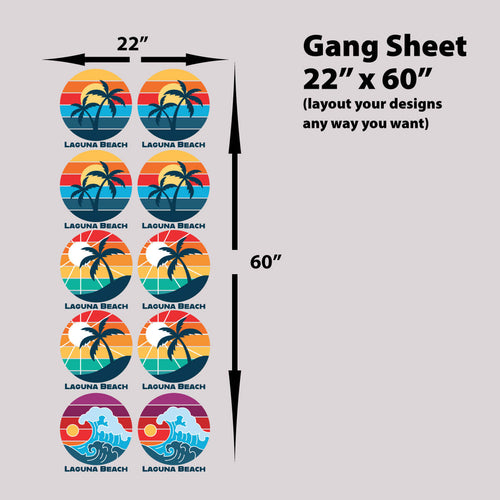
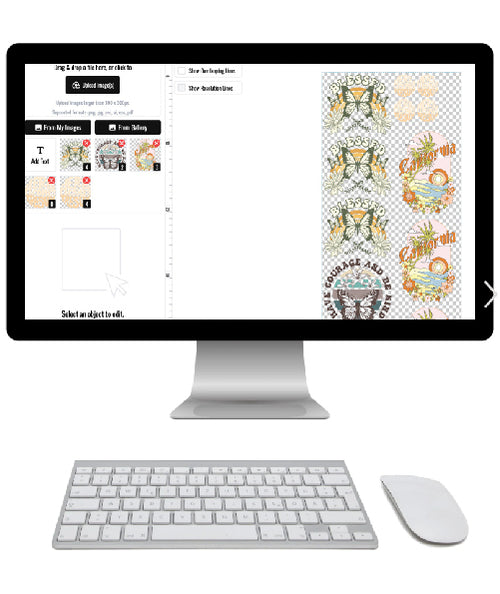
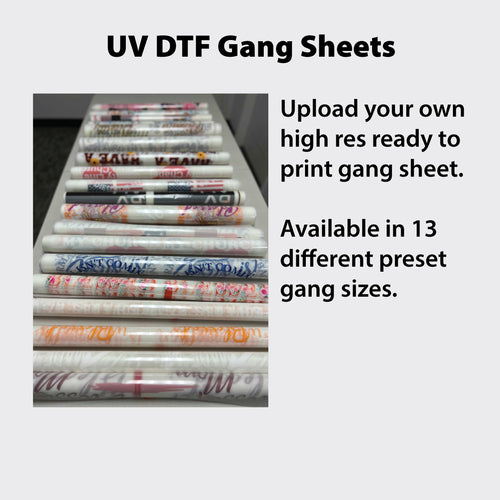
The fastest way to waste money on DTF is to treat every artwork file like a separate project. That creates dead space, extra handling, and more opportunities for layout mistakes. A better workflow uses the Auto-build gang sheet builder, which arranges multiple graphics on a sheet so you're buying usable print area instead of paying for empty margins.

A corporate event is the cleanest example. Say a buyer uploads twelve logo variations in different sizes, plus a few shirt fronts and sleeve marks. Manual layout takes time and invites mistakes. The auto-builder can stack, nest, and space those pieces more efficiently, which makes small orders feel much more economical and reduces the back-and-forth that usually slows proofing.
That's especially useful when buyers are trying to keep the cost per sheet lean. Lion DTF Transfers lists gang sheets at prices as low as $0.017 per square inch in its product information, and that pricing only works in practice when the layout tool is doing its job. The big win is not just lower spend, it's less operator time spent dragging graphics around one by one.
Good file prep saves money twice. Clean PNGs, transparent backgrounds, and correctly sized artwork help the builder do its best work, and they also reduce the chance of a proof correction that costs you a day.
If you want a tighter workflow, the internal guide on how to use the DTF gang sheet builder is the right starting point. For buyers who want fewer clicks, Lion DTF Transfers also offers an Auto-build gang sheet builder that removes most of the layout tedium and keeps mixed-size orders easy to place.
Local Pickup Versus Shipping for Oklahoma City Orders
Some buyers in Oklahoma City really do need transfers in hand. Others think they do, but a short shipping window would've solved the problem with less driving and less coordination. The right choice depends on the order size, the deadline, and whether you need to inspect the transfers before you press them.
When pickup is the smarter move
Same day printing with overnight shipping wins when the order is urgent, when you want to catch an error before it hits a shirt, or when shipping would add delay for no real gain. It also makes sense for small runs where the buyer already knows the artwork is right and just wants the transfers quickly.
A local Reddit discussion on DTF printing in OKC points to the same basic gap in the market, buyers often want a clear rule for turnaround, pickup radius, and file-prep reliability rather than another glossy landing page about speed. That's why pickup instructions matter. If you're collecting an order, use the shop's pickup process and timing carefully, including the details in these pickup instructions.
When shipping makes more sense
Shipping is usually the better call when the order isn't urgent, the buyer is outside the immediate metro, or the production schedule matters more than the drive time. It also helps when the order is going straight to a decorator, fulfillment partner, or second location. In those cases, the main cost driver is usually not postage alone, it's whether the order arrives clean, complete, and on time.
Keep the decision simple. If you need to press today or tomorrow, pickup deserves a hard look. If the job can wait and the drop-off point is out of your way, shipping usually removes more friction than it creates.
Real Oklahoma City Use Cases and Success Stories
DTF fits Oklahoma City because the city's apparel demand is fragmented. You've got sports teams needing names and numbers, schools ordering spirit wear for games and fundraisers, small businesses wanting branded shirts for staff, and e-commerce sellers fulfilling one-off or short-run merch. That's a different pattern from a huge uniform contract, and DTF handles it without forcing a shop to reset the whole production line for each order.
A youth baseball coach might need matching jerseys with player names on the back and a logo on the chest. A school club might need a small spirit-wear drop for a pep rally and another batch a month later for a tournament. A local café might want shirts for staff and a separate run of customer merch, each with different artwork but the same brand look.
Short-run orders are where DTF earns trust
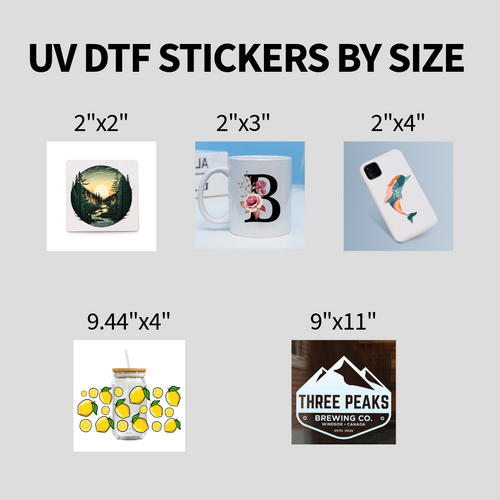
The same logic applies to event organizers and promotional teams. When the print run is limited and the deadline is tight, a method built for fast setup and full color usually makes more sense than a slower decoration process that's optimized for larger runs. UV DTF stickers extend that usefulness to hard surfaces like water bottles, coolers, cases, and equipment, which gives Oklahoma City buyers a second way to cover branded items without changing the whole production plan.
That shift toward short-run, event-driven, and on-demand work is exactly the gap many local pages miss. The broader Oklahoma DTF discussion points to creator merch, school customization, and same-week promo printing as the primary demand drivers, not just generic transfer sales DTF in Oklahoma City and short-run apparel demand.
Why the market keeps leaning this way
The important detail is not that every customer needs the same thing. It's that Oklahoma City buyers keep showing up with mixed orders, mixed deadlines, and mixed fabric needs. DTF is useful because it adapts to that mess without making the buyer choose between quality and speed every single time.
Ordering Workflow and Turnaround Expectations
A clean order usually follows the same path. The customer uploads the artwork, the sheet is auto-built or checked, the proof gets approved, and the transfers move into print and preparation. That sounds simple, but it only stays simple when the files are clean and the buyer responds quickly to proof questions.

What slows an order down
The biggest delay isn't usually the printer. It's the artwork. Low-resolution files, missing transparent backgrounds, and mismatched sizes force corrections, and every correction adds time. That's why the file upload stage matters so much more than most buyers expect.
What a realistic timeline looks like
Lion DTF Transfers lists 24-hour printing, 1 to 2 business day shipping, and same-day pickup options for the Tennessee and California offices, which sets a practical baseline for buyers planning around launch dates and events. The key is that “fast” only stays fast when the order is ready to move. If a rush job needs redesign work, the clock starts stretching immediately.
Practical rule: Rush service works best when the file is final, the garment count is final, and the pickup or shipping decision is final. Unfinished details are what break deadlines.
Use the auto-builder when you've got multiple logos or sizes. Use the proof carefully when you're checking placement, not just color. And if you're trying to hit a narrow deadline, send the order early in the day instead of assuming the shop can absorb a last-minute surprise without consequences.
Common Questions About DTF Services in Oklahoma City
The first question is always about speed, but the smarter question is about risk. A rushed ship date only helps if the file is ready and the proof is approved quickly, while local pickup helps most when you need to inspect the transfers before pressing. Buyers should compare the full path, not just the promised turnaround.
Another common concern is order size. Local pickup usually starts making sense when time matters more than convenience and when the buyer wants direct control over the handoff. For tiny one-off jobs, shipping can be easier. For larger, multi-artwork jobs, the right call depends on whether the layout is organized enough to avoid proof delays.
Color consistency and wash durability matter too. Ask how the transfers are color-managed, how the artwork is prepared, and what happens if a file prints differently than expected. A cheap sheet that fails on press or looks off on garment is more expensive than a cleaner, better-managed order.
The safest approach is simple. Compare turnaround times, check the file first, and choose the pickup or shipping option that lowers the chance of a mistake.
Lion DTF Transfers works well for Oklahoma City buyers who need DTF transfers, gang sheets, and UV DTF stickers without turning a simple order into a production headache. If you need same day shipping, 24-hour printing, or an easier way to build mixed-size sheets, visit Lion DTF Transfers and compare the order flow to your next deadline.