



You've got a design in your head, maybe a logo on your laptop, and a deadline that feels closer than it should. This is a common starting point for custom T shirts online. The hard part isn't coming up with the idea. The hard part is making the first order come out looking like a product you'd sell, wear, or hand to a customer without apologizing for it.
Most guides stop at “upload your file and check out.” That's not enough. A shirt can fail long before it reaches the press. Wrong fabric, weak artwork, the wrong print method, wasted sheet space, bad pressing. Those are the mistakes that eat your margin and your time.
The opportunity is real. The global custom t-shirt printing market was valued at USD 5.16 billion in 2024 and is projected to reach USD 9.82 billion by 2030, with a projected 11.5% CAGR from 2025 to 2030, according to Grand View Research's custom t-shirt printing market analysis. More brands, creators, schools, and event teams are buying personalized apparel. That means more demand, but it also means buyers notice quality faster.
From Idea to Apparel Your Starting Point
You have a design mocked up on your laptop, a launch date on the calendar, and a shirt in your cart. That feels like progress. In print production, it is still the risky part.
First orders usually go wrong before checkout. I see the same pattern over and over. The artwork was built for social media instead of print, the shirt choice was made on price alone, and the design was ordered at a quantity that made testing more expensive than it needed to be. None of those mistakes look obvious on a product page. All of them show up once the order is in motion.
A new brand can have a strong logo, a solid front graphic, and a clear audience, then still end up with a shirt that feels off because the pre-production calls were made in the wrong order. Start by defining the job the shirt needs to do. Is it retail merch, an event giveaway, staff apparel, or a sample run to test demand? That answer affects everything after it, especially fabric, print method, and how much detail the artwork can carry.
If the design is still rough, clean that up before you buy blanks or compare print options. A better concept usually prints better, scales better across placements, and wastes less money in revisions. This guide on what makes a good T-shirt design is a useful place to tighten the idea before you send files to production.
Good apparel starts before the press. Most bad orders were predictable.
The actual advantage for a new seller is not ordering faster. It is setting up the file, garment, and print plan so the first run looks intentional and can be repeated without guesswork. That is how you avoid paying twice for the same lesson.
Choosing the Right Shirt and Print Method
The shirt is your canvas, but not all canvases behave the same. Fabric changes how ink sits, how color reads, how soft the print feels, and how the shirt wears after repeated washing.
Start with the blank shirt
A basic fabric choice affects nearly everything after it.
| Shirt type | What it does well | Where it can trip you up |
|---|---|---|
| Cotton | Soft hand feel, easy everyday wear, strong choice for many graphic prints | Can shrink or change feel depending on garment quality |
| Polyester | Durable, moisture-friendly, common for athletic wear | Some print styles and visual expectations differ from cotton |
| Blends | Balance of softness and durability | Results vary by fabric ratio and garment finish |

If you're selling lifestyle merch, cotton or a soft blend usually gives the feel people expect. If you're printing for workouts, outdoor use, or uniforms, polyester and performance blends often make more sense. Match the shirt to the use case first, then choose the print process that works with it.
Compare the big three honestly
Most buyers end up deciding between DTF, DTG, and screen printing.
- DTF works across a wide range of fabrics and handles detailed, colorful artwork well. It's a strong fit for mixed garment types, names, left chest logos, sleeve hits, and small-batch runs.
- DTG can be a smart option for photo-style art on suitable garments, especially when you want a direct print look on cotton-based apparel.
- Screen printing still makes sense when the design is simple and the quantity is high enough to spread setup costs.
For small custom orders under 24 units, digital methods such as DTG and DTF are typically the most cost-efficient because they remove screen setup costs. Screen printing usually becomes economically advantageous at about 24 units or more of the same design, according to Dataintelo's custom t-shirt printing market report summary.
That break point matters. If you're testing a design, outfitting a small event crew, or running multiple graphics in low quantity, screen printing can look cheaper at first glance and still cost more once setup, minimums, and remake risk enter the picture.
Match the method to the job
A quick way to understand it:
- Need 1 to 20 shirts fast? DTF or DTG usually makes more sense.
- Need broad fabric compatibility? DTF is often easier to work into real-world mixed orders.
- Need one simple design in volume? Screen printing deserves a real quote.
- Need detailed art with many colors? Digital methods remove a lot of friction.
For a fuller breakdown of process differences, this overview of different types of T-shirt printing is useful before you order.
Practical rule: Don't pick a print method by habit. Pick it by quantity, fabric, artwork style, and deadline.
Preparing Flawless Artwork for Printing
First orders often go sideways: The file looked sharp on a phone or laptop, so the buyer assumed it was ready. Then the print comes out fuzzy, the edge looks dirty, the colors feel off, or the background box shows up around the art.
A major pain point for online t-shirt buyers is the gap between ordering and reality, often caused by artwork issues. Most guides show how to place an order but not how to prepare artwork correctly, leading to failed prints, as noted in this artwork preparation tutorial on YouTube.

What a print-ready file actually needs
You don't need to be a designer, but you do need to check a few technical basics before sending art to production.
- High resolution matters because the printer can't invent detail that isn't in the file.
- Transparent backgrounds matter because that white or colored box behind the artwork won't magically disappear.
- Correct dimensions matter because a social media graphic often isn't sized for a full front print.
- Clean edges matter because rough cutouts show immediately on apparel.
- Outlined fonts matter because missing fonts can change the design when the file is opened elsewhere.
The safest file types depend on the artwork. Vector files are usually the cleanest option for logos, type, and simple graphics because they scale without losing edge quality. Raster files can still work well when they're exported at strong resolution and built at the final print size.
If you need a plain-language breakdown, this guide on what file format is best for printing covers the common file types buyers run into.
The mistakes that waste the most money
Buyers usually don't lose money because the design idea was weak. They lose money because the file wasn't prepared for a shirt.
Here are the common misses I'd watch for first:
-
Internet images pulled from search results
They often look fine on screen and fall apart in print. Most are too small, compressed, or already full of artifacts. -
Artwork built in RGB and judged on a bright screen
Print and screen don't behave the same way. If color accuracy matters to your brand, check expectations before production. -
Tiny details on textured garments
Thin lines, distressed effects, and miniature text can get muddy fast, especially when the shirt fabric itself adds visual noise. -
Ignoring print placement
A design can be technically clean and still look wrong if it's too high, too low, or too wide for the garment size range.
If your file only looks good when viewed small, it isn't ready yet.
A simple preflight routine
Before you upload, zoom in. Check the edges. Make sure the background is transparent. Verify the final print size. Read every line of text at actual scale. Then ask one practical question: will this still look intentional on fabric, not just on a screen?
For sellers without in-house design help, artwork cleanup, vectorization, and file review can save a lot of remake headaches. That's especially true when one design needs to become a full front print, a sleeve hit, and a small left chest version. Those aren't just resized copies. They usually need adjustment.
Maximizing Value with Gang Sheets
You approve the front graphic, place the order, and then remember you still need a left chest version, two sleeve marks, and a few neck labels. That second order is where small jobs get expensive. Gang sheets help you avoid that mistake by forcing the layout plan before you buy.
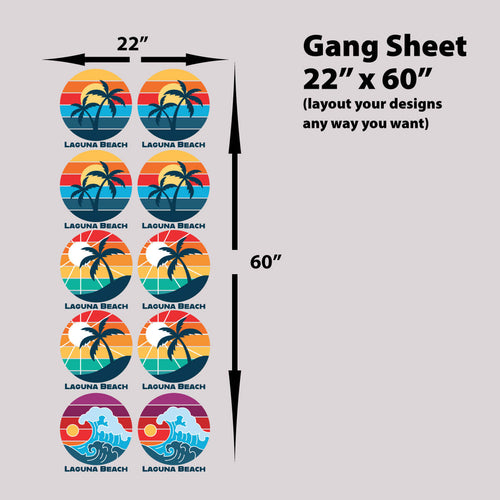
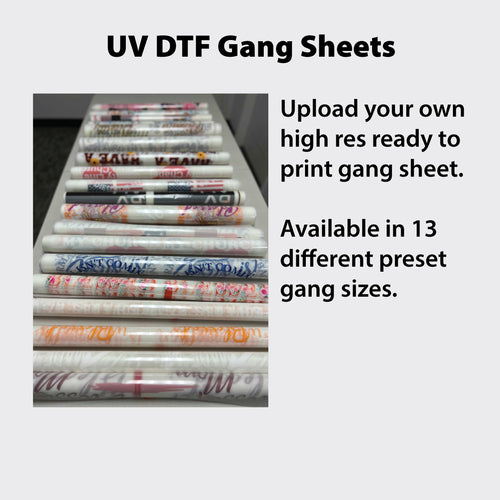
A gang sheet is a larger transfer layout that holds multiple graphics on one sheet. Instead of paying for each placement as its own item, you group the artwork you need and use the printable area with purpose.

Why gang sheets change the math
This matters most on short runs, test launches, event merch, and mixed-size orders. In those jobs, unused sheet area turns into wasted spend fast. Good operators do not look at a design by itself. They look at the full print program for the shirt.
Gang sheets work well when you need:
- Multiple placements such as left chest, full back, sleeve, and inside neck
- Several designs for one drop, staff set, or event
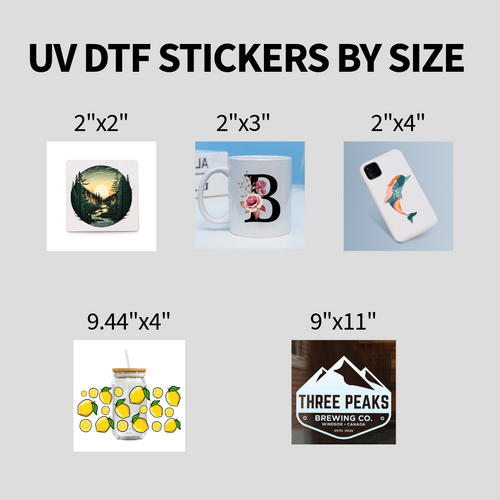
- Different logo sizes for adult, youth, and accessory use
- Small mixed orders where separate setup decisions eat the margin
The trade-off is simple. A badly planned gang sheet can create trimming mistakes, sizing errors, or pieces that are harder to track at press time. A well-planned one lowers cost per usable print and reduces reorders for forgotten parts.
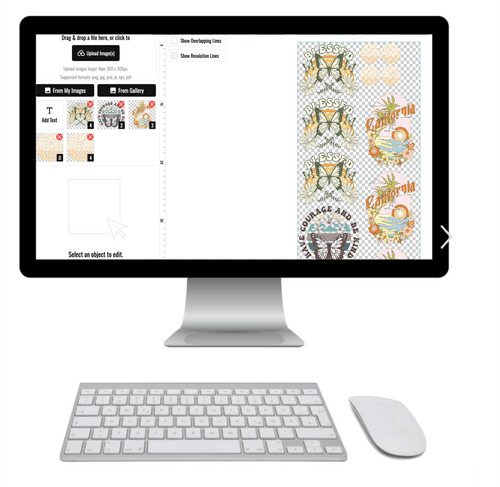
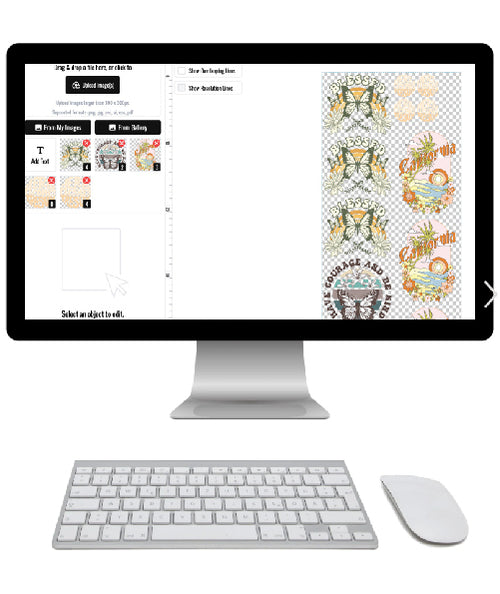
Lion DTF Transfers offers an auto-build gang sheet tool, which is helpful for buyers who do not want to build the layout manually in design software. That can save time, but the tool does not replace judgment. You still need to choose the right print sizes, leave enough cut room, and group pieces in a way your production table can handle.
What belongs on one sheet
The best sheets are built around production use, not just squeezing in as many graphics as possible.
| Good use of sheet space | Why it helps |
|---|---|
| Main chest print plus sleeve logos | Covers the full garment package in one order |
| Neck tags plus brand marks | Useful for private-label finishing and small brand runs |
| Several test designs | Lets you sample ideas before committing to deeper inventory |
| Event names and personalized add-ons | Fits small, varied orders better than separate line items |
One rule from the shop floor. Keep pieces together that will be pressed together. If a front print, sleeve logo, and neck label all belong to the same shirt program, group them with enough space to cut cleanly and identify them quickly. That saves time later and cuts down on grabbing the wrong transfer during production.
A short walkthrough helps if you haven't built one before:
What works and what doesn't
Plan the whole order before you upload. Count every placement. Decide which logos need alternate sizes. Include the small pieces people forget, especially youth prints, inside neck marks, and one-off add-ons for sponsors or staff.
Do not cram artwork edge to edge just to fill every inch. Cutting room matters. Labeling matters. Pressing order matters too.
Small-batch profit comes from layout discipline and fewer remake orders.
For a startup, school organizer, or small shop, gang sheets are not a shortcut. They are a pre-production habit that helps you buy smarter, test more designs, and keep your per-shirt cost under control without over ordering garments or transfers you do not need.
Placing Your Order and Navigating Production
By the time you're ready to order, most of the expensive mistakes should already be behind you. The last stage is mostly about decision discipline. Don't rush here just because the artwork is finally done.
A common but underserved question is how to handle small, personalized, or time-sensitive orders. Many services cater to bulk, but for small businesses and event planners, the challenge is finding a process like DTF that offers durability, speed, and no-minimum ordering without a cost penalty.
Read the price the right way
A lot of buyers compare only the checkout total. That's not enough. You want to know what you're paying for in terms of usable output.
Ask these questions before you place the order:
-
Is the pricing tied to sheet size, design size, or finished garments?
This affects whether combining assets will reduce your cost. -
Are you paying for convenience or for wasted space?
Prebuilt options can be fine, but only if they fit your design mix. -
Will a slightly larger order save hassle later?
Reordering one missing logo or one extra youth shirt is rarely efficient.
Match the turnaround to the real deadline
Not every rush order is a true rush order. Some buyers pay for the fastest path when standard production would've worked. Others choose the cheapest shipping and then panic when an event date is fixed and close.
Use a simple sequence:
-
Lock the in-hand date first
Start from the day you need to press, pack, or hand out the shirts. -
Subtract your own handling time
If you still need to press transfers, sort garments, or package orders, that time counts. -
Choose production speed after that
Fast printing only helps if shipping also matches the timeline.
Your real deadline isn't the day the event starts. It's the day you must have the shirts ready.
Final order checks before you click buy
This is the boring part. It also saves money.
- Confirm garment compatibility with the print method you chose.
- Review every size and placement because placement errors don't fix themselves after production.
- Check duplicate files so you don't order the same graphic twice under different names.
- Label artwork clearly if you're ordering multiple placements or multiple customers' jobs.
- Plan for one extra or two when a deadline matters and blank inventory could become an issue later.
For small brands and event buyers, the best ordering workflow is usually the simplest one. Clear file names, a smart gang sheet, enough lead time, and a method chosen for the actual order size. That beats a flashy design tool every time.
From Transfer to T-Shirt Pressing and Care
A first run can look great on the press table and still come back with lifting edges, scorched fibers, or prints that crack after two washes. That usually points to application, not artwork. Pressing is the last production step, but it decides a lot about how the shirt is judged.

Pressing habits that give cleaner results
Use a real heat press if you have one. An iron can handle a quick personal project, but it rarely gives even pressure across the full design. Uneven pressure causes corners to miss, adhesive to under-cure, and prints to fail in spots instead of all at once.
Start with a shirt that is dry, lint-free, and flat. A short pre-press removes moisture and relaxes wrinkles, which helps the transfer bond to the fabric instead of sitting on top of it.
Then work through the press cycle in order:
-
Pre-press the shirt
Five to ten seconds is usually enough to remove moisture and flatten the print area. -
Set placement with a guide, not your eyes alone
A ruler, collar offset, or platen guide keeps left chest and full front prints consistent across the batch. -
Use the transfer supplier's settings
Temperature, pressure, and dwell time are part of the product. If the supplier says medium pressure and a hot peel, use that. Guessing based on another transfer type is how you waste shirts. -
Peel at the right moment
Hot peel, warm peel, and cold peel each behave differently. Peel too early or too late and you can stretch the print, dull the finish, or leave adhesive behind. -
Finish press if the product calls for it
A short second press with the right cover sheet can improve hand feel and help seat the print cleanly.
One more point that beginners miss. Pressure matters more than extra heat. If a transfer is not bonding, raising the temperature is often the wrong fix. Too much heat can scorch polyester, cause dye migration, or flatten the texture of the shirt. Correct pressure and correct time solve more problems than a hotter press.
Common application mistakes
The same few errors cause most failed shirts:
- Light pressure leaves weak adhesion, especially on larger graphics.
- Shifting the transfer during setup throws off alignment and makes repeat jobs look sloppy.
- Lint, dust, or moisture in the print area interferes with bonding.
- Wrong peel timing distorts the surface or pulls parts of the design back up.
- Using one press recipe for every fabric creates inconsistent results across cotton, blends, and polyester.
I always recommend one test press on the exact blank you plan to use. The actual garment matters. A transfer that behaves perfectly on a ringspun cotton tee may need different handling on a heavy fleece or a performance shirt.
Care instructions worth passing along
Good care instructions reduce avoidable complaints. They also protect the work you already paid to print and press.
Keep the instructions simple:
- Wash inside out
- Use cold or moderate water
- Use mild detergent
- Skip bleach and harsh wash cycles
- Do not iron directly on the print
- Tumble dry low or hang dry if possible
Customers do not need a lecture. They need clear directions that fit on a packing slip, hang tag, or follow-up email.
A shirt with strong artwork and the right print method can still disappoint if the final press is rushed. Clean application and clear care guidance are what turn a transfer into a finished product people will wear again, wash again, and reorder with confidence.
Bringing Your T-Shirt Vision to Life
Ordering custom T shirts online gets easier when you stop treating it like a website task and start treating it like a production workflow. The buyers who get strong results on the first run usually make the same decisions in the same order. They choose the right blank, match the print method to the quantity and fabric, fix the artwork before upload, and use layout tools that reduce waste.
That's the gap in most beginner guides. They show where to click, not how to think. But the quality of the finished shirt is mostly decided before checkout.
If you're launching merch, running school apparel, handling event gear, or feeding jobs into a small print shop, the practical approach is the one that scales. Keep files organized. Build for the actual deadline. Don't overbuy just because a bulk option looks familiar. Use gang sheets when the order mix calls for them. Press carefully. Then give the customer care instructions that protect the product after sale.
That's how a rough idea becomes a shirt you'd reorder with confidence.
If you're ready to turn artwork into finished apparel without wasting time on preventable mistakes, Lion DTF Transfers offers DTF transfers, gang sheet tools, artwork support, and ordering options that fit small tests, repeat merch runs, and deadline-driven jobs.