


You’re probably dealing with one of two problems right now.
Either customers want short-run, full-color apparel and your usual production methods make the job awkward, or you already run a shop and you’re tired of saying “that’s not a good fit for screen printing” every time someone sends a detailed logo, a photo print, or a mixed-fabric order.
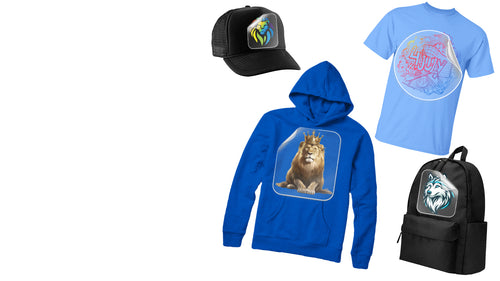
That’s where custom dtf transfers have changed the workflow for a lot of brands, decorators, school programs, and small print businesses. Instead of building a job around screens, color separations, or strict garment limitations, you build the artwork once, order the transfer, and press it where you need it. Cotton tees. Performance blends. Hoodies. Team gear. Event merch.
The reason this category matters now isn’t hype. The global Direct-to-Film market grew from $2.72 billion in 2024 to $2.89 billion in 2025, about 6.25% year over year, according to Images Magazine’s 2025 DTF market report. Shops aren’t adopting it because it sounds new. They’re adopting it because it solves old production headaches.
A lot of new buyers make the same mistake, though. They treat DTF like a magic fix. It isn’t. It’s a very useful production method, but it still depends on clean artwork, correct ordering, and proper pressing. If any one of those is off, results suffer.
Used well, custom dtf transfers give you more control over small runs, rush orders, niche markets, and hybrid shop workflows. Used poorly, they create avoidable reprints.
The End of Print-Run Headaches
Small orders used to be the jobs nobody wanted.
A school booster club needs mixed youth and adult sizes for a weekend event. A local brand wants a dozen test shirts in multiple colors. A team parent needs names, numbers, and a full-color front graphic on performance fabric. Those jobs are common, but traditional methods often make them expensive, slow, or annoying to produce.
Where older workflows start breaking down
Screen printing still makes sense for specific jobs, especially when the artwork is simple and the quantity is high. But once the order gets smaller, the design gets more detailed, or the garments vary, the friction shows up fast.
Common pain points look like this:
- Too much setup for too little volume. Small runs can feel upside down because prep work eats the margin.
- Design complexity becomes a problem. Gradients, photo effects, and multi-color art are harder to price.
- Garment choice gets limited. One job may include cotton tees, poly hoodies, and athletic wear in the same order.
- Rush work gets messy. Tight event deadlines don’t leave much room for back-and-forth.
DTG helps in some of those situations, but dark garments, fabric variability, and production cost can still make it a poor fit for many shops.
Why custom dtf transfers changed the equation
DTF moves the decoration step away from the garment itself. That sounds simple, but operationally it matters a lot.
You can stock blank apparel and decorate as orders come in. You can press the same design onto different garment types without rebuilding the job from scratch. You can say yes to more one-off requests without dragging your whole production schedule behind them.
Practical rule: If the order has complex color, mixed garments, or uncertain quantities, DTF is usually the first method worth pricing.
That’s why custom dtf transfers work so well for modern shops. They reduce the penalties that used to come with short runs and varied orders. For new business owners, that means fewer lost sales. For established print shops, it means fewer jobs you have to decline or outsource awkwardly.
What Are Custom DTF Transfers and How Do They Work
A custom DTF transfer is a printed design built on film first, then pressed onto the garment later. That split matters in a real shop because printing and decorating do not have to happen at the same time.
For a new business owner, that changes how orders move through production. A school booster club can approve one mascot design, then you can apply it across tees, hoodies, and warmups as size counts shift. A local brand can hold transfers for a weekend pop-up instead of tying up garments before sales are confirmed.

The basic build of a transfer
The transfer itself is simple to describe and easy to misunderstand. It starts with PET film, printed artwork, a white underbase, and hot-melt adhesive powder that cures onto the print before pressing.
The order of those layers affects the result on press. White ink gives the design opacity, CMYK builds the visible image, and the adhesive bonds that image to the fabric. If you want a closer material breakdown before placing an order, this guide to what DTF transfers are made of explains the components clearly.
What each layer is doing on the shirt
Each part has a job.
- White ink layer. Keeps color from sinking into dark garments and helps reds, blues, and small details stay true.
- CMYK color layer. Carries the visible design, including gradients, halftones, and fine text.
- Adhesive powder. Melts and bonds the print to the fabric during pressing.
Shops usually notice problems here before they notice them anywhere else. A weak white base makes prints look muddy on black tees. Uneven powder coverage causes edge lift. Poor curing creates transfers that press fine at first, then start failing after wash cycles.
How the process works in production
The workflow is straightforward. Artwork is printed onto film, adhesive powder is applied, the transfer is cured, and the finished sheet is later pressed onto the garment with heat and pressure.
That sounds technical, but the business benefit is practical. You can print ahead for repeat jobs, hold transfers for seasonal rushes, and decorate blanks only when the order is ready to ship. Shops that already run screen print, embroidery, or vinyl often use DTF to fill the gaps those methods leave, especially for mixed-fabric orders, small reorders, and names or numbers that change late.
Why this matters beyond the print itself
DTF is not only a decoration method. It is a scheduling tool.
That is why it fits so many operating models. E-commerce brands can decorate closer to the sale. Print shops can run the same approved art across different garments without rebuilding the order. Schools, leagues, and team dealers can keep core logos ready, then press by roster, season, or event. Makers can buy ready-to-press transfers and skip the cost of running a full print setup from day one.
The process is easy to follow. The profit comes from using it where flexibility, mixed garments, and fast turnaround matter.
Why Choose DTF Over Screen Printing or DTG
A school booster club orders 24 shirts today, adds 12 hoodies tomorrow, then sends a roster change an hour before pickup. That job can be profitable or frustrating, depending on the print method you build it around.
DTF works well because many real orders do not stay fixed for long. Quantities shift. Garment types change. Artwork comes in full color, and the customer still wants a quick turnaround.

Where DTF fits best
For a working shop, the question is usually operational. Which method lets the team quote accurately, keep production under control, and still leave room for margin?
Screen printing still earns its place on long, repeatable runs. DTG can make sense for cotton-focused one-offs and sample work. DTF fills the gap between them, especially when orders are short to mid-sized, artwork is complex, and the blank list includes more than one fabric type.
That matters for shops serving schools, rec leagues, clubs, local brands, and company merch programs. Those buyers rarely order one perfect SKU in one perfect quantity. They order tees, hoodies, staff pieces, fan gear, and late add-ons.
Side-by-side decision points
| Method | Strong fit | Weak fit | What usually works best |
|---|---|---|---|
| DTF | Short and medium runs, detailed art, mixed garments, dark fabrics | Jobs where every order is a large repeat run with stable specs | Team stores, event merch, school spirit wear, names and numbers, test launches |
| Screen printing | Large repeat orders with simpler art | Late changes, small reruns, variable data, many color transitions | Booster sales, staff uniforms, basic logo programs, volume-driven apparel |
| DTG | Cotton garments, one-offs, sample printing | Mixed-fabric jobs, fleece-heavy orders, production built around speed pressing | Online samples, single retail pieces, photo prints on cotton tees |
Where quoting gets easier
DTF removes a lot of friction at the estimating stage.
A customer sends a design with gradients, shadows, thin outlines, and six colors. With screen printing, that often turns into a longer art conversation, more setup math, and a quote that climbs fast. With DTF, the same file is usually easier to price and easier to fit into a mixed-order schedule.
That does not make DTF the automatic winner. If the same two-color logo will run on 500 cotton tees every quarter, screen printing is still hard to beat on unit cost.
Mixed garments are where DTF earns its keep
Many shops add DTF because orders rarely stay on one blank. The front logo may need to go on ringspun tees, athletic polyester, fleece hoodies, and a few tote bags in the same batch.
Running that through one decoration path simplifies production. It also cuts down on avoidable mistakes, because the team is not switching methods every time the garment stack changes.
For schools and teams, this is a strong business case. Keep approved logos ready. Press player names, coach pieces, parent extras, and last-minute replacements as they come in. That shortens reorder time and helps you sell profitable add-ons instead of treating them like interruptions.
Use DTF when the order changes faster than a traditional setup can comfortably keep up.
Durability depends on execution
Customers do not care which print method sounded good in the shop. They care whether the shirt still looks right after repeated wear and washing.
DTF holds up well when the transfer is made correctly and pressed with the right temperature, pressure, and peel timing. Poor application still causes failures. Too little pressure, rushed curing, or inconsistent pressing will show up later as edge lift, cracking, or weak adhesion.
That trade-off matters for a manager building a repeatable process. DTF gives flexibility, but it still rewards disciplined production.
Cost logic for a working shop
The cheapest method on paper is not always the most profitable one on the floor. Labor, setup time, reorder speed, and waste all affect margin.
DTF usually makes strong business sense when:
- Order sizes are unpredictable
- Artwork is full color or detail-heavy
- The same design goes on multiple garment types
- You want to stock blanks and decorate close to ship time
- Names, numbers, or staff titles change late
Shops that already print screen print jobs or run embroidery often use DTF as the method that catches everything awkward but still worth selling. That is where it improves workflow, not by replacing every process, but by covering the orders that usually slow the team down.
If you are comparing the two digital methods more closely, this guide on DTF vs DTG printing gives a useful breakdown for day-to-day shop decisions.
Mastering Your Order The Ultimate Buyers Guide
Ordering custom dtf transfers well is mostly about choosing the right format for the job.
A new buyer often uploads art, picks a size, and checks out. That can work. But it’s not always the smartest buying method. If you run a shop, sell online, or decorate for schools and teams, the ordering format directly affects your margin and your workflow.

Three ways most buyers should order
There are usually three practical paths.
Order by size
This is the simplest route. You’ve got one design, you know where it goes, and you don’t need to combine multiple graphics on one sheet.
This works well for:
- Single-logo chest prints
- Standard front graphics
- Repeat orders with fixed placement
- Fast reorders for the same design
It’s clean and easy, but it can become expensive if you have several small graphics that could have shared one sheet.
Use a gang sheet
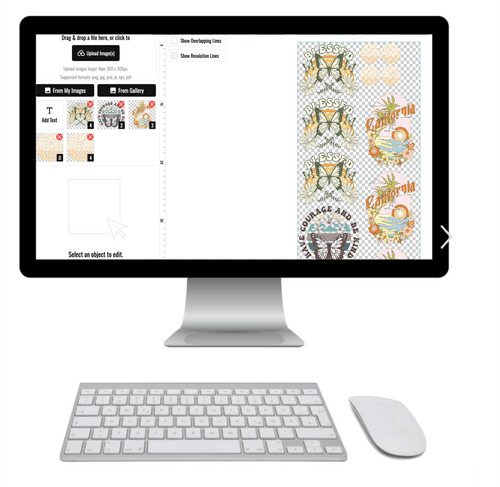
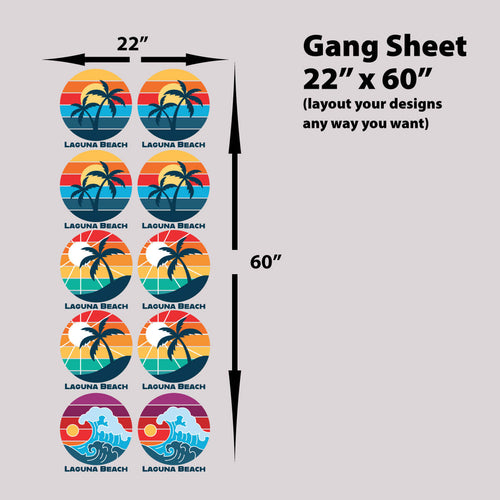
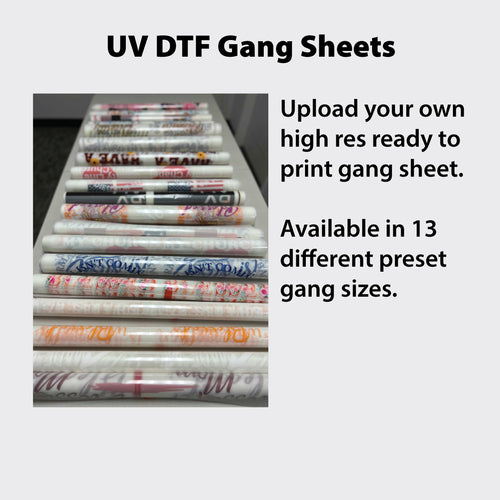
A gang sheet means placing multiple designs, logos, names, or sizes onto one transfer sheet so you use as much printable area as possible.
For shops, this is often the most efficient buying format because it lets you batch work by campaign, client, season, or event.
Good gang sheet use looks like this:
- School programs grouping youth fronts, adult fronts, sleeve logos, and coach names on one build
- Team orders combining sponsor logos, player numbers, and left-chest marks
- E-commerce sellers stacking multiple sizes of a launch design for on-demand pressing
- Promo companies filling sheets with several client logos for a short production window
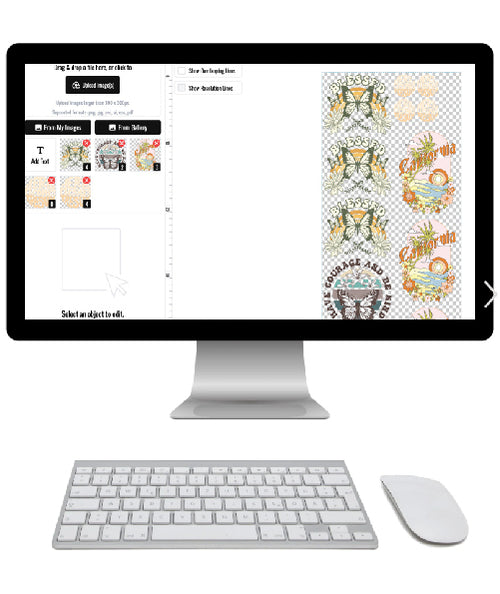
If you’re manually building gang sheets, spacing and layout mistakes can waste film. That’s why an Auto-build gang sheet builder is useful. It arranges designs efficiently, saves time, and reduces the common problem of leaving paid-for sheet space unused.
Why ready-to-press designs matter more than people admit
Not every profitable job starts with custom artwork.
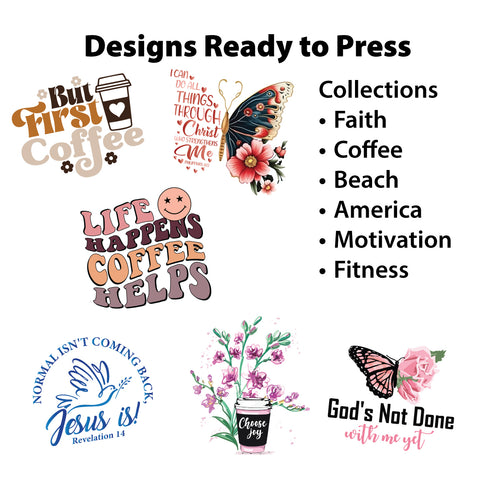
Ready-to-press collections are useful when you need fast-selling seasonal or niche graphics without waiting on design development. That’s especially relevant for craft sellers, school fundraisers, holiday pop-ups, and trend-based shops.
Commercial demand in that category is real. Top suppliers have reported annual sales volumes exceeding 1,000,000 units for trending DTF designs in themes like faith, pets, and seasonal holidays, according to Accio’s roundup of best-selling ready-to-press DTF prints.
That tells you something practical. Buyers don’t only want custom logos. They also buy niche graphics that are already proven to move.
How to choose the right ordering method
Use this quick filter:
| If your job looks like this | Order format that usually makes sense |
|---|---|
| One design, one placement, predictable repeat use | By size |
| Multiple logos, mixed placements, event bundles, names or numbers | Gang sheet |
| Fast trend drops, seasonal inventory, impulse retail graphics | Ready-to-press |
What new businesses usually get wrong
The common mistakes aren’t complicated.
- They order individually when a gang sheet would lower waste
- They upload too many separate files with no naming convention
- They treat a rush order like a design project
- They overlook niche markets that reorder consistently
Schools, sports teams, camps, booster groups, event organizers, and local businesses tend to reorder because their needs repeat. Once you have the logo setup and sizing pattern, the work gets easier.
The easiest profit in DTF often comes from buyers who need the same identity applied across changing garments and changing people.
If you’re deciding where to place an order, this resource on where to buy DTF transfers can help you compare buying approaches. One option many shops use is Lion DTF Transfers, especially when they want custom uploads, by-size ordering, ready-to-press designs, or an Auto-build gang sheet builder in the same workflow.
Preparing Your Artwork for Flawless Prints
Most transfer problems start before the transfer is printed.
Bad art creates bad output. It doesn’t matter how good the film, press, or adhesive is. If the file is soft, poorly sized, or flattened with the wrong background, the finished print will show it.

The one rule you can’t ignore
Artwork for custom dtf transfers needs to be 300 DPI at the actual print size. That isn’t a preference. It’s the baseline for sharp output.
That requirement is explained clearly in this artwork preparation guide for DTF transfers, which notes that lower resolution leads to visible pixelation and blur.
The phrase at the actual print size matters. A web graphic may look fine on your screen, but if it was built for online use and then enlarged for print, it will usually fall apart.
A clean file checklist
Use this before you upload anything:
- Set the final size first. Don’t design small and hope scaling fixes it later.
- Keep the background transparent. If you leave a solid background in place, it can print as an unwanted block around the design.
- Use a suitable file type. PNG is common for transparent raster art. Vector artwork is even better when available.
- Check tiny details. Thin outlines, small text, and glow effects often expose low-resolution issues first.
- Name files clearly. Shops handling gang sheets for schools or teams lose time when uploads are called “final-final-2.png.”
What doesn’t work
A few file habits cause repeat trouble.
Low-resolution logos
A customer pulls a logo from a website, drags it into a gang sheet, and assumes the printer will clean it up. It won’t. Saving a low-quality file at a higher DPI doesn’t restore missing detail.
Flattened art with white boxes
This is common with beginner uploads. The design itself may be fine, but the background wasn’t removed. On press, that box becomes part of the print area.
Tiny text on rough source files
DTF can hold strong detail, but it can’t invent clean edges that aren’t in the file. If text is important, use vector artwork or rebuild it.
Color expectations
Color is where you need practical judgment.
Screen colors are viewed in light. Printed colors live on fabric. Those aren’t the same environment. If a client expects an exact on-screen look from a poor source file, the conversation needs to happen before production, not after pressing.
Support services are particularly helpful here. If you don’t have clean art, a “We Build a Gang Sheet for You” option or vectorization service can save time and reduce costly mistakes. That’s especially useful for schools, community teams, and local businesses that have a logo but not a print-ready file.
A transfer can only print what the file gives it. The press doesn’t fix artwork problems. It locks them in.
The Perfect Press A Step-by-Step Application Guide
A good transfer still needs a good press.
Most application issues come down to three variables. Temperature, time, and pressure. If one is off, the transfer may look acceptable at first and then fail later.
The core pressing sequence
This sequence is dependable for most custom dtf transfers.
- Pre-press the garment Press the blank briefly to remove moisture and flatten the print area. Wrinkles and trapped moisture create uneven adhesion.
- Position the transfer Place the design where it belongs and make sure the garment is lying flat. Crooked placement is still one of the most common production mistakes in new shops.
- Press with the supplier’s settings Follow the transfer’s recommended instructions. Don’t assume every film behaves the same.
- Peel at the correct stage Some transfers are hot peel, some cold peel. Peeling too early or too late can affect the finish and edge quality.
- Second press the garment A short finishing press helps seat the design and improve consistency.
Fabric-specific judgment
Different garments don’t behave the same under heat.
- Cotton usually gives you the widest margin for error.
- Polyester and performance wear need more caution because excess heat can damage or mark the fabric.
- Blends and fleece may need test pressing before a full run.
- Stretch garments benefit from careful pressure and a finishing press to help long-term wear.
If you decorate a lot of team gear or event apparel, run a test press on the actual blank before committing the whole order.
Practical shop habits that improve results
A few habits separate smooth production from constant troubleshooting:
- Keep pressure consistent. Uneven pressure causes partial adhesion and weak edges.
- Use a firm, stable press surface. Soft or inconsistent lower platens create avoidable problems.
- Don’t stack assumptions. New garment, new transfer type, and rush deadline is a bad time to skip testing.
- Let the press do the work. Excessive repressing can create shine, edge marks, or overcooked adhesive.
After-care matters
The press is only part of durability. Garment care matters too.
For best wear, let the print rest before washing. Then wash inside out with mild settings and avoid high-heat abuse. If the user treats decorated apparel like shop rags, no print method performs at its best.
When the transfer quality is good and the application is correct, DTF is known for strong long-term wear, offering excellent durability. That result depends on disciplined pressing and reasonable garment care, not shortcuts.
Troubleshooting Common DTF Transfer Issues
When a transfer fails, people usually blame the transfer first.
Sometimes that’s fair. More often, the issue happened in artwork setup, garment choice, or pressing conditions. The useful mindset is simple. Diagnose the failure point instead of guessing.
Problem and fix guide
The design isn’t sticking fully
Likely cause: Pressure is too light, heat isn’t reaching the full print area, or the garment surface wasn’t pre-pressed.
Fix: Check platen contact, flatten seams away from the image area, and test again on the same blank type. Uneven pressure is especially common on hoodies and textured garments.
The edges look shiny or slightly marked
Likely cause: Too much heat exposure, too much finishing pressure, or peeling at the wrong time.
Fix: Reduce the second press intensity and use a cover sheet if needed. Test peel timing before running the full order.
Colors look weaker than expected
Likely cause: Incomplete adhesion or a file problem that already reduced print quality before production.
Fix: Verify the garment was pressed flat and re-check the source art. If the file was weak, pressing won’t restore vibrancy.
The print cracks or peels after washing
Likely cause: Under-application, low-quality transfer, or poor garment-care habits.
Fix: Revisit press settings and test wash one finished sample before releasing large orders. This matters a lot for activewear, spirit wear, and team uniforms.
Niche jobs need tighter control
Troubleshooting gets more specific when you decorate for schools, sports teams, and youth programs. That’s one reason this area remains underserved. Guidance around youth sizing, activewear durability, and school or team use cases is a frequent pain point, as noted in this DTF niche-market content gap reference.
In practical terms, that means you should watch for:
- Youth print placement that sits too low or too large
- Performance fabrics that react poorly to excess heat
- Team repeat orders where one bad setup mistake gets duplicated across the batch
Most DTF problems are repeatable. That’s good news. Once you identify the underlying cause, you can usually stop the issue from happening again.
Frequently Asked Questions for Makers and Businesses
Can I use a home iron instead of a heat press
You can try, but it’s not a reliable production method.
A home iron doesn’t apply heat and pressure evenly across the transfer area. Small hobby tests may work inconsistently. If you want repeatable results, use a heat press. For business use, that’s the standard.
What is the true cost per shirt using custom dtf transfers
It depends on the transfer size, how efficiently you build the sheet, the garment cost, labor, and whether you’re pressing one design or several.
The most important cost lever is usually layout efficiency. If you’re ordering a lot of small graphics separately, your cost per shirt goes up. If you use gang sheets well, especially with an Auto-build gang sheet builder, your material usage gets tighter and quoting gets easier.
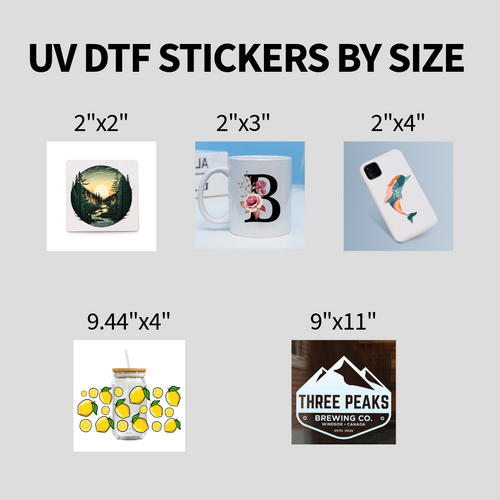
How do UV DTF stickers differ from apparel transfers
They aren’t the same product.
Custom dtf transfers for apparel are made to be heat pressed onto garments. UV DTF stickers are designed for hard surfaces and are applied differently. If someone tries to use apparel transfers like a hard-surface decal, or vice versa, the result won’t be correct.
How can I integrate DTF into my screen printing business
Use DTF where screen printing creates friction, not where screen printing already runs cleanly.
Good hybrid shops usually do something like this:
- Keep screen printing for repeat bulk jobs with simple artwork
- Use DTF for short runs and artwork with heavy color detail
- Reserve embroidery for texture-driven placements like hats or premium left-chest branding
- Use DTF for names, sponsor marks, and test runs before committing a design to larger production
That hybrid approach works because customers don’t buy methods. They buy finished apparel delivered on time. If DTF lets you accept awkward orders without clogging your main production line, it becomes a useful operational tool rather than a replacement for everything else.
If you need custom dtf transfers for single designs, gang sheets, school orders, team gear, or ready-to-press graphics, Lion DTF Transfers offers online ordering, an Auto-build gang sheet builder, artwork support, and production options that fit both new sellers and established print shops.