



You've got a logo, a product idea, or a first merch concept. You also have a browser full of tabs, five printing acronyms, and no clear answer on what to order, what file to send, or what's going to make money instead of creating returns.
That confusion is normal. Custom clothing printing looks simple from the outside, but the result depends on a handful of choices that affect everything downstream: garment type, decoration method, artwork quality, order size, and how you plan to fulfill repeat orders.
It's also not a tiny hobby market. The global custom T-shirt printing market was valued at $5.16 billion in 2024 and is projected to reach $9.82 billion by 2030, implying an 11.5% CAGR from 2025 to 2030. That matters because it tells you this isn't niche craft work anymore. It's a real operating category for brands, schools, creators, events, and e-commerce sellers.
Starting Your Custom Apparel Journey
Individuals often start in the same place. They ask, “What's the best way to print my design?” That sounds like the right question, but it usually isn't.
The better question is, what are you printing, on what garment, in what quantity, and how often will you reorder it? A small run of fashion tees, a team order for performance shirts, and a brand drop with oversized back prints are all “custom apparel,” but they don't belong in the same production lane.
If you're trying to turn an idea into a business, it helps to start with a practical foundation like this guide on how to start a custom t-shirt business. The operational side matters just as much as the artwork.
Start with the business reality
A new entrepreneur usually cares about four things first:
- Unit economics: What does each finished garment cost you?
- Minimum risk: Can you test designs without overcommitting?
- Consistency: Will reorder number two look like reorder number one?
- Scalability: Can the same method still work when demand grows?
Those questions matter more than whichever acronym is trendy this month.
Practical rule: Don't choose a print method because it sounds modern. Choose it because it fits your fabric, design style, order size, and fulfillment model.
The first decision most buyers miss
Buyers often focus on artwork before they've picked the garment. In a print shop, we usually reverse that. Fabric decides a lot. Cotton, polyester, fleece, blended hoodies, and cut-and-sew pieces don't all behave the same under ink, heat, pressure, or thread.
That's why good custom clothing printing starts with a workflow, not a machine. First choose the garment. Then choose the decoration method that fits that garment. Then prepare artwork for that method. Then think about scaling and reorder efficiency.
If you get that sequence right, you avoid the expensive mistakes: blurry files, wrong placements, peeling transfers, muddy colors, and margins that disappear the second you have to reprint an order.
The Five Pillars of Custom Apparel Printing
Small brands usually don't need ten decoration methods. They need to understand the few that affect margin, turnaround time, and reorder quality.

A good shop treats these methods like tools on a bench. The job decides the tool. Order size, fabric, art style, and how often you expect to reorder should drive the choice.
Screen printing
Screen printing uses a mesh screen to push ink onto the garment, one color layer at a time. Each color usually needs its own setup, so the method rewards simple art and larger quantities.
This is still one of the strongest options for bold graphics on cotton tees, staff shirts, event merch, and retail runs where you need the cost per piece to drop as volume rises. The print can look great and last a long time if the shop controls ink deposit, curing, and registration.
The trade-off shows up before production starts. More colors mean more screens, more setup time, and more room for alignment issues. For a 12-piece test run with detailed artwork, screen printing often eats margin. For 300 shirts with a clean two-color chest print, it usually makes financial sense.
Direct-to-garment
DTG prints water-based ink directly onto the garment. It handles detail well, especially gradients, soft shading, and artwork that would be expensive to separate for screens.
DTG fits short runs on cotton and cotton-heavy garments. It works well for sample orders, print-on-demand testing, and brands selling artwork with lots of color variation. The hand feel can be soft on the right blank, which many customers like.
Its limits are practical, not mysterious. Fabric choice is narrower, dark garments often need pretreatment, and production speed is not ideal for bigger orders. If you are comparing DTF vs DTG printing for small runs and mixed fabrics, the deciding factor is usually garment type and how much flexibility you need after the first order.
Direct-to-film
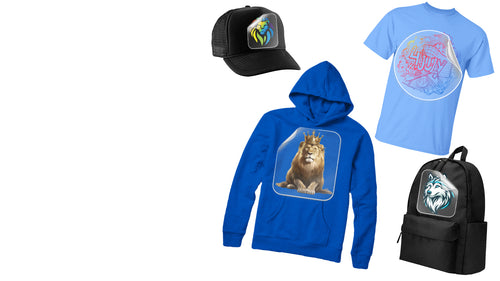
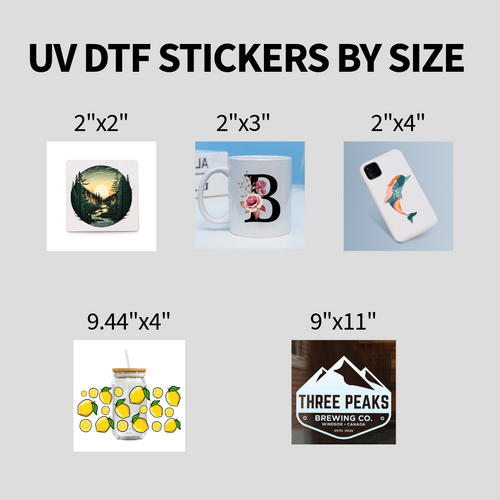
DTF prints the design onto film, applies adhesive powder, then heat presses that transfer onto the garment. For many small brands, this is the easiest method to build a workflow around because it covers so many fabric types without changing the art much.
DTF is strong for left chest logos, full-front prints, sleeve hits, tote bags, hoodies, polyester blends, and short-run brand tests. It handles detail well and avoids some of the garment restrictions that come with DTG. That flexibility matters if your product mix changes month to month.
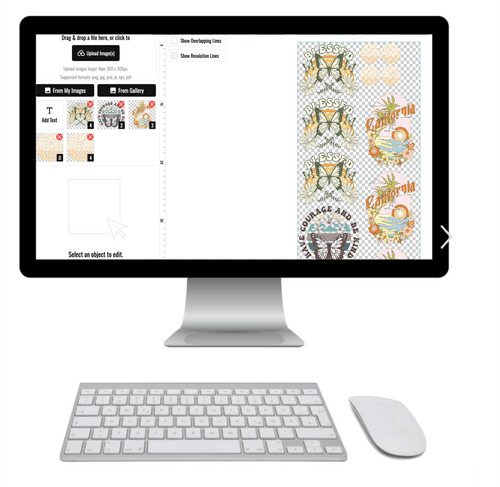
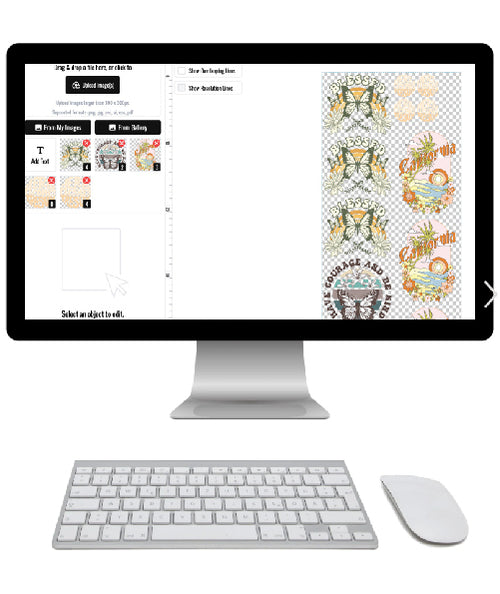
Profitability depends on how you build the sheet. Shops that waste film space cut into margin on every order. An auto-build gang sheet builder helps pack transfers tightly, reduce dead space, and get more sellable prints out of the same run. That sounds like a small operational detail. It is usually the difference between a transfer workflow that scales and one that leaks profit.
Heat transfer vinyl
HTV uses cut vinyl that is pressed onto the garment with heat. It is a practical choice for names, numbers, simple lettering, and one-off personalization.
It starts to slow down once designs get more detailed or quantities rise. Layering multiple colors takes time, weeding adds labor, and the finished look is less suited to brand artwork with fine detail. HTV still earns its spot in sports, school apparel, and custom jobs where each piece needs different text.
Embroidery
Embroidery builds the logo with thread instead of ink. It gives garments texture, dimension, and a more structured finish.
That makes it a strong fit for hats, polos, jackets, uniforms, and corporate apparel. Customers often read embroidery as more premium, especially on heavier garments. The trade-off is design translation. Fine lines, tiny type, and photo-style graphics usually need to be simplified before they sew well.
Sublimation
Sublimation uses heat to bond dye into polyester fibers. The color becomes part of the fabric instead of sitting on top of it.
That makes it excellent for performance wear, team uniforms, and all-over graphics on the right blanks. It also means the method has strict limits. You need polyester or a high-poly surface, and light-colored garments usually work best. If the garment does not fit those conditions, sublimation is the wrong tool no matter how good the artwork looks on screen.
Choosing Your Method A Head-to-Head Comparison
Once you know what each method is, the primary challenge is matching it to the job. At this point, buyers either protect their margin or lose it.
The biggest mistake I see is choosing based on the design alone. A mockup can look perfect on screen and still be the wrong production choice if the garment, quantity, or reorder pattern doesn't match the method.
Printing method dictates fabric compatibility. Screen printing excels on cotton but is less efficient for multi-color art. DTF has become the standard for complex detail on any fabric, including polyester blends, because its hot-peel transfer technology adheres to both natural and synthetic fibers without pre-treatment, unlike DTG.
Custom Printing Method Comparison
| Method | Best For | Durability (Washes) | Feel on Garment | Color Complexity | Cost (Low Volume) | Cost (High Volume) |
|---|---|---|---|---|---|---|
| Screen Printing | Bulk orders with simpler art on cotton | Strong when produced correctly | Ink feel varies by print style | Better for simpler color builds | Usually less favorable because setup matters | Usually strong once volume rises |
| DTG | Small runs on cotton with detailed artwork | Good when matched to the right garment | Often softer on suitable cotton garments | Strong for detailed and photo-style work | Often practical for short runs | Usually less attractive as volume grows |
| DTF | Detailed artwork across many fabric types | Strong when properly applied and cured | Sits on top of fabric more than DTG | Strong for complex, multi-color designs | Often practical for short runs | Often stays competitive because setup is simpler |
| HTV | Names, numbers, simple personalization | Varies with material and application | More noticeable layer on garment | Weak for complex artwork | Fine for select one-offs | Labor can become a bottleneck |
| Embroidery | Premium logos on hats, polos, jackets | Strong on suitable garments | Raised stitched texture | Best for simplified logo work | Often justified for premium placements | Works well when design stays consistent |
What to use when
If you're ordering a large run of cotton shirts with a straightforward logo, screen printing usually makes the most sense. The setup takes work, but once that's done, volume starts helping you.
If you're testing a new design with lots of color and you don't want to commit to a large inventory position, DTF is often the cleaner path. It gives you flexibility across garment types and lets you keep the same art active on tees, hoodies, and blends without rebuilding the whole job.
For cotton tees with highly detailed art in a small batch, DTG can still be a good fit. But don't force DTG onto garments it doesn't like.
A simple decision filter
Ask these questions in order:
- What fabric am I decorating? Cotton, polyester, blends, fleece, or structured headwear all narrow the field.
- How detailed is the art? Fine lines and full-color graphics usually push you away from old-school bulk methods.
- What quantity am I producing now? Not “eventually.” Now.
- Do I expect frequent reorders? A method that works for testing might not be the best for recurring production.
- Will I press in-house or outsource finished garments? That changes your sourcing model.
For a deeper side-by-side on two methods that buyers compare constantly, this breakdown of DTF vs DTG printing is useful.
If your design is complicated but your quantity is uncertain, don't lock yourself into a production method that only gets economical after volume appears.
Preparing Your Designs for Flawless Prints
Bad artwork costs more than bad pressing. If the file is wrong, the press operator can't rescue it.
The cleanest production jobs almost always start with files that were built correctly from the beginning.

The 300 DPI rule
For optimal durability, artwork must be supplied at a minimum resolution of 300 DPI at the final print size. Designs below 150 DPI often show pixelation and may exhibit visible cracking and peeling after only 10 to 20 washes, whereas 300+ DPI inputs can maintain integrity for over 100 washes.
That “at the final print size” part matters. A tiny internet image might look sharp on your phone, then fall apart when someone tries to print it across a chest or back. It's like enlarging a small screenshot into a poster. The information just isn't there.
Vector beats raster when possible
If your design is a logo, line art, text-based mark, or anything with crisp shapes, vector files are the safest option. AI and EPS files scale without losing quality.
Raster files such as PNG or JPG can still work, but they need enough resolution at the exact output size. If you're not sure what your printer wants, this guide on what file format is best for printing helps clarify the difference.
Color mode and background issues
A file can be sharp and still print wrong if the color setup is sloppy. Artwork should be supplied in CMYK or with Pantone references when color accuracy matters. RGB often shifts during printing, especially when fabric color enters the equation.
A few file-prep habits save a lot of pain:
- Use transparent backgrounds: Don't send a white rectangle unless you want a white rectangle printed.
- Convert text carefully: Missing fonts can alter spacing and break logos.
- Check garment contrast: Colors that work on white may disappear on heather gray or sand.
- Size the art intentionally: Don't leave placement decisions to guesswork.
Shop-floor advice: If brand color matters, ask about proofing and Pantone matching before the order is in production, not after the first box lands.
Proofing matters most on brand-critical jobs. Some apparel shops explicitly offer PMS color matching or sample-based matching, and that's an important question for schools, companies, and merch brands that need consistency, as discussed by Perfect Fitz in its custom screen printing information.
A short visual walkthrough can help if you're still sorting out file prep basics.
The Printing Workflow from Order to Unboxing
A first order usually feels simple until the details start stacking up. You need the right blank, the right print method, the right file setup, and a delivery plan that still leaves room for profit. Shops that run well do not treat this as a loose series of tasks. They treat it like a production system.
That matters for a small brand because margin leaks happen in the handoff points. Wrong art size. Poor method choice. Empty space on a transfer sheet you still paid for. A late proof approval that pushes shipping into the next week.
What happens after you upload artwork
A standard workflow usually follows five steps:
- Artwork review: The shop checks size, resolution, transparency, placement, and whether the file is ready to print.
- Method match: The order gets assigned to the print method that fits the artwork, garment, quantity, and budget.
- Layout planning: For transfer orders, designs are arranged on gang sheets to reduce wasted space and keep unit cost under control.
- Production: Transfers are printed, garments are pressed or printed, and the order is checked during the run.
- Packing and delivery: Finished goods are counted, sorted by size or SKU, packed, and shipped or staged for pickup.
The second and third steps decide a lot of your profit.
A good shop does not just ask, "Can we print this?" It asks, "What is the least expensive way to print this without creating problems on press, in packing, or after wash?"

Why gang sheets matter
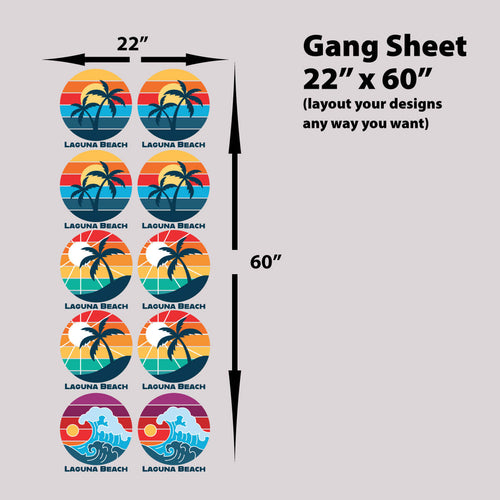
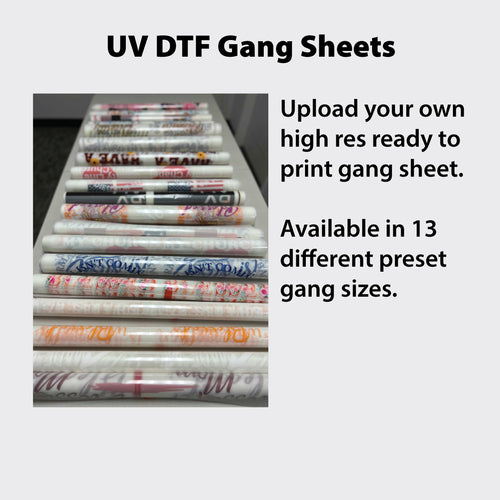
Gang sheets are one of the clearest examples of workflow affecting margin. A gang sheet is a larger sheet that holds multiple prints together, such as left-chest logos, full backs, sleeve hits, neck labels, and name drops.
Used well, it works like loading a delivery truck properly. Every open spot is wasted capacity you already paid for.
For a startup brand, that changes the math fast. A mixed run with youth sizes, adult sizes, and several placements can become expensive if each graphic is ordered separately. Pack those same prints tightly onto one sheet, and the cost per usable print usually drops. That is why an auto-build gang sheet builder is not just a convenience tool. It directly affects quoting, reorder planning, and how much margin survives on short runs.
It also reduces manual errors. If someone on your team is dragging files around by hand, it is easy to miss spacing, duplicate the wrong size, or leave dead space on the sheet. Automated layout tools help standardize that part of the job.
Two ordering paths, two different workload levels
Brands usually buy custom apparel in one of two ways.
The first path is finished goods. You send the art, approve the proof, and receive completed garments. This is the easier model if you do not want equipment, labor, or production headaches. It also gives you less control over last-minute blank swaps, insert packing, or pressing extras later.
The second path is transfers only. You buy the printed transfers, then press them in-house or through a local decorator. This takes more coordination, but it gives you flexibility. You can source blanks based on price or availability, test different garments without reordering printed inventory, and keep backup transfers on hand for small restocks.
Neither path is automatically better. The right one depends on order volume, storage space, labor, and how often your designs change.
If a brand is testing three designs across two shirt styles, transfers often make sense. If a company is ordering 500 uniform shirts and wants them boxed by employee size, finished production is usually the cleaner move.
Where orders usually go wrong
The expensive mistakes are rarely dramatic. They are small misses that pile up.
A customer approves artwork without checking actual print size. A left-chest logo ends up too large. A gang sheet gets built with poor spacing and one design has to be reprinted. Names are submitted in the wrong format, so the shop has to stop production and clean the list. Shipping is chosen before anyone checks whether the proof will be approved the same day.
That is why disciplined intake matters. Good shops ask more questions up front because it prevents remake costs later.
Why process discipline matters
As noted earlier, this industry runs on repeatable systems. Shops that stay profitable standardize intake, proofing, production, and packing because custom work gets expensive fast when every order is handled like a one-off.
For a new entrepreneur, the practical lesson is simple. Treat each order like a workflow, not just a design purchase. If you choose the right method early, build gang sheets efficiently, and remove preventable corrections before production starts, custom clothing printing becomes much easier to scale.
Scaling Your Brand with the Right Printing Partner
At the beginning, customers often choose a vendor the same way they choose takeout. They look at price, speed, and maybe a few photos.
That works for one order. It doesn't work for building a brand.
Full-service printer or transfer supplier
A full-service printer handles the blank garments, decoration, and finished delivery. That's useful when you don't want to touch production and you'd rather buy completed goods.
A transfer supplier gives you the decorated component, not the finished shirt. You press it yourself or have a local partner do the application. That model can make sense when you want more control over blank sourcing, inventory timing, packaging, or local fulfillment.
Neither model is universally better. The right choice depends on how you're selling.
- Choose full-service when you want the simplest ordering experience and don't want to manage pressing.
- Choose transfers when you want flexibility across blanks, want to test multiple garments, or need more control over the last step.
- Choose local hybrid production when you want national transfer supply but local same-day pressing for rush needs.
The overlooked issue that causes expensive mistakes
A frequently overlooked angle in vendor selection is fabric and method compatibility. Many buyers compare vendors on price before asking the key question: can this shop reliably decorate the specific garments I'm planning to sell?
That matters because method and material are tied together. Supplier-neutral examples also show that all-over printing is used as a full-surface screen-printing method, while all-over print products are often positioned specifically for cotton in current catalogs. That kind of detail is exactly where new buyers get tripped up, as shown in Broken Arrow Wear's all-over printing information.
What a good partner should help you decide
A capable partner should be able to answer these without hedging:
- Garment fit: Which decoration method works on the exact blank you selected?
- Art fit: Does your design need cleanup, vectorization, or color adjustment?
- Placement fit: Will the print area suit the garment cut and customer size range?
- Reorder fit: Can they help you repeat the job consistently?
If a vendor can't explain those trade-offs clearly, you're doing too much of their job for them.
Margin comes from process, not just price
A lot of new sellers focus only on what they pay per print. Real margin also depends on how many issues you avoid. Misprints, wrong placements, poor fabric matches, and inconsistent reorders are all hidden costs.
That's why the right print partner is part supplier, part process filter. If they help you choose the correct method early, they save you from spending money on the wrong garment, the wrong file prep, and the wrong fulfillment model.
Troubleshooting and Caring for Custom Garments
If a print cracks, peels, fades, or feels wrong, the cause usually traces back to one of three things: the artwork was poor, the method didn't match the garment, or the garment was washed harshly.
Customers often blame “bad printing” for every issue. Sometimes they're right. Sometimes the underlying problem started long before the first wash.
Common problems and likely causes
- Cracking: Often linked to low-quality artwork, weak application, or a print method that wasn't right for the fabric.
- Peeling: Usually points to poor adhesion, incorrect pressing, or heat-transfer misuse.
- Blurry details: Most often an artwork problem, especially low-resolution files.
- Color mismatch: Can happen when digital files weren't prepared with print color in mind, or when garment color changed the visual result.
One practical example from production standards is placement. Optimal print placement requires a minimum clearance of 1.5 inches from the collar and a maximum front print area of 11.25 x 4.5 inches for adult shirts to maintain a flat surface and avoid awkward results. Technical setup details like that are easy to overlook until a shirt looks “off” even though the art itself was fine.
Care instructions worth passing to customers
These are the basics I'd put on every insert card or post-purchase email:
- Wash inside out: This reduces friction against the printed area.
- Use cold water: Gentler cycles help protect the print surface.
- Avoid harsh settings: High heat is rough on decorated garments.
- Tumble dry low or hang dry: Heat is usually the enemy over time.
- Don't iron directly on the print: Turn the garment inside out or avoid the decorated area entirely.
Good care won't fix a bad print, but bad care can shorten the life of a good one.
What to do when a job goes wrong
When there's an issue, don't jump straight to reprinting the full order. First isolate the failure point.
Ask:
- Was the file print-ready?
- Was the garment appropriate for the method?
- Was the transfer or print applied correctly?
- Were care instructions clear and followed?
That sequence usually reveals the problem fast. In custom clothing printing, troubleshooting gets easier when the original workflow was documented properly.
If you want a practical way to run transfer-based apparel production, Lion DTF Transfers offers DTF transfers, gang sheets, an Auto-build gang sheet builder, and upload options for print-ready artwork, which can help brands and shops organize orders more efficiently.