



You’ve got an idea for a shirt. Maybe it’s merch for your brand, staff shirts for an event, fundraiser tees, or a small online drop you want to test without tying up cash in inventory. Then the printing options start piling up. Screen printing sounds efficient until you only need a few pieces. Vinyl feels limiting when your design has gradients or fine detail. DTG can look good, but beginners often get stuck on setup, fabric questions, and consistency.
That’s where most new sellers lose time. Not because custom apparel t shirts are hard to make, but because the old advice assumes you’re either a big print shop or a total hobbyist.
A better path sits in the middle. DTF transfers let you print detailed, full-color artwork, store transfers until you need them, and press them onto shirts on demand. You can start small, stay flexible, and still make products that look polished enough to sell.
If you’re new to this, the process becomes much easier once you stop thinking about “printing shirts” as one giant task. It’s really five smaller jobs: prepare the art, build the layout, order the transfers, press them correctly, and care for the finished garment. Get those five right, and custom apparel t shirts stop feeling complicated.
The Modern Way to Create Custom Apparel T-Shirts
You sketch a shirt idea on Monday, post a mockup on Tuesday, and by Friday someone wants three youth sizes, two adult hoodies, and one black tee with a left-chest logo instead of a full front print. That is the point where many new sellers learn the old print model can get expensive fast.
Small apparel orders rarely fail because the design is bad. They fail because the workflow does not match the order. Screen printing is efficient for repeat jobs in higher quantities, but setup costs and color limits can make test runs harder to price. Heat transfer vinyl works for simple names, numbers, and basic shapes, yet detailed artwork turns into extra labor almost immediately.
DTF changes the job into something easier to control.
With Direct-to-Film, your design is produced on transfer film first, then applied to the garment with a heat press. For a new entrepreneur, that separation matters. You can buy transfers once, keep them organized, and press garments only after an order comes in. It works much more like stocking labels than guessing how many finished shirts to print in advance.
That shift saves money in a few practical ways. You do not have to tie up cash in full size runs. You can use one design on cotton, poly blends, and many dark or light garments. You can test a design on a handful of shirts before committing to a bigger release.
It also makes your production process easier to learn. Instead of mastering every printing method at once, you can break custom apparel t shirts into a clear shop routine: make the art file correctly, fit multiple designs onto a gang sheet, order the transfers, press with the right settings, and care for the finished print so it lasts. Lion DTF’s tools, especially the Auto-builder for gang sheets, simplify that workflow for sellers who want professional results without building a full print shop from scratch.
The biggest advantage is flexibility.
A coffee shop can press five staff shirts now and ten more next month. A fundraiser organizer can reorder only the sizes that sold. A small brand can test a design drop without filling shelves with inventory that may sit. That is the modern approach to custom apparel. Keep the design ready, keep blanks on hand, and produce finished shirts when demand shows up.
What Are DTF Transfers and Why Choose Them
You get a late-night order for six shirts, two hoodies, and a youth tee, all with the same full-color design. That kind of mixed order is where DTF makes sense. Instead of setting up a separate production method for each garment, you apply the same printed transfer to each item with the right press settings.

A DTF transfer is a design printed onto film, coated with adhesive powder, cured, and then pressed onto fabric. The easiest way to understand it is to compare it to a ready-to-apply graphic. The artwork is produced first, then stored until you need it on a shirt, hoodie, tote, or other item.
That separation changes how a small apparel business works. You are no longer forced to print finished garments before you know what will sell. You can keep transfers filed by design, keep blank apparel on the shelf, and make the final product only when the order is real. For new sellers, that usually means less waste, less guesswork, and fewer leftover sizes.
How DTF works in plain language
The process follows a clear shop sequence:
- Your artwork is printed onto transfer film
- Adhesive powder is added to the wet ink
- The transfer is cured so the adhesive is ready to bond
- You heat press the transfer onto the garment
- You peel the film and complete the final press if needed
If you are new to print files, it helps to learn what file format is best for printing before you order. Clean files save time upstream and prevent expensive mistakes downstream.
Why DTF fits custom apparel t shirts so well
Custom apparel orders are rarely neat. A local business may want polos one week and tees the next. A school group may reorder only a few missing sizes. A brand may test several graphics before deciding which one deserves a larger run.
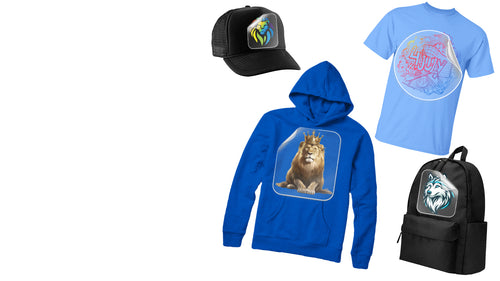
DTF handles that variety well because it supports full-color artwork, fine detail, and a wide range of garment types without the setup demands of some older methods. You can print a bright illustrated back graphic, a small left-chest logo, and a name run for event staff without turning each variation into a separate production headache.
Here is the comparison most new shop owners need:
| Method | Best fit | Where it struggles |
|---|---|---|
| DTF | Full-color graphics, short runs, mixed garment types | Requires clean artwork and correct press settings |
| Screen printing | Repeating one design across larger runs | Less practical for many color changes, small batches, or frequent design swaps |
| HTV | Names, numbers, simple one-color graphics | Slows down fast with detailed art or layered designs |
| DTG | Soft prints on suitable garments, especially cotton jobs | More garment-sensitive and often less flexible for mixed-order workflows |
What beginners usually notice first
DTF removes a lot of the friction that scares people away from custom printing.
- Design range is wider: Photos, gradients, illustrated art, and small text are all realistic options.
- Fabric options are broader: Cotton, blends, and many performance garments can all work.
- Testing costs stay lower: You can order transfers for samples instead of printing full garment runs.
- Reorders are easier: If a design sells, you order the transfer again instead of rebuilding the whole job.
Lion DTF’s workflow tools make that even simpler, especially when you start grouping multiple designs onto one sheet. That matters because true savings in DTF often come from planning jobs well, not just pressing them well.
When DTF is the smarter choice
DTF is usually the better fit when your business depends on flexibility. That includes online sellers, local merch brands, school programs, fundraisers, team orders, and company apparel jobs with changing quantities.
Screen printing still has a strong place in large, repeatable runs. Vinyl still works for simple names and numbers. But if your orders change often, your artwork includes multiple colors, or you want to buy transfers once and apply them as sales come in, DTF gives you a more practical path.
For a new entrepreneur, that matters. You get a production method that is easier to scale in stages. Start with good artwork, organize your transfers, use gang sheets to control costs, and press garments only when they are needed. That is how many small brands grow without tying up cash in piles of unsold custom apparel t shirts.
Preparing Your Artwork for Flawless DTF Prints
Most bad transfers start as bad files. The press gets blamed, the shirt gets blamed, and sometimes the transfer supplier gets blamed. But a lot of the trouble starts on your screen before anything is ever printed.
Start with the right file type
For optimal DTF results, artwork should be prepared as a vector EPS file in RGB color mode at actual print size, according to Envato’s t-shirt template requirements for print-ready art. Vector art matters because it stays clean when resized. If you enlarge a low-quality raster image, rough edges and blurry curves show up fast.
If your artwork isn’t vector, don’t panic. You can still work with high-quality raster art for some designs, but you need to be realistic. Logos, text-heavy artwork, and sharp-edged graphics benefit most from vector format.
If you need a practical breakdown of file options before uploading, this guide on what file format is best for printing helps sort out which file types are easiest to use and which ones create cleanup work.
Use RGB, not a screen print mindset
A common mistake is building art like it’s headed for screen printing. DTF doesn’t want that approach. It works from an RGB-based inkjet workflow, and the verified guidance warns that improper CMYK conversion can reduce hue saturation by up to 20-30%, which affects vibrancy.
That’s why bright colors often look duller than expected when someone exports the file the wrong way.
Use this checklist before you upload:
- Set the file to actual print size: Don’t build a tiny design and hope the printer scales it perfectly later.
- Keep the file in RGB color mode: This protects the brightness DTF is designed to reproduce.
- Convert text to outlines: That prevents font substitution problems if your typeface isn’t embedded.
- Remove unwanted backgrounds: Transparent areas should be intentional, not accidental.
- Inspect small details: Tiny lines and micro text may need to be thickened so they press cleanly.
Practical rule: If a line looks fragile on your monitor, it usually gets more fragile after heat, peel, stretch, and wash.
Think like the press operator
Good artwork isn’t just attractive. It’s easy to print and easy to apply.
Here’s where beginners get tripped up:
| Artwork issue | What happens on the shirt |
|---|---|
| Low-resolution image | Soft edges and visible pixelation |
| CMYK-built file | Colors can print flatter than expected |
| Live fonts | Missing or replaced text |
| Background not removed | Unwanted box or fill around design |
| Oversized art for placement | Crowded print area or awkward fit |
One more tip saves a lot of frustration. Print placement should match the garment and the buyer. A youth tee, a left chest logo, and a full-front streetwear graphic all need different sizing logic. Don’t prep one version and force it onto every product.
Build a Gang Sheet to Maximize Your Value
You have six shirt designs, two sleeve hits, a neck label, and a small left-chest logo. Ordering each piece one by one gets expensive fast. Building a gang sheet keeps that job organized and cuts waste at the same time.
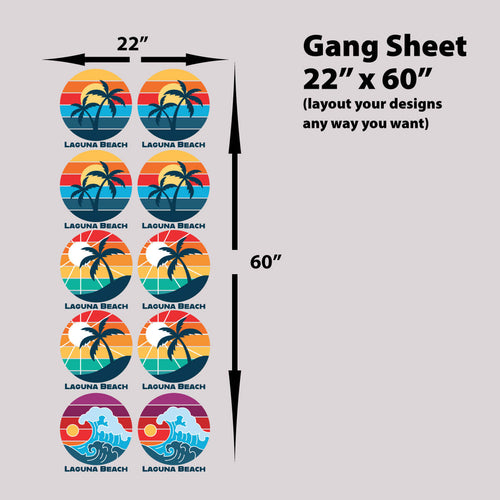
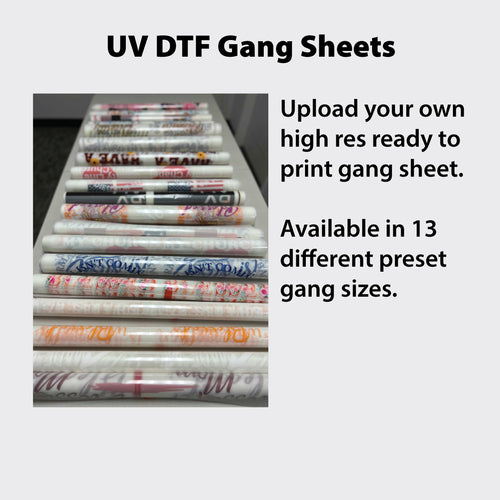
A gang sheet is one larger print sheet that holds multiple designs or repeated placements together. You use the full sheet the way a baker uses the whole tray instead of baking one cookie at a time. For small brands, event printers, and Etsy sellers, that usually means lower cost per print and fewer half-used orders.

That matters because custom apparel keeps shifting toward short runs, test drops, and personalized orders. As noted earlier, industry analysts expect strong growth in custom t-shirt printing, driven in part by on-demand fulfillment and personalization. Gang sheets fit that model well because they let you print more variety without paying for separate setup on every small graphic.
Why gang sheets save real money
The savings come from density. Every empty inch on the sheet is space you paid for but did not use.
A smart gang sheet can combine:
- Full front graphics for your main shirt designs
- Left chest logos for uniforms or branded basics
- Sleeve prints for events, teams, or retail details
- Neck labels for a more finished private-label look
- Repeat copies of your fast sellers so you are ready for reorders
That mix is where new apparel sellers usually gain margin. Instead of ordering one front print today, then coming back later for neck labels and sleeve hits, you can batch the whole sales cycle into one sheet.
Layout mistakes cost more than people expect
The problem is not understanding the idea. The problem is packing the sheet well.
Beginners often leave odd gaps, resize pieces unevenly, or place designs in a way that looks efficient on screen but wastes printable space. A few small gaps do not seem serious until you realize those gaps could have held four pocket logos or two extra neck labels.
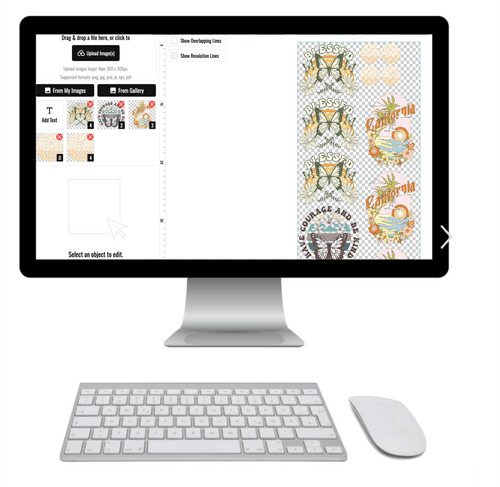
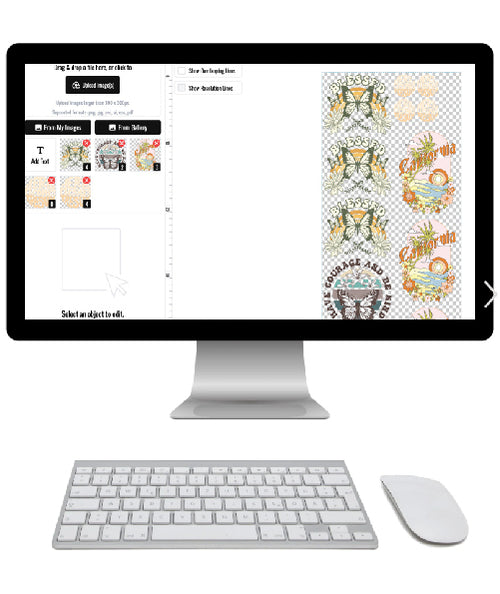
Lion DTF’s Auto-builder helps solve that. You upload your art, let the tool arrange it more efficiently, then review the layout before ordering. That is much faster than dragging every graphic by hand, and it reduces the trial-and-error that eats up an evening. If you want a closer look at the concept, this guide to how DTF gang sheets work is a useful reference.
Here is a practical rule for deciding whether a gang sheet makes sense:
| Situation | Better choice |
|---|---|
| One design, one exact size | Order by size |
| Several designs or multiple placements | Build a gang sheet |
| You want to save layout time | Use Lion DTF’s Auto-builder or a done-for-you option |
A quick walkthrough makes the idea easier to visualize:
What to include on one sheet
Plan the sheet around the order flow, not just one shirt.
For example, a small apparel brand might place all of these on one gang sheet:
- A full-front graphic for black tees
- A smaller chest logo for white tees
- Two sleeve accents
- A neck label
- Extra copies of the design that usually sells first
That approach gives you options. You can press different garment colors, test more than one placement, and keep a few extras ready for the designs that move first.
Leave some breathing room in your planning. A full sheet is good. A full sheet with the wrong sizes is expensive.
A good habit is to group artwork by real production use. Put youth sizes together. Keep adult full fronts separate from small branding pieces. Save repeat logos and labels for the leftover spaces that would otherwise go unused. That is how experienced shops squeeze more value from every sheet without turning the layout into a mess.
How to Order Your DTF Transfers
Ordering gets easier once your file is ready and you know whether you need single placements or a gang sheet. Most new sellers overcomplicate this part because they think they need to know every technical detail before they submit an order. You don’t. You just need to know what you’re printing, where it goes, and whether the file is prepared correctly.
Pick the order style that matches the job
There are usually three practical ways to order DTF transfers.
The first is uploading a pre-built gang sheet. That works well if you already arranged all of your artwork and you know exactly how you want it laid out.
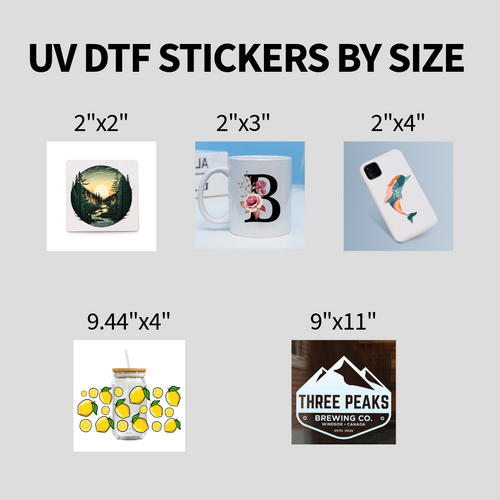
The second is ordering by size. This is useful when the artwork is simple and the placements are standard, such as left chest, full front, full back, or sleeve graphics. It keeps the process clean when you don’t need a custom sheet layout.
The third is having the sheet built for you. That’s a good fit when you have usable art but don’t want to spend time arranging every piece manually.
A simple ordering workflow
Most orders follow the same path:
-
Choose the product type
Decide whether you’re ordering individual transfers by size or a gang sheet. -
Upload your artwork
Use the print-ready files you prepared earlier. Double-check size, background transparency, and outlines. -
Review the layout
Confirm the design isn’t cropped, stretched, or scaled awkwardly. -
Select quantity and shipping
Match this to your actual production plan, not your ideal plan. -
Place the order and prep garments while you wait
Have blanks, heat press supplies, and packing materials ready so you can press as soon as the transfers arrive.
What makes ordering smoother
A few habits save a lot of cleanup later:
- Name your files clearly: “front-logo-blacktee” is better than “final-final-new2.”
- Separate placements: Don’t combine front and sleeve art in one file unless you’re intentionally building a gang sheet.
- Match the art to the garment type: Lightweight fashion tee, heavyweight streetwear blank, and athletic shirt don’t all feel the same after pressing.
- Check deadlines before launch: Don’t open sales first and ask production questions later.
Good ordering is boring on purpose. If the file is right and the layout is right, the rest of the job usually moves without drama.
If you’re producing custom apparel t shirts for customers, reliability matters more than novelty. A repeatable ordering habit keeps your margins safer than constantly improvising.
Pressing and Caring for Your Custom Apparel
The pressing step is where the transfer becomes the finished product. This is also where beginners can ruin a perfectly good print with the wrong temperature, uneven pressure, moisture in the shirt, or a rushed peel.

Get the shirt ready before the transfer touches it
Start with a quick pre-press. That helps remove moisture and wrinkles so the transfer lands on a flatter surface. Lay the garment straight, check seams and collars, and make sure the print area is free of lint or debris.
A crooked shirt usually creates a crooked print. Don’t try to eyeball every placement if consistency matters. Use guides, rulers, or placement tools if you’re doing multiple pieces.
For a more detailed breakdown of application variables, this guide on heat press settings for DTF is useful to keep nearby while you work.
Press with consistent settings
In practice, you should follow the transfer supplier’s instructions and stay consistent across the batch rather than changing settings shirt by shirt.
Use one tested setting for the same garment type and transfer type. Random adjustment is one of the fastest ways to create inconsistent results.
A practical pressing routine looks like this:
- Pre-press the garment briefly
- Position the transfer
- Press with firm, even pressure
- Peel according to the transfer type
- Finish press if recommended
- Let the shirt cool flat before stacking
The peel matters more than people think
Hot-peel transfers reward confidence. If you hesitate, stop halfway, or peel unevenly, you increase the chance of edge lift or partial release.
Peel smoothly and decisively. If the transfer type is hot peel, treat hesitation like a production error, not a style choice.
If something doesn’t look right, don’t send the shirt out anyway. Check whether the issue came from pressure, placement, temperature, or garment moisture.
Care instructions that protect the print
DTF can hold up very well, but customer care still matters. Give buyers simple, realistic instructions:
- Wash inside out: This reduces surface abrasion.
- Use cold or cool water when possible: Gentler washing helps preserve the print surface.
- Avoid harsh wash conditions: Rough treatment shortens the life of any decorated garment.
- Tumble dry low or hang dry: Lower heat is easier on both shirt and print.
- Don’t iron directly over the design: Use a cover sheet or avoid direct contact.
When you sell custom apparel t shirts, care instructions are part of quality control. A solid print can still get blamed for damage caused by aggressive washing or heat.
A Real-World Custom T-Shirt Pricing Example
A new seller gets an order for 24 custom apparel t shirts, checks the blank cost, adds a quick markup, and sends the invoice. The job feels profitable until they count the transfer order, shipping, packaging, one mis-pressed shirt, and the time spent at the heat press. That is how busy shops end up with thin margins.
Pricing works the same way as building a print file. If one layer is missing, the final result falls apart. For custom apparel t shirts, your price has to cover the full production path, not just the garment and the print. As noted earlier, commercial buyers make up a large share of the custom apparel market, and personal-order demand keeps growing too. That gives small brands room to sell. It also means you need numbers you can repeat with confidence.
Start with the unit economics you control
The simplest pricing model starts with six costs:
- blank shirt
- transfer cost
- shipping allocation
- pressing labor
- packaging
- spoilage allowance
That last line trips up a lot of new sellers. Spoilage is the cost of reality. A crooked placement, a test press on the wrong blank, or a damaged shirt from your supplier all count. If you ignore that cost, your margin looks better on paper than it does in your bank account.
You do not need a universal retail formula. A heavyweight streetwear tee, a basic promo shirt, and a boutique small-batch release should not be priced the same. What you need is a method you can reuse every time.
Sample Cost-Per-Shirt Calculation
Use this table as a worksheet. Plug in your real numbers from your blank supplier, your transfer order, your shipping total, and the amount of time it takes to produce one finished shirt.
| Item | Cost | Notes |
|---|---|---|
| Blank t-shirt | Your Cost | Use the actual cost for the garment you plan to sell |
| DTF transfer from gang sheet | Your Cost | Divide total gang sheet cost by the number of usable transfers you fit on it |
| Inbound shipping allocation | Your Cost | Spread shipping across the number of shirts produced from the order |
| Pressing labor | Your Cost | Include your time or staff time per shirt |
| Packaging | Your Cost | Mailer, size sticker, insert, or retail bag if used |
| Spoilage allowance | Your Cost | Build in room for mistakes, test presses, or damaged blanks |
| Total cost per shirt | Add all rows above | This is your true unit cost |
| Suggested retail price | Your Price | Set this based on your market and margin goal |
| Gross profit per shirt | Retail minus total cost | Check whether the sale is worth your time |
How gang sheets improve the math
Gang sheets are where many small apparel brands either save money or waste it. A gang sheet works like renting a truck. If you fill the whole space with useful cargo, your cost per item drops. If half the truck is empty, you still pay for the full trip.
That is why layout planning matters so much. If one sheet holds a full front print, a left chest version, a sleeve mark, and a neck label for multiple shirts, your transfer cost spreads across more sellable pieces. If the sheet has random gaps because the artwork was sized poorly, that blank area becomes paid-for waste.
Lion DTF's Auto-builder helps here because it removes a lot of the guesswork. Instead of manually dragging pieces around and hoping you used the sheet well, you can build a layout faster and see more clearly how many usable prints fit on the order. That saves money before you ever press the first shirt.
A practical pricing example
Let’s say you are selling a 12-shirt run for a local brand launch. The front logo is the same on every shirt, and you also want a small neck label. If you order those as separate one-off pieces without planning the layout, your transfer cost rises fast. If you combine both placements into a gang sheet and pack the sheet tightly, your per-shirt transfer cost usually comes down.
Now add the rest of the job. One blank cost, one share of inbound shipping, a few minutes of press time, packaging, and a small allowance for mistakes. That full stack is your real cost per shirt.
The mistake is pricing from the first number you see. Price from the replacement cost. If the customer comes back next week and asks for the same 12 shirts again, your price should still cover materials, labor, and normal production loss without turning the reorder into a stress test.
Healthy margins come from repeatable math, not guesswork.
A good pricing system should answer one question fast. Can you produce this same shirt again at the same quality and still make money? If the answer is unclear, tighten the process first. Clean artwork, efficient gang sheets, and a predictable ordering workflow through tools like Lion DTF's Auto-builder make that answer much easier to trust.
Frequently Asked Questions About DTF Transfers
Can I use a home iron instead of a heat press
You can try, but it’s not the route I’d suggest if you plan to sell the result. A home iron doesn’t apply pressure evenly across the print area, and pressure matters with DTF. Inconsistent pressure often leads to partial bonding, weak edges, or uneven finish.
If you’re making one personal test shirt, an iron might help you experiment. If you’re producing custom apparel t shirts for customers, a heat press is the safer tool.
What garments work well with DTF
DTF is popular because it works across a wide mix of garments. T-shirts, hoodies, sweatshirts, tote bags, and many fabric blends are all common use cases. That flexibility is one reason small sellers like it. They can keep one decoration method in the workflow while offering more than one product.
The key is to test on the actual blank you plan to sell. Fabric feel, surface texture, and seam placement all affect the final result.
Can I combine DTF with embroidery or screen printing
Yes, and this is an area where many decorators want more practical guidance. A key underserved area in the custom apparel market is hybrid production. Print shops are increasingly adopting DTF to add full-color designs to items that will also be screen printed or embroidered, but guidance on how to press DTF over existing elements without causing damage is scarce, according to Real Thread’s note on hybrid custom apparel workflows.
That tells you two things. First, combining methods is a real production need. Second, you should test before offering it widely.
A few practical rules help:
- Avoid guessing over raised embroidery: Thickness changes pressure distribution.
- Sequence matters: In many jobs, it’s safer to plan decoration order carefully instead of improvising at the press.
- Use sampling for premium products: Hybrid decoration can look excellent, but it needs proofing.
- Watch placement conflicts: A full-color DTF print and a stitched logo can compete visually if they’re too close.
What’s the best fabric for beginners
Beginners usually do well with standard t-shirt blanks that have a stable, smooth print area. Extremely stretchy, heavily textured, or unusual garments can wait until your pressing technique is consistent.
Start with blanks you can easily reorder. That way, if a design sells, you don’t have to redesign your whole product because the original shirt disappeared.
What’s the most common mistake new sellers make
They rush past testing. They order transfers, press on whatever shirt is nearby, and assume the production version will behave the same way.
Instead, test the actual combination you plan to sell:
- The garment
- The transfer size
- The press settings
- The wash routine you’ll recommend to customers
That small bit of discipline saves returns, wasted blanks, and awkward customer messages later.
If you’re ready to turn designs into sellable apparel without overcomplicating production, Lion DTF Transfers offers options for ordering by size, uploading print-ready sheets, and using an Auto-build gang sheet builder that helps pack layouts more efficiently. It’s a practical way to produce custom apparel t shirts with a workflow that stays manageable as orders grow.