



You’ve got a design on your screen, a launch date in your head, and one big question: how do you turn that file into apparel people want to wear?
That’s where most new sellers, school organizers, bands, and local businesses get stuck. The design part feels creative. The printing part feels technical, expensive, and full of conflicting advice. One shop says screen printing is the answer. Another says use DTG. Someone else swears by DTF. Then you hear terms like gang sheets, vector files, cure times, and wash testing, and suddenly a simple t-shirt idea starts feeling like a production problem.
It doesn’t have to be.
The practical way to approach custom apparel printing is to stop asking, “What’s the best printing method?” and start asking two better questions. First, what gives me the right cost per unit for the quantity I need? Second, what will still look good after repeated washing and real use?
Those two questions separate a good order from a costly mistake. A band selling merch at weekend shows has different needs than a school ordering spirit wear. A sports team needs durability and repeatability. A new clothing brand needs flexibility, speed, and low-risk testing. The right method depends on the job.
From Idea to Apparel Your Starting Point
A common starting point looks like this. You’ve got a logo, slogan, or illustration that looks great on a laptop screen. Now you need to put it on shirts, hoodies, or uniforms without blowing your budget or ending up with prints that crack after a few washes.

That hesitation is reasonable. Apparel isn’t just ink on fabric. It’s part design, part production, part purchasing decision. The shirt blank matters. The print method matters. The order size matters. If you’re buying for resale, one wrong choice can eat your margin. If you’re buying for a team or event, a weak print can turn into complaints and reorders nobody wanted.
Why so many people are entering this market
The interest in custom apparel isn’t a niche trend. The U.S. custom printing market was valued at USD 6.10 billion in 2023 and is projected to grow at a CAGR of 10.5% from 2024 to 2030, with the clothing segment holding 37.2% of revenue share in 2023 according to Grand View Research on the U.S. custom printing market.
That matters for one reason. You’re not overthinking this. Customized t-shirts, hoodies, and branded apparel are now standard tools for selling merch, building a brand, outfitting staff, and creating event identity.
The decision that actually matters
Most guides talk in broad pros and cons. That’s helpful at first, but it doesn’t solve the actual buying decision.
Use this simple lens instead:
- Quantity first: Are you ordering a handful of shirts, a small batch, or a large run?
- Design second: Is your artwork simple and bold, or full of color and detail?
- Wear conditions third: Will this be casual merch, workwear, team gear, or something that gets washed hard and often?
Practical rule: Don’t choose a print method by popularity. Choose it by volume, artwork complexity, fabric, and expected wear.
A band shirt for a short merch run often rewards flexibility and strong color on demand. A sports team uniform needs dependable repeat results and durability. A restaurant staff shirt may value a clean logo application over a soft fashion print. Once you look at apparel through that lens, the confusing part starts to clear up.
The Five Main Custom Printing Methods Explained
A customer walks into the shop with two jobs. The first is a 24-piece band merch run with a full-color front graphic and no promise they will reorder. The second is 80 practice shirts for a sports team, plus player names and numbers that need to hold up through repeated washes. Those two orders may both be "custom apparel," but they should not be produced the same way.
That is the point of knowing the main print methods. Each one solves a different production problem. The smart choice comes from two questions first. What happens to your cost per shirt as quantity goes up, and how well will the print survive real use and washing?

Screen printing
Screen printing works like a stencil system. Each ink color needs its own screen, and each screen takes setup time. That setup is the reason a 12-shirt order can feel expensive, while a 300-shirt order often becomes very competitive on a per-unit basis.
This method usually fits simple or moderately complex artwork that repeats across a larger run. A school event shirt with one front design is a classic screen printing job. Once the press is set up, the shop can print fast and keep the prints consistent from shirt to shirt.
Durability is one reason screen printing has stayed popular for decades. When the ink is chosen well and cured correctly, the print holds up well through repeated washing. For a sports camp, company event, or volunteer shirt order where consistency matters more than one-off personalization, screen printing often makes financial sense.
DTG printing
Direct-to-garment, or DTG, prints ink directly onto the garment. The closest comparison is a paper printer, except the shirt has to be properly pretreated and loaded flat so the print lays down cleanly.
DTG earns its place on small runs and high-detail artwork. If a band wants 18 shirts with album art, gradients, and fine shading, DTG can produce that without building screens for every color. That keeps setup lighter at low quantities, even if the cost per shirt does not drop as sharply as screen printing on big runs.
The trade-off is garment sensitivity and wash performance that depends heavily on process control. DTG usually performs best on suitable cotton garments and with proper curing. If the shirt itself is poor quality or the print is rushed, you will hear about it after the first few washes.
Heat transfer vinyl
HTV uses cut vinyl that is heat pressed onto the garment. It is a clean solution for bold shapes, names, numbers, and single-color elements.
This is why sports uniforms often use HTV for personalization. A team may screen print the main logo, then add each player name and number in vinyl. That keeps the base order efficient while still allowing one-by-one customization.
HTV is less attractive for artwork with heavy detail or many colors because labor rises fast. Every extra piece has to be cut, weeded, positioned, and pressed. The result can be durable, but it has a more noticeable hand because the material sits on top of the fabric.
DTF transfers
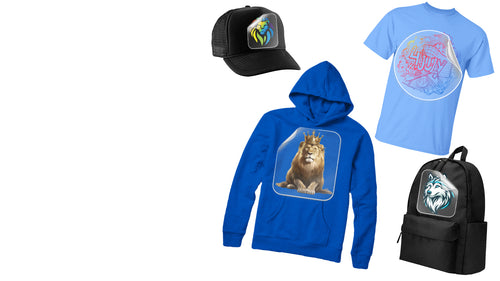
Direct-to-film, or DTF, prints the design onto film, applies adhesive powder, then heat presses the transfer onto the garment. For many shops, DTF fills the gap between one-off digital printing and traditional production methods.
It handles detailed artwork well, works across a wide range of fabrics, and avoids the screen setup costs that push small orders upward. That makes it useful for mixed orders. A creator selling 15 shirts, 10 hoodies, and 8 tote bags with the same full-color design can often run that job more smoothly with DTF than with screen printing.
Wash durability can be strong when the transfer is well made and properly pressed. Pressure, temperature, and press time matter here. If you want a clearer overview of where DTF fits among other decoration options, this guide to t-shirt printing methods and use cases gives a helpful visual starting point.
A quick visual can help lock these methods in place:
Sublimation
Sublimation turns ink into gas under heat so it bonds into the material instead of sitting on top of it. The print feels very soft because there is no added layer on the surface.
The catch is fabric choice. Sublimation works best on polyester and light-colored garments, which is why it shows up so often in performance wear, fishing shirts, and all-over athletic designs. For the right garment, wash durability is excellent because the image becomes part of the fabric structure.
For the wrong garment, it is the wrong method. A cotton band tee and a polyester team jersey are very different jobs.
Embroidery
Embroidery uses thread instead of ink, so it belongs in this comparison even though it is not a print method in the strict sense. It creates a raised, structured finish that reads as more formal and more uniform-ready.
This is often the right choice for left-chest logos on polos, jackets, hats, and hospitality uniforms. A restaurant logo on a staff polo usually benefits from embroidery because it looks polished and stands up well to repeated wear. A full-front concert graphic usually does not. Stitch count, garment type, and logo complexity all affect price, so embroidery is strongest on smaller design areas rather than large artwork.
A band shirt and a sports uniform can start with the same logo file and still need completely different production methods. The right choice comes from order size, fabric, customization needs, and how hard the garment will be used and washed.
Comparing Print Methods Head-to-Head
A print method isn’t “good” in the abstract. It’s good for a specific job. The mistake I see most often is someone choosing based on one factor alone, usually price or appearance, without thinking through volume and wear.

Custom Apparel Printing Method Comparison
| Method | Best For | Feel on Shirt | Durability | Cost Profile | Ideal Order Size |
|---|---|---|---|---|---|
| Screen Printing | Simple designs in repeated runs | Often smooth and integrated, depends on ink | Very strong when done well | Higher setup, better scaling on larger runs | Medium to large |
| DTG | Detailed artwork on small runs | Usually soft on suitable garments | Moderate to strong, depends on garment and care | Lower setup, less volume advantage | Small |
| DTF | Full-color designs across varied fabrics | Transfer feel on garment surface | Strong when properly pressed and cared for | Low setup, flexible across quantities | Small to medium, also useful for mixed orders |
| HTV | Names, numbers, bold simple graphics | Noticeable layer | Strong for the right applications | Labor matters more than setup | Small and personalized |
| Embroidery | Logos, uniforms, hats, polos | Raised stitched texture | Very strong | Digitizing and stitching affect price | Small to medium |
Start with order size, not with the machine
For a band ordering a short merch run with several graphic options, setup-heavy methods can become awkward fast. You want the freedom to print multiple designs without rebuilding the whole production process every time.
For a sports league ordering matching shirts with the same front logo across a larger run, setup starts to make more sense because repeated production can spread that cost across many units. That’s the key cost-per-unit idea. Some methods get cheaper as repetition increases. Others stay relatively steady because they don’t rely on the same front-loaded setup.
How design complexity changes the choice
A one-color chest logo is easy for several methods. A full-front design with gradients, tiny linework, and lots of color narrows the field.
Here’s the practical version:
- Simple logo, many shirts: screen printing often makes sense.
- Detailed artwork, small run: DTG or DTF usually enters the conversation.
- Names and numbers: HTV is often a clean answer.
- Professional uniform look: embroidery often wins for placement like caps and polos.
- Mixed garments and varied fabrics: DTF is often attractive because of its flexibility.
Durability needs a real definition
“Durable” gets thrown around loosely in this industry. Ask what it means in washing, not in marketing language.
According to questions buyers should ask about print durability and wash cycles, one useful benchmark is whether a supplier can tell you how many wash cycles the print is rated for. That same guidance notes that premium DTF transfers can be engineered to last 100+ washes without cracking or fading, which is a meaningful standard for uniforms and retail-style merch.
That doesn’t mean every DTF print from every source performs the same. Pressing conditions, fabric choice, and application quality all matter. But it gives you a better question to ask.
If a supplier says a print is durable, ask how they define it. “How many washes?” is a better question than “Will it last?”
Feel on the garment matters more than beginners expect
Customers don’t just look at a print. They wear it.
A fashion-forward brand selling soft ringspun tees may highly value how the graphic feels over a large chest print. A booster club shirt for one weekend event may care less about softness and more about getting clear color at a reasonable cost. Uniform buyers may prioritize longevity above all.
That’s why there isn’t one winner. There’s only the better fit for the use case.
A simple way to choose
Use this grid mentally when you’re stuck:
- Choose screen printing when you’ve got repetition, simpler artwork, and enough quantity to justify setup.
- Choose DTG when you need detail on a smaller cotton-focused run.
- Choose DTF when you need flexibility, color detail, broad fabric compatibility, and low setup friction.
- Choose HTV when personalization is the main job.
- Choose embroidery when stitched branding suits the garment and audience.
For the band shirt, flexibility and artwork detail usually matter. For the sports team, consistent application and wash performance matter more. Same category. Different decision.
Preparing Your Artwork for Perfect Prints
Bad artwork ruins good production. That’s the hard truth. A shop can have solid equipment and careful operators, but if the file is low quality, the final print starts behind.
Vector vs raster in plain English
A vector file is more like a recipe. It tells the software how to build shapes and lines, so it can scale cleanly. A raster file is more like a photo. It’s made of pixels, and when you stretch it too far, it gets soft or jagged.
That’s why logos usually do better as vectors. They need clean edges on a left chest, a full front, or a large back print. Raster art can still work well, but it has to be high enough quality for the intended print size.
The checklist that prevents most file problems
Before you upload artwork, check these basics:
- Resolution: If you’re using raster art, make sure it’s sharp at the final print size. Don’t enlarge a tiny web image and hope the printer fixes it.
- Transparent background: A fake white box around your design is one of the most common beginner mistakes.
- Clean edges: Zoom in and look for fuzzy outlines, leftover pixels, and unintended shadows.
- Color expectations: Screen colors and printed colors don’t always match perfectly. Bright digital art may need adjustment before production.
- Correct sizing: Decide whether the design belongs on a pocket area, full front, sleeve, or oversized placement before exporting.
If you’re unsure what file type to send, this guide on the best file formats for apparel printing breaks down what shops usually need and why.
AI can speed up the design phase
A lot of new sellers now start with AI-assisted concepting. That can be useful, especially when you’re testing ideas before committing to a print run.
According to Gelato’s overview of AI in custom apparel design, generative AI platforms can create hundreds of unique design variations from text prompts, which can reduce design validation cycles from weeks to days. For a small seller, that means you can test several shirt directions before choosing which one deserves production.
Use AI as a sketch partner, not as an excuse to skip file cleanup. A cool concept still needs production-ready edges, transparency, and proper sizing.
Common artwork mistakes by project type
A band often brings detailed poster-style art. The risk there is clutter. Tiny text, distressed textures, and layered effects may look great on screen but get muddy if the file isn’t prepared properly.
A sports team usually brings logos, mascots, and roster personalization. The risk there is inconsistency. Names need to be aligned, numbers need to match, and repeat orders need the same file standards every time.
Clean artwork saves money twice. First by avoiding setup delays, then by avoiding reprints.
If a file isn’t ready, vectorization and cleanup are often worth doing before you order. It’s cheaper than finding out after production that your logo edges were rough or your transparent background wasn’t transparent.
The Lion DTF Ordering Workflow Step-by-Step
You have a band order due Friday. The front print goes on black tees, the back print changes for two tour dates, and you also want a small left chest version for hoodies. On the same day, a youth sports program asks for mascot logos, coach polos, and player names in mixed sizes. If you order each graphic one by one, your cost climbs fast and sorting gets messy fast too. Gang sheets solve that problem by turning scattered art into one planned print file.
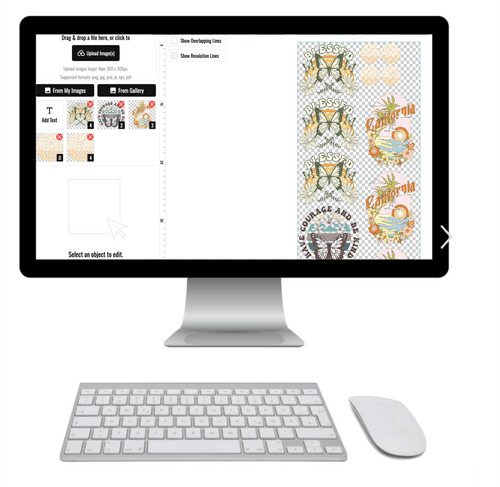
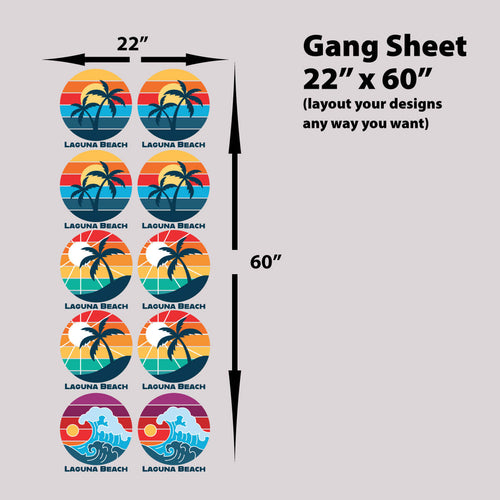
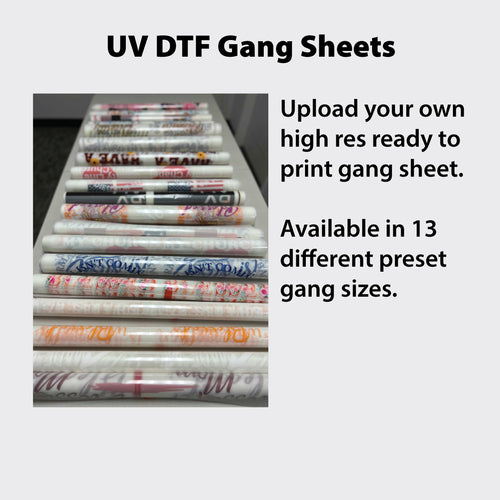
A gang sheet is one larger transfer sheet that holds multiple designs, sizes, or placements together. The value is not just convenience. It is cost control. You are paying for sheet space, so the question becomes how much useful artwork you can fit on that space without creating confusion during pressing.
Gang sheets work like loading a delivery van. A half-empty van still costs a full trip. A well-packed van spreads that cost across more boxes. DTF ordering follows the same logic. A sheet with one oversized logo can make sense for a single large print run, but mixed jobs often become more profitable when you add sleeve prints, left chest logos, neck labels, youth sizes, or replacement pieces into the unused areas.

Why this workflow matters for order economics
This is one of the clearest places where DTF changes the math for small and mid-size orders. You are not paying for separate screen setups every time a design changes. That makes short runs, mixed placements, and test orders much easier to price without padding the order just to recover setup labor.
For a band, that can mean testing two back print versions before a tour. For a sports team, it can mean combining sponsor logos, player names, and coach branding in one order instead of breaking them into separate jobs. Same printer. Different business goal.
The other benefit is operational. A well-built gang sheet reduces waste on the front end and confusion on the back end. If the sheet is planned around how garments will be pressed and sorted, your team spends less time guessing which print goes where.
Three ordering paths, and when each one makes sense
Experienced shops often build their own gang sheets in design software. That gives full control over spacing, sizing, and layout. It works well when you already know production rules and need every inch of the sheet used carefully.
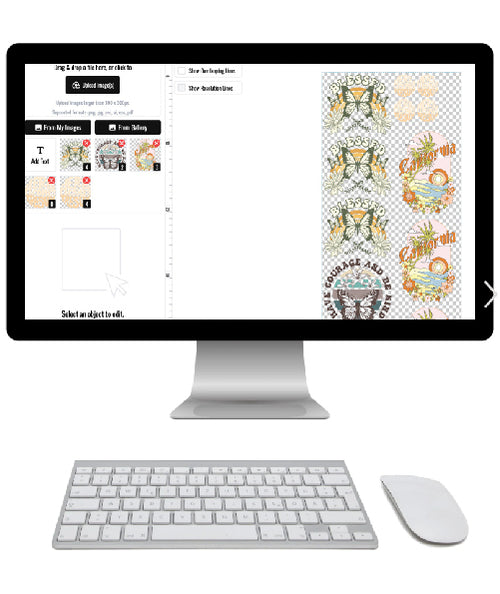
Newer sellers usually do better with a builder tool. A tool like Lion DTF’s auto-build gang sheet builder helps place multiple designs efficiently without requiring you to arrange every file by hand. That middle option is useful when you understand what you need printed but want help using sheet space well.
The third option is handing off separate files and having the provider assemble the sheet. That can work for beginners, but it only works well if your file names, sizes, and placement notes are clear. Otherwise, the shop has to guess, and guessing is where reprints begin.
A practical sequence that prevents expensive mistakes
Use a simple order of operations.
-
Collect every file before you build anything
Put front prints, back prints, sleeve graphics, chest logos, and neck labels in one folder. A missing file often leads to a rushed substitution or a wasted blank spot on the sheet. -
Label files by size and placement
“Logo-final.png” is not enough. “Left-chest-3.5in” or “Adult-full-front-11in” tells the shop what the art is supposed to become. That matters even more on mixed orders. -
Sort by garment type or job type
A band drop might group merch art by tee, hoodie, and tote. A sports program might group logos, numbers, and names separately. This makes the pressing table run smoother later. -
Build around usable space, not perfect visual symmetry
New buyers often center everything neatly and leave dead zones. Production does not care whether the sheet looks balanced on screen. It cares whether each inch of film earns its keep. -
Add practical extras if room remains
Replacement logos, extra neck labels, or one or two backup prints can save a reorder later. That matters most on repeat programs and event-driven jobs where timing is tight. -
Check orientation, transparency, and readability last
Mirrored text, stray backgrounds, and tiny details are still common failures. One final check is cheaper than remaking a full order.
How this plays out in real jobs
A band usually has variation. Maybe the same skull graphic appears as a full front on tees, a small chest hit on zip hoodies, and a tour-date back print on long sleeves. A gang sheet lets you combine those parts so you can press them onto different blanks as inventory changes. That keeps your cost-per-unit tighter while you test what sells at the merch table.
A sports team usually has repetition with controlled variation. The mascot stays the same, but names, numbers, and garment types change. Gang sheets help you keep branding consistent while still handling player-specific details. That is a better fit for roster updates and mid-season add-ons than forcing one large bulk order too early.
A local print shop can also use gang sheets to cover overflow work. Instead of setting up another decoration process in-house for a small mixed order, the shop can outsource transfers, keep production moving, and still protect margin on short runs.
Build the sheet around the job after printing. Who will sort it, press it, and reorder it later matters just as much as how tightly the artwork fits today.
Pressing Care and Ensuring Longevity
A transfer can be printed perfectly and still fail on the shirt if the pressing is off. That’s why application matters just as much as artwork.
The three press variables that control results
Every heat application comes down to temperature, time, and pressure. Miss one, and durability drops.
Too little heat and the adhesive may not bond fully. Too much heat can distort the print or stress the fabric. Too little pressure can leave weak areas. Uneven pressure is especially common on seams, collars, zippers, and thick garment sections.
Fabric changes the rules
Not every shirt behaves the same under heat. Cotton, blends, and performance fabrics all react differently, and that’s one reason settings must match the garment.
According to Grand View Research on the U.S. decorated apparel market, 78% of custom apparel uses cotton or blends. That makes cotton and blended garments the everyday reality for most shops, and it’s why press settings for those fabrics matter so much. The same source notes that correct settings can be the difference between a print that lasts 10 washes and one that lasts 100.
That’s not a small detail. It directly affects returns, complaints, and whether a customer orders again.
A reliable pressing routine
Use a repeatable routine instead of guessing:
- Pre-press the garment: This removes moisture and flattens fibers.
- Check placement carefully: Measure from collar and centerline instead of eyeballing.
- Apply consistent pressure: Avoid light pressure on thick seams or uneven surfaces.
- Follow peel instructions exactly: Hot peel, warm peel, and cold peel behave differently.
- Finish with a final press if recommended: This can help lock the print down and smooth the surface.
Care instructions your customer should actually get
After pressing, the garment still needs sensible care. Most problems blamed on printing are really a mix of over-aggressive washing, high heat drying, or poor application.
Pass these instructions on to customers:
- Wash inside out: This reduces surface abrasion on the printed area.
- Use mild detergent: Harsh chemicals are hard on both fabric and print.
- Avoid high heat: Lower dryer heat helps preserve the transfer and the garment.
- Skip aggressive ironing directly on the print: Heat and friction on the graphic can shorten life.
- Store folded or hung normally: Don’t leave fresh prints crushed under heavy heat sources.
A durable print starts at the press, but it survives in the laundry room.
For a sports team, these details matter because uniforms get washed often and worn hard. For a band shirt, good care keeps the graphic looking sharp long after the show. In both cases, clear instructions protect your reputation.
Scaling Your Business with Custom Apparel
Once you understand print methods, artwork, and durability, the bigger opportunity comes into view. Custom apparel isn’t just a product. It’s a system you can scale if you control cost and quality.
Start with cost per unit, not just selling price
A lot of new sellers price from the top down. They ask what customers will pay, then hope production works underneath. Experienced operators do the reverse. They understand the true cost per unit first, then build margin on top of it.
That matters because waste hides everywhere. Unused gang sheet space, poorly prepared artwork, wrong garment choices, and reprints all increase the actual cost of a shirt.
According to this FAQ analysis on custom apparel cost optimization, understanding cost-per-unit economics is critical for small businesses, and using gang sheets to reduce waste directly affects profitability and competitiveness.
Three growth paths that work
The hobbyist turning into a seller
Start with short runs. Test a few designs, learn what moves, and avoid buying deep into inventory before demand is proven.
The advantage of transfer-based workflows is flexibility. You can learn sizing, audience preferences, and repeat purchase patterns without committing to a big single-design run.
The e-commerce brand expanding its catalog
Use apparel testing like product research. A front design that gets clicks may not become a repeat seller. A simple one-color shirt may even outperform your most artistic graphic because customers wear it more often.
Keep your lineup disciplined:
- Core evergreen designs: The ones that represent your brand year-round.
- Seasonal experiments: Timed drops and trend-based releases.
- Audience-specific variants: Designs for niches within your customer base.
That approach keeps you from treating every new idea like a full launch.
The local print shop increasing capacity
A lot of smaller shops don’t need to buy every machine to grow. They need dependable workflows and smart outsourcing decisions.
If you already do screen printing or embroidery, transfers can help you cover orders that don’t fit your core setup well. Mixed-fabric jobs, small full-color runs, or rush designs can be handled without changing your whole operation. That lets you sell more kinds of work while protecting your main production flow.
What scaling looks like in practice
A school apparel organizer scales by standardizing artwork and reordering common logos instead of rebuilding each fundraiser from scratch.
A sports supplier scales by keeping placement, names, and repeat branding consistent across seasons.
A merch brand scales by testing more ideas with less upfront risk, then putting its larger bets behind proven sellers.
In every case, the same principle applies. Keep your process simple enough to repeat. Complexity is expensive.
The durable business is usually the simpler one
You don’t need every print method in-house. You need a decision framework that helps you choose the right one for each job, protect quality after pressing, and keep your per-unit costs under control.
If you do that well, custom apparel printing becomes easier to grow because each order teaches you something useful. Which garments hold up best. Which print styles your audience reorders. Which layouts waste money. Which jobs deserve bigger runs and which ones should stay flexible.
That’s how small apparel businesses get stronger. Not by knowing every term in the industry, but by making better choices job after job.
If you’re ready to turn artwork into press-ready transfers, Lion DTF Transfers offers DTF transfers, gang sheets, UV DTF stickers, vectorization support, and online gang sheet building for creators, shops, schools, and small brands that need a straightforward production workflow.