
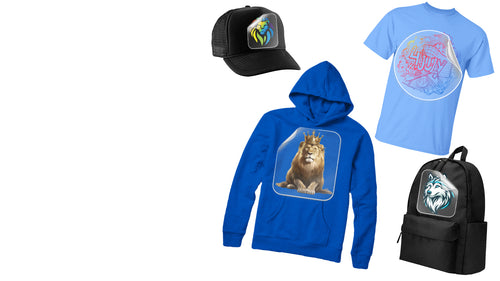
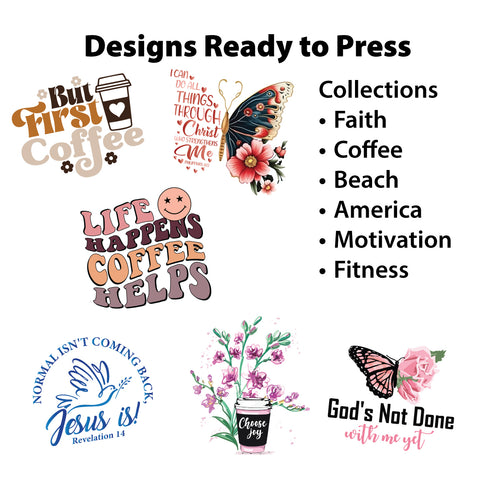



Picking the best heat transfer vinyl really boils down to what you're trying to create. If you're just knocking out some simple, one-color text or a clean logo, a standard matte or glossy HTV is your go-to. It's cheap, easy, and gets the job done. But when you’re talking about vibrant, multi-color graphics or photorealistic images, that’s where modern workhorses like Direct-to-Film (DTF) transfers really blow everything else out of the water.
What Is Heat Transfer Vinyl?
Let's cut through the noise and talk about what heat transfer vinyl really is. Think of HTV as a specialized material for fabric that comes to life with a heat press, forming the backbone of the entire custom apparel world. It’s what lets you put that sharp logo on a polo or that wild design on a hoodie.
This guide is designed to be your roadmap. We’ll cover everything from the basics to the pro-level stuff, and even stack HTV up against newer tech like Direct-to-Film (DTF). Whether you're a hobbyist firing up your first t-shirt project or a print shop ready to scale, we’ll give you the clarity to make smart choices and create gear that’s built to last.
The Rise of Custom Apparel
The hunger for custom gear is off the charts, and the numbers don't lie. The global heat transfer vinyl market was pegged at around USD 1.1 billion in 2025 and is on track to hit a massive USD 6.94 billion by 2034. That explosion is all thanks to e-commerce, print-on-demand shops, and customers wanting something that’s uniquely theirs. You can dig into more data on the HTV market's impressive growth if you want to see just how big this is.
This boom is a clear signal for creators and businesses. If you get a handle on the right materials, you can grab a serious piece of this growing market.
Key Takeaway: Heat Transfer Vinyl isn't just another craft supply; it's a core tool in a multi-billion dollar industry. Nailing its applications is the first step to making professional-grade custom apparel that people will actually want to wear.
Why Choosing the Right Vinyl Matters
Picking the right HTV isn't just about looks—it's about longevity. Make the wrong call, and you're looking at designs that peel, crack, or just feel like a stiff chunk of plastic on the shirt. Ever seen a graphic on a stretchy athletic shirt crack after just one wear? That’s almost always because someone used a standard vinyl that couldn't handle the fabric.
This guide is here to help you sidestep those rookie mistakes. We'll break down:
- The different kinds of HTV and what they’re actually good for.
- How to match your vinyl to your fabric so your designs stick around.
- Cost and production realities for shops looking to grow.
- When to stick with HTV and when it’s smarter to switch to DTF transfers for a better workflow.
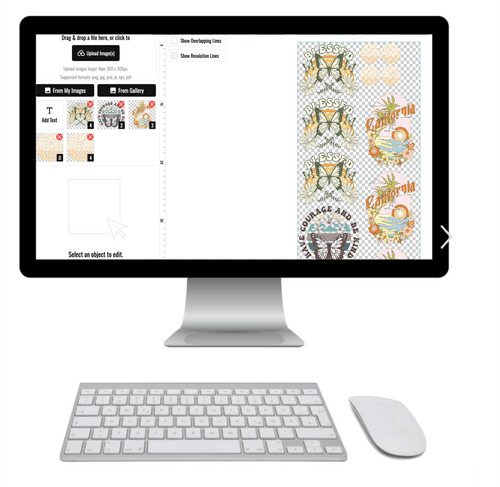
For businesses juggling tons of different designs or high-volume runs, our Auto-build gang sheet builder is a game-changer. It packs your designs efficiently onto a single sheet, cutting down on waste and making production way more profitable.
Exploring the Different Types of HTV

Think of heat transfer vinyl not as a single material, but as a whole family of options, each with its own personality and purpose. Getting to know the different types is the key to matching the right vinyl to your project, ensuring the final garment looks and feels exactly how you envisioned it. Choosing the best heat transfer vinyl is all about understanding what makes each one tick.
The industry is always moving, and a lot of the innovation right now is happening with polyurethane (PU) films, especially those made for digital printing. These newer materials give you better stick, tougher durability, and a massive range of colors and textures. If you're curious about the nitty-gritty, you can find research on the growth of digital print-compatible films that shows just where things are headed.
To help you sort through the options, we've put together a quick comparison guide. This table breaks down the most common HTV types so you can see, at a glance, which one is the right fit for your job.
Heat Transfer Vinyl (HTV) Comparison Guide
| HTV Type | Best For | Feel & Finish | Stretchability | Compatible Fabrics |
|---|---|---|---|---|
| Matte/Standard | Everyday logos, text, and basic graphics | Smooth, non-shiny, and soft | Low | Cotton, Polyester, Blends |
| Glitter | Spirit wear, dance costumes, eye-catching apparel | Textured, sparkly, and vibrant | Low | Cotton, Polyester, Blends |
| Flock | Retro designs, luxury branding, adding texture | Soft, fuzzy, and suede-like | Low | Cotton, Polyester, Blends |
| Stretch | Sportswear, leggings, and performance fabrics | Thin, smooth, and highly flexible | High | Spandex, Lycra, Athletic Blends |
| Printable | Full-color photos and intricate, detailed graphics | Smooth, matte, or glossy | Varies | Cotton, Polyester, Blends |
This chart is a great starting point, but let’s dive a little deeper into what makes each of these vinyls special and when you’ll want to reach for them.
Standard and Matte HTV
This is your go-to, the workhorse of the vinyl world. Standard HTV, especially with a modern matte finish, is perfect for the bulk of your work—logos, simple text, and clean graphics on cotton or poly/cotton blends. It’s reliable, easy to cut and weed, and gives you a professional look without any extra flair.
Because it has such a thin profile and soft feel, it’s the top choice for basic t-shirts, hoodies, and tote bags where you don't want a heavy, plastic-y feel. When you just need a great-looking, straightforward design, this is where you start.
Glitter and Flock HTV
When a design needs to do more than just sit there, you bring in the specialty players: glitter and flock.
- Glitter HTV is pure energy. It has a gritty, sparkling finish that demands attention, making it perfect for cheer uniforms, dance outfits, and any apparel that needs to stand out in a crowd. The best part? The glitter is locked into the vinyl, so you get all the bling with none of the mess.
- Flock HTV brings a totally different vibe. With a soft, velvety texture, it adds a premium, almost retro feel. It creates a raised, fuzzy surface that gives a touch of class to sweatshirts, hats, and jacket patches.
These vinyls are your secret weapons for adding texture and dimension that a flat print just can't replicate. They turn a simple graphic into a tactile experience.
Pro Tip: While you can layer many types of HTV, glitter vinyl is a bit of a diva—it almost always has to be the top layer. Its textured surface is a poor foundation for other vinyls. Flock, on the other hand, makes an excellent base layer for other materials.
Stretch and Printable HTV
For activewear and complex, multi-color graphics, you need a more advanced solution. Stretch and printable HTV were engineered to solve two of the most common challenges in apparel decoration.
Stretch HTV is the acrobat of the vinyl family. It’s made to be incredibly flexible. When you apply it to fabrics like spandex or athletic knits, it moves and stretches right along with the garment, so the design won't crack or peel. This is non-negotiable for sportswear, leggings, and anything built for movement.
On the flip side, Printable HTV is like having a blank canvas for your heat press. It lets you run a sheet of vinyl through a solvent or eco-solvent printer to create full-color, photorealistic images or super-detailed patterns. This completely eliminates the nightmare of layering a dozen different colors of vinyl. It's the only way to go for custom photo shirts or intricate brand logos. And if you're lining up multiple jobs, our Auto-build gang sheet builder is a game-changer for arranging your designs to save time and material.
How to Choose the Right HTV for Your Project
Staring at a wall of heat transfer vinyl options can feel a bit like a guessing game. But picking the right one is simple once you know what to look for. It's like choosing tires for a car—you wouldn’t put slicks on a 4x4, right? The same logic applies here. Your vinyl has to match the garment and the job.
By focusing on four key things—the fabric, how tough it needs to be, how easy it is to work with, and the final look—you can nail your choice every single time. This approach guarantees your finished product not only looks incredible but actually lasts.
Fabric Compatibility First
This is the big one. The single most important factor is matching your vinyl to your fabric. If you press standard HTV onto a super-stretchy athletic jersey, you’re just asking for trouble. That design will crack and peel the first time it's worn because the vinyl can't flex with the material.
- For Cotton & Blends: You're in good shape with Standard, Glitter, and Flock HTV. These are stable fabrics that play well with most general-purpose vinyls.
- For Performance Wear (Polyester, Spandex, Lycra): Don’t even think about it—you absolutely need Stretch HTV. Its flexibility is designed to move with the garment, which is the only way to prevent cracking.
- For Heat-Sensitive Fabrics (Nylon, Rayon): Go for a low-temperature application vinyl. These specialized materials are made to adhere at lower heat, so you don't end up scorching or melting the garment.
Durability and Washability Needs
Next up, think about how the item will be used. A one-and-done shirt for a birthday party has totally different needs than a set of soccer jerseys that will see the washing machine every week.
A high-quality polyurethane (PU) HTV is typically rated for 50+ washes without cracking, fading, or peeling. Always look at the manufacturer's specs. You want the design to outlast the shirt itself.
For anything that's going to get heavy use, make sure you're grabbing a vinyl known for its tough adhesive and solid wear resistance. It’s a simple check that protects your reputation and keeps customers happy.
Ease of Weeding and Production Speed
Weeding, the process of yanking out all the extra vinyl from your cut design, can become a serious time-suck. This is especially true if you're working with detailed graphics or knocking out a big order. Some vinyls are a dream to weed, while others will test your patience.
For instance, glitter vinyl is usually thick and stiff, which makes it surprisingly easy to weed even complex shapes. On the flip side, some of the very thin or stretchy vinyls can be a real pain, requiring a delicate touch. If you've got dozens of shirts to make with an intricate logo, an easy-weeding vinyl will save you hours of work and a major headache.
Desired Aesthetic and Finish
Finally, what’s the vibe you're going for? The finish of the vinyl is a huge part of the design's personality.
- Matte: Gives you a modern, professional look with a soft feel.
- Glitter: Perfect for high-energy, eye-catching designs that need to pop.
- Flock: Adds a premium, velvety texture that feels rich and luxurious.
- Printable: The only way to go when you need full-color, photorealistic images or complex gradients.
While HTV is a fantastic tool for many jobs, that weeding process gets old fast when you're dealing with multiple colors or high-volume orders. In those cases, weeding becomes a real bottleneck. Using a service that lets you upload multiple designs onto one sheet can be a total lifesaver. Our Auto-build gang sheet builder, for example, streamlines the entire thing, making it incredibly easy and cheap to produce vibrant, complex designs with zero weeding. For anyone looking to scale their business, it's often the smarter move.
Turning a blank shirt into a custom piece of art is one of the best parts of this business. But the difference between a pro-level finish and a peel-and-fade disaster all comes down to the application.
Getting your workflow dialed in is what separates the veterans from the rookies. From the moment you click "cut" to that final, satisfying peel, a solid process is everything. Let's walk through how to get a perfect press, every single time.
First things first, and this one's a biggie: mirror your design in the software before you do anything else. You're cutting the vinyl from the back, so if you forget to flip the image, it will come out backward on your shirt. It’s a frustrating mistake we’ve all made once, and you only want to make it once.
Cutting and Weeding Your Vinyl
Once your design is flipped, you're ready to cut. Whether you're running a Cricut, a Silhouette, or a pro-grade cutter, the basics are the same. You'll place the HTV on the cutting mat with the shiny side facing down—that’s the clear carrier sheet. The machine then slices through the vinyl but leaves that carrier sheet intact.
After the cut comes the part that can make or break your sanity: weeding. This is where you remove all the extra vinyl that isn't part of your graphic, leaving just the good stuff on the carrier sheet. A sharp weeding tool is non-negotiable here, especially for digging out the tiny bits inside letters and detailed designs.
This simple flowchart breaks down the key decisions you need to make for any project.

As you can see, a great result starts by thinking about your fabric, how tough the design needs to be, and how much work you're willing to put into weeding before you even warm up the press.
The Heat Pressing Steps
With your design cut and weeded, it’s showtime. Your heat press technique is what takes a design from looking homemade to totally professional. Here's how to nail it:
- Pre-Press the Garment: Put the blank shirt on your press and give it a quick 5-10 second press. This is a crucial step that removes moisture and wrinkles, giving you a perfectly flat and dry surface for the vinyl to stick to.
- Position Your Design: Lay your weeded graphic onto the shirt. The carrier sheet is face up, so you’ll see the design just as it will look when it’s finished.
- Press with Precision: Slap a Teflon sheet or some parchment paper over the design to protect your shirt from the heat. Now, press it using the time, temperature, and pressure recommended by the vinyl manufacturer. Don’t guess here!
- Peel at the Right Time: This is critical. Some vinyls are a "hot peel," meaning you rip the carrier sheet off right away. Others are "warm" or "cold peel," where you have to wait. Follow the instructions for your material, or you'll pull the design right off with the sheet.
For a deeper dive into the right settings, check out our complete temperature guide for heat press for specific recommendations.
Troubleshooting Common HTV Problems
Even when you do everything right, things can still go sideways. Here’s how to fix the most common issues you'll run into:
- Vinyl Won't Stick: Nine times out of ten, this is a pressure problem. Make sure your press is locked down tight and providing even pressure. It could also be a sign you didn't pre-press the shirt to get the moisture out or your temperature is too low.
- Scorched or Shiny Fabric: Your temperature is cranked too high for the material. Polyester and other synthetic blends will get a nasty sheen or even scorch if you overdo it. A cover sheet is your best defense against this.
- Peeling After Washing: If your design gives up after a trip through the laundry, it means the initial bond was weak. This usually traces back to the wrong temperature, not enough pressure, or peeling the carrier sheet when it was too hot or too cold.
Key Insight: Almost every failed application comes down to one of three things: wrong pressure, wrong temperature, or skipping the pre-press. Get those three dialed in, and you've cracked the code to durable, professional-looking custom gear.
Comparing HTV and DTF Transfers
Choosing between Heat Transfer Vinyl (HTV) and Direct-to-Film (DTF) transfers isn't about one being "better" than the other. It's about picking the right tool for the job you have right now.
Think of HTV as a box of specialized tools. You have your glitter, your flock, your metallics—each perfect for a specific task. On the other hand, DTF is like a powerful, do-it-all multi-tool that’s ready for almost anything you can throw at it.
The best heat transfer vinyl really shines when you keep your designs simple. If you're doing single-color graphics, bold text, or numbers for a sports team, HTV is fast, dependable, and easy on the wallet. It's also the undisputed king of specialty finishes. Need that gritty sparkle of glitter, the soft feel of flock, or a shiny metallic foil? HTV is your only real play.
But the moment complexity enters the picture, the game changes. That's where DTF transfers step up and show you what they're made of.
When to Stick with HTV
For small batches and straightforward designs, HTV is often the smartest choice. Its simplicity is where it wins.
- Single-Color Jobs: Need to put a business name on a work shirt or a number on a jersey? Nothing beats the speed of cutting a single layer of standard HTV.
- Specialty Finishes: Like we said, if the design calls for a unique texture like glitter or a suede-like flock, HTV is the way to go. You just can't get those premium, tactile finishes with ink.
- Ultra-Small Runs: If you only need one or two shirts, it’s often quicker to fire up the cutter and knock out a simple vinyl design than to order a custom transfer.
The biggest hurdle with HTV is the manual labor. The process of weeding—picking out all the tiny, unwanted pieces of vinyl by hand—can become a serious time-killer as your designs get more intricate or your order numbers climb.
When to Upgrade to DTF Transfers
DTF transfers are hands-down the better option for any design with multiple colors, fine details, or gradients, especially when you're producing in volume. They show up at your door ready to press, which means zero weeding and hours of tedious work saved.
Key Insight: The biggest win for DTF is its power to handle unlimited colors, gradients, and even photorealistic images in a single, simple press. A basic one-color logo takes the exact same amount of time to apply as a full-color photograph.
This is the technology that picks up right where HTV leaves off. A DTF transfer feels softer and more flexible than a lot of standard HTV because it bonds with the fabric instead of just sitting on top. This leads to incredible durability—a high-quality DTF print can easily last 100+ washes without cracking, peeling, or fading. For a full rundown, you can learn more about the differences between DTF and heat transfer vinyl in our guide.
Feel, Durability, and Vibrancy
Let's break down how they stack up on the things your customers will actually notice.
Feel: A standard HTV design can sometimes feel like a thick, plasticky patch on a shirt. While there are some great premium PU vinyls that are much softer, DTF generally provides a lighter, more breathable feel, which is a huge deal on larger graphics.
Durability: Both are tough when you apply them correctly. But DTF's ink-based process gives it a real advantage in the long run, especially for clothes that get a lot of wear and washing. It stretches and bounces back beautifully, resisting the cracking that can plague the wrong type of HTV on a stretchy garment.
Vibrancy: HTV colors are solid and opaque, which is great for bold designs. But if you need gradients, shadows, or photo-quality images, DTF is in a league of its own. It reproduces digital artwork with incredible precision, nailing every shade and detail without forcing you to layer a single thing.
For any business looking to grow, it all comes down to efficiency and cost. When you're juggling different designs for multiple clients, DTF gives you a clear path to being more profitable. Using an Auto-build gang sheet builder lets you upload all your graphics—big, small, and in-between—and automatically packs them together to use every last inch of the film. This approach slashes your cost-per-print and makes managing high-volume orders unbelievably simple.
Scaling Your Production with DTF Gang Sheets

Heat transfer vinyl is a fantastic way to get started in the custom apparel world. But as your business grows, the very thing that makes HTV great for one-offs—the hands-on process of cutting and weeding—quickly turns into your biggest bottleneck. The truth is, trying to scale up with HTV is an uphill battle against time and profitability.
The limitations show up fast. Let's say you land an order for 50 t-shirts, each with a three-color logo. With HTV, you aren't just pressing 50 times; you're stuck cutting and weeding 150 individual pieces of vinyl. The labor hours and tedious work pile up, chewing right through your profit margins.
This is the exact moment when smart business owners stop asking about the best heat transfer vinyl for big jobs and start looking for a better system. The real path to growth isn't another roll of vinyl—it's shifting to Direct-to-Film (DTF) transfers and unlocking the power of gang sheets.
The Economic Power of Gang Sheets
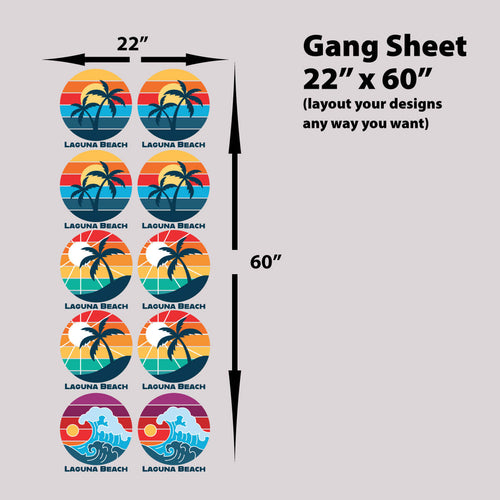
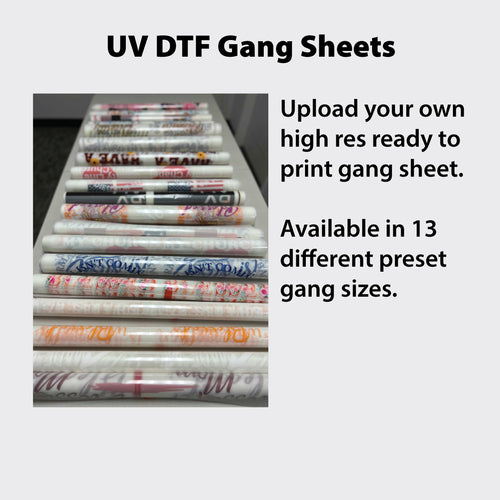
A gang sheet is simply a large sheet of DTF film packed with multiple designs. Instead of ordering prints one by one, you fill up an entire sheet with all the graphics you need for the week—different logos, various sizes, even designs for multiple clients. This single change flips your production economics on its head.
With HTV, your cost is tied to every roll of color you use. With DTF gang sheets, you pay for the sheet, not for the number of colors or the complexity of the art on it.
- Dramatically Lower Cost-Per-Print: By fitting dozens of designs onto one sheet, the cost for each individual graphic plummets. This is a huge win for small items like chest logos or sleeve prints.
- Zero Weeding. Ever: This is the real game-changer. DTF transfers arrive at your door ready to press. All those hours you once lost to picking tiny pieces of vinyl are gone, freeing you up to press more shirts and find more customers.
- Unlimited Color and Detail: Photorealistic images, super-fine lines, and smooth gradients are either impossible or a nightmare with layered HTV. DTF handles it all in a single press with no extra work.
Key Insight: Moving from HTV to DTF gang sheets means you're switching from a labor-heavy craft model to a streamlined production model. Your heat press goes from being a simple tool to a full-blown profit machine.
Maximizing Efficiency with an Auto-Build Gang Sheet Builder
Trying to arrange designs on a gang sheet to use every last bit of space can feel like a frustrating game of Tetris. When you do it by hand, it takes forever, and you almost always leave expensive blank spots. This is where modern software gives you a massive advantage.
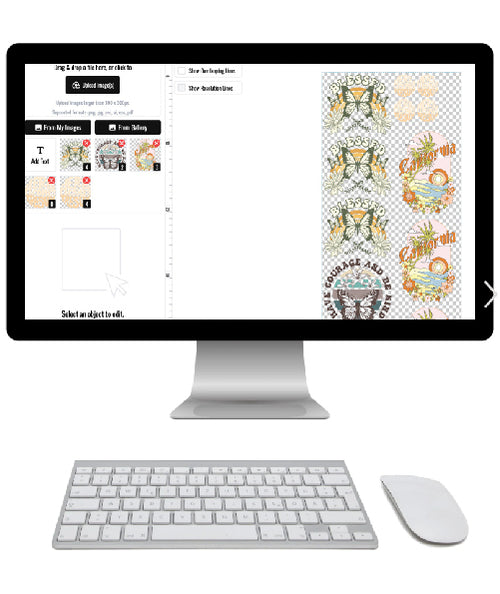
Our Auto-build gang sheet builder was designed to solve this exact problem. It makes creating ultra-efficient gang sheets ridiculously simple. You just upload all your image files—as many as you want—and the software does the heavy lifting. It automatically rotates and nests every design, packing them as tightly as possible so you get the most value out of every square inch.
This isn't just about saving a few minutes; it's about maximizing your return on investment. A well-built gang sheet can slash your per-print cost by over 50% compared to buying individual transfers or wrestling with multi-color HTV jobs. You can learn more about mastering this process in our guide to understanding DTF gang sheets.
For any shop serious about scaling, the one-two punch of DTF technology and a smart gang sheet builder is a no-brainer. It gives you a direct path to higher profits, faster turnarounds, and the ability to say "yes" to more complex jobs without hiring more staff. It’s the strategic move that graduates you from a crafter to a professional print shop.
Frequently Asked Questions About HTV
If you’re getting into the custom apparel game, you've probably got questions. We hear the same ones all the time from folks just starting out and even from seasoned pros trying to perfect their craft.
Getting these fundamentals right is the key to avoiding frustration and wasted material. Think of this as your cheat sheet for making professional-quality gear every single time.
Can I Use a Regular Iron for Heat Transfer Vinyl?
Technically, yes, but for any work you want to sell or have last more than a wash or two, the answer is a hard no. A home iron is a disaster waiting to happen—they're notorious for hot spots and have no way to apply consistent pressure.
These two things are the biggest reasons for failed applications. You'll see corners lifting right away or the whole design peeling off after one trip through the laundry. A heat press is the only way to go because it delivers what an iron can't:
- Consistent Temperature: The entire heat platen stays at the exact temperature you set, so the adhesive activates evenly across your whole design.
- Even Pressure: A real press clamps down with firm, even pressure, forcing the adhesive deep into the fabric for a bond that actually lasts.
Why Is My Heat Transfer Vinyl Peeling After Washing?
Peeling is the number one sign of a weak bond, and it almost always points back to a mistake in the application process. If your designs are failing in the wash, take a hard look at your technique.
The main culprits are almost always incorrect temperature or not enough pressure. Every vinyl has its own specific recipe, and just getting "close enough" won't do the job. Another huge mistake is skipping the pre-press. Always press the blank garment for 5-10 seconds to zap any moisture and smooth out wrinkles. It creates the perfect canvas for your transfer.
Key Takeaway: A peeling design is a symptom of a bad press. Always follow the manufacturer’s instructions for heat, pressure, and whether it’s a hot, warm, or cold peel. That’s how you get a durable finish that looks professional.
What Is the Difference Between HTV and Adhesive Vinyl?
This one trips up a lot of beginners, but it's pretty simple. The difference comes down to how the adhesive works and what you’re sticking it on.
Heat Transfer Vinyl (HTV) is made specifically for fabric—think cotton tees, poly sportswear, or canvas totes. It has a special heat-activated adhesive on the back. You have to use a heat press to melt that glue and bond it permanently into the fabric's fibers.
Adhesive vinyl, on the other hand, is basically a sticker. It has a pressure-sensitive adhesive that works on hard, smooth surfaces like glass, metal, plastic, or laptops. No heat needed; you just peel and stick. It's the stuff you use for car decals, window signs, and custom mugs.
How Can I Make My Custom Apparel More Cost-Effective?
For simple, one-color jobs or super small batches, using the best heat transfer vinyl you can find is a solid, cost-effective choice. But the minute your designs get complicated or your order sizes grow, the cost of vinyl and the time spent weeding will eat into your profits fast.
To really make your production cost-effective, you have to think bigger than single HTV rolls. For any job with multiple colors, tiny details, or more than a few shirts, Direct-to-Film (DTF) transfers are a much smarter investment. You can fit dozens of different designs onto one transfer sheet, which slashes your cost per print.
Our Auto-build gang sheet builder makes this ridiculously easy. Just upload all your designs, and the tool automatically packs them together to use every last inch of the film. This means you get zero waste and the lowest possible cost for every graphic, all while completely eliminating the headache of weeding. It’s the perfect way to scale your business profitably.
Ready to create vibrant, durable, and complex designs with zero weeding? The team at Lion DTF Transfers makes it simple with industry-leading DTF prints that are ready to press and built to last.
Explore our premium DTF transfers and start building your gang sheet today!