



For a small business, the best all-around heat press is a 16"x20" model that features auto-open. This size gives you the perfect sweet spot—versatile enough for all sorts of products but big enough for efficient batch production. The auto-open function is a lifesaver, preventing scorched garments and cutting down on fatigue during those long printing sessions.
Choosing The Right Heat Press For Your Business
Think of your heat press as the engine of your custom apparel business. It's a foundational investment, and the quality of your machine directly dictates the quality of your final products. Whether you're a budding Etsy entrepreneur or scaling an e-commerce brand, you need a machine that lines up with how you actually work.
This decision is about more than just the price tag. Key factors like platen size, heat consistency, and pressure control are non-negotiable if you want professional, durable results. This is especially true when you're working with high-quality Direct-to-Film (DTF) transfers, since their longevity hinges on a precise application. The right press guarantees every item you sell meets the high standards your customers expect.

Core Features To Evaluate
The demand for personalized gear is booming, making now a great time to invest in quality equipment. In fact, the global heat press machine market hit USD 829.13 million in 2024, largely driven by small businesses cashing in on the custom apparel trend. To compete, you have to know what you're looking for. You can see more on these market trends over at Gitnux.org.
Before you start comparing models, it helps to understand the core features that separate a hobbyist tool from a professional workhorse.
A heat press isn't just a purchase; it's a long-term business partner. Prioritizing even heating and consistent pressure from day one will save you countless dollars in wasted materials and reprints down the line.
To simplify your search, we've put together a quick-glance table breaking down the most critical machine features for any small business.
Quick Guide To Key Heat Press Features For Small Businesses
Here’s a summary of the most important features to look for when choosing a heat press that can keep up with your business needs.
| Feature | Why It Matters For Small Business | Recommended Spec For DTF |
|---|---|---|
| Platen Size | Determines the max design size and lets you press multiple items or large gang sheets at once, boosting throughput. | A 16"x20" platen is ideal for maximizing our Auto-build gang sheet builder, which makes you more cost-effective. |
| Even Heat Distribution | Prevents "cold spots" that cause transfers to peel or crack, ensuring every part of your design adheres perfectly. | Look for digital temperature control with a thick, high-quality heating element. |
| Consistent Pressure | Guarantees that the DTF adhesive bonds correctly to the fabric, which is critical for a soft feel and wash resistance. | An adjustable pressure system with a clear, easy-to-use mechanism is a must. |
| Digital Controls | Allows for precise, repeatable settings for time and temperature, ensuring consistency across every item in a big run. | An easy-to-read LCD screen with intuitive controls will save you headaches. |
This table gives you the essentials, but for those just starting out, our guide on the best heat press for beginners offers more tailored advice to get you up and running.
A Detailed Comparison Of Heat Press Types
Not all heat presses are created equal. When you're picking one, it's not about finding the "best" one overall, but the best one for your specific setup and workflow. The first real decision you'll make is choosing between the three main styles: Clamshell, Swing-Away, and Draw. Each one brings its own game in terms of space, safety, and ease of use.
This isn't just a minor detail; it directly shapes how you work every day. It affects your production speed, the kinds of products you can even offer, and your own comfort during a long day of pressing. If you're working out of a tight space, one type will make more sense. If you're pressing thick, bulky items, you'll need another.

The Clamshell Heat Press
The Clamshell heat press is what most people start with, and for good reason. It's a workhorse, especially if you're tight on space. The design is as simple as it sounds: the top platen lifts straight up and down, like a clamshell. That vertical-only motion means it takes up the smallest footprint of the three.
If your business is knocking out standard t-shirts, tote bags, or other thin, flat goods, a clamshell is a fantastic choice. The operation is fast and straightforward, making it perfect for simple, repetitive jobs where speed is key.
The downside? That compact design means there's not a lot of clearance between the hot top platen and the bottom one. This can make it a little tricky to perfectly position transfers, and it’s a real challenge with thicker items like hoodies. You also have to be more mindful to avoid accidental burns, since your hands are working close to the heat.
The Swing-Away Heat Press
Next up is the Swing-Away heat press. With this design, the top platen swings out horizontally, moving the heat source completely away from your work area. This gives you a wide-open, top-down view of the lower platen, which is a massive advantage for precise alignment.
This full access is a game-changer if you’re working with a mix of items, especially thicker things like ceramic tiles, plaques, or bulky hoodies. The risk of burning your knuckles is almost zero, making it a much safer option for complex jobs that demand more time for setup.
A key benefit of the swing-away design is the ability to apply even, consistent pressure across the entire platen, which is critical for flawless DTF transfer applications on both thin and thick materials.
The big trade-off here is real estate. That swinging motion needs clearance, so these machines require a much larger operational footprint than a clamshell with the same platen size. It’s a huge factor for anyone working in a small shop. It's no surprise this style is popular; market data shows Swing-Away presses command the largest market share at 31.09% with a market value of USD 244.5 million in 2024. You can explore more market data on these trends and see why so many businesses prefer them.
The Draw Heat Press
Finally, there’s the Draw heat press, which offers a smart mix of safety and space-saving design. On these machines, the top platen stays put while the bottom platen slides out toward you like a drawer.
This gives you fantastic, unobstructed access to lay out your garment and transfer, much like a swing-away, but it doesn't need all that extra space on the side. You get a safe, open workspace in a relatively compact footprint, which makes it a great ergonomic choice.
Draw presses really shine in high-volume shops where comfort and efficiency are top priorities. Being able to set up your next press without reaching under a hot platen reduces fatigue and seriously speeds up your workflow. This makes it an excellent candidate for the best heat press machine for a small business with plans to scale up.
So, the right choice really boils down to your specific needs.
- Clamshell: The go-to for limited space and high-volume, straightforward jobs like t-shirts.
- Swing-Away: Perfect for getting maximum visibility and safety, especially when pressing thick or varied items.
- Draw: A great ergonomic hybrid, giving you safe, easy access without the huge footprint of a swing-away.
Matching the press to your products, workspace, and production goals is the first step toward building a successful operation. And remember, pairing any of these presses with a smart tool like our Auto-build gang sheet builder can streamline your process even further, helping you get the most out of every sheet and driving down your costs.
Core Features Of A Professional-Grade Machine
The jump from hobby-grade results to professional, retail-quality products comes down to the technical guts of your equipment. While the type of press matters, it’s the core features inside that truly dictate the durability and finish of your work. For a small business, a machine with professional components isn’t an expense—it’s your insurance policy against wasted inventory and unhappy customers.
These features are especially critical when you're working with premium Direct-to-Film (DTF) transfers designed to last over 100 washes. The precision of your machine's temperature, the consistency of its pressure, and even the size of its platen directly impact whether a transfer looks vibrant after fifty washes or cracks and peels after just a few. Knowing what to look for is how you choose the best heat press machine for a small business that’s built for quality.
Platen Size And Production Efficiency
A smaller press might seem like a smart way to save money upfront, but platen size is directly tied to your production speed and, ultimately, your profitability. A standard 15"x15" platen can handle most t-shirt designs, sure, but it will bottleneck your ability to work on oversized garments or press multiple items at once.
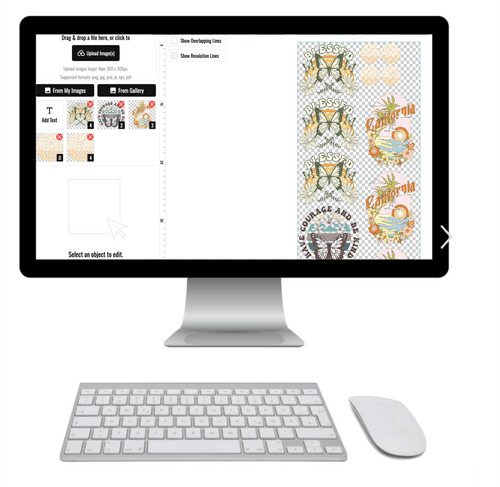
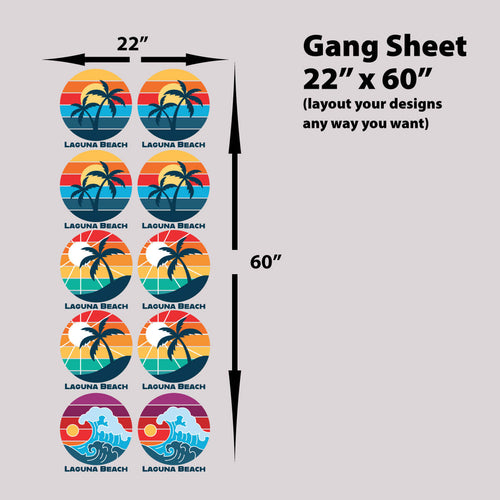
This is where a larger platen becomes a real strategic advantage. The industry-standard 16"x20" platen is the better choice for any business serious about growth. This larger surface area lets you press bigger, more impactful designs without having to compromise. More importantly, it lets you take full advantage of gang sheets, which group multiple designs onto a single transfer sheet. A bigger platen means you can press an entire sheet in one shot, dramatically cutting down your production time on batch orders. That's why pairing a 16"x20" press with our easy-to-use Auto-build gang sheet builder is a cost-effective strategy for any growing business.
The Critical Role Of Consistent Temperature
A professional-grade heat press absolutely must deliver precise and unwavering temperature across every single square inch of its platen. Cheaper machines are notorious for "cold spots," where the temperature can swing by as much as 10-20°F from the center to the edges. For DTF transfers, this inconsistency is a recipe for disaster.
If one part of the transfer doesn't get enough heat, the adhesive won't cure correctly, leading to immediate peeling or failure after the first wash. On the flip side, hot spots can scorch the garment or damage the transfer's delicate ink. A quality machine uses a thick heating element with tightly wound coils to guarantee that edge-to-edge thermal consistency.
A single cold spot on a platen can ruin an entire batch of DTF transfers, costing you not just the price of the transfers but also the garments and your valuable time. This is why even heating is a non-negotiable feature for any serious business.
Precise Digital Controls And Pressure Settings
Reliability in a heat press comes from its ability to repeat the exact same conditions, press after press. This is only possible with precise digital time and temperature controls. An easy-to-read LCD screen that lets you lock in your parameters ensures every item in a large order gets the identical treatment—a key factor in brand consistency.
Just as important is adjustable and even pressure. The "hand feel" of a transfer is determined by how well its adhesive bonds with the fabric fibers, and that requires firm, uniform pressure. A professional machine will have a solid pressure adjustment system, usually a central knob, that allows you to dial in the perfect setting for different materials, from thin t-shirts to thick hoodies.
A machine with a weak frame or a poor pressure mechanism will apply more force in the center and less at the edges. This uneven application is a primary cause of transfer failure, as the edges won't adhere properly and will be the first to lift. Ultimately, a press with reliable controls and a sturdy build is what separates amateur work from professional, long-lasting products.
Matching Your Heat Press to Your Business Model
Trying to find the single "best heat press machine for small business" is a fool's errand. The real question is, what's the best press for your business? The machine that’s perfect for a high-volume print shop would be total overkill for a home-based Etsy store, just like a budget machine will instantly become a bottleneck for a growing e-commerce brand.
To make a smart investment, you have to get real about your business model. Are you making one-of-a-kind custom pieces, or are you knocking out batch orders of 50 identical shirts? Your answers will point you directly to the right features, platen size, and price point. Let's break down the ideal heat press profiles for three common small business types.
This flowchart lays out the core features you'll need to think about—platen size, heat control, and pressure consistency—no matter what you're making.

Think of it as a decision-making process: size determines your product range, while heat and pressure control ensure every one of those products looks professional and lasts.
The Etsy Crafter: Low Volume, High Variety
The classic Etsy crafter is usually running the show from home, building a brand on unique designs, personalization, and small-batch orders. For this model, versatility and a small footprint are way more important than raw speed or automation. You're not churning out hundreds of the same shirt; you're creating a diverse lineup, one piece at a time.
A smaller, budget-friendly clamshell press is almost always the perfect starting point. A 15"x15" platen gives you plenty of room for standard adult t-shirts and tote bags without taking over your entire workspace. Since you’re not doing massive production runs, the manual effort is completely manageable, and features like auto-open are a luxury, not a need.
What you can't compromise on, even on a budget, is quality. The machine must deliver consistent heat and even pressure to make sure every custom order is perfect.
- Must-Have Features: Accurate digital time and temperature controls, a reliable heating element that doesn't have cold spots.
- Ideal Platen Size: 15"x15" is the sweet spot for versatility and space-saving.
- Budget Considerations: An entry-level to mid-range price is fine. Just focus on build quality over bells and whistles.
The E-commerce Brand Owner: Batch Production
The e-commerce brand owner has graduated from one-off orders. Now, it's all about fulfilling inventory and processing orders in batches. Here, consistency, reliability, and efficiency are everything. This business needs a durable, mid-range workhorse that can run for hours without breaking a sweat.
This is where a 16"x20" swing-away or draw-style press becomes a serious upgrade. That larger platen is a game-changer for maximizing DTF gang sheets, letting you press multiple designs or oversized graphics in one shot. Using our Auto-build gang sheet builder to easily pack your designs becomes incredibly cost-effective at this scale, and a 16"x20" press is the key that unlocks that efficiency.
For a growing e-commerce brand, an auto-open feature is a lifesaver. It prevents scorching, cuts down on fatigue during long press sessions, and lets you prep the next garment while the current one is pressing—a simple way to boost your daily output.
The Local Print Shop: High Throughput and Diversity
An established local print shop is a high-volume operation juggling a huge variety of jobs, from team jerseys and corporate wear to a stack of promotional tote bags. This business demands a heavy-duty, high-throughput machine with advanced features built for speed, durability, and versatility.
At this level, you're investing in professional-grade equipment with robust automation. Features like interchangeable platens are invaluable, letting you swap from pressing standard tees to hats, sleeves, or pant legs in minutes. The machine has to be an ergonomic workhorse, which often means a draw-style press or an air-powered automatic model to minimize physical strain on your team during all-day shifts.
The goal is to crank out as much product as possible without a single dip in quality. That means your press needs flawless heat distribution, precise pressure adjustments, and the ability to store preset settings for all those repeat jobs.
- Must-Have Features: Auto-open functionality, interchangeable platens, and storable time/temperature presets.
- Ideal Platen Size: A 16"x20" platen is the bare minimum. You'll likely want options for larger or specialized platens, too.
- Budget Considerations: See this as a long-term capital investment. You should expect to be in the higher-end price range for a machine built for industrial use.
Optimizing Your Workflow For Maximum Profitability
A high-quality heat press is a fantastic start, but the best machine only becomes a true money-maker when it’s part of a smart, efficient system. Real profitability isn't just about your equipment; it’s about your entire workflow. Building a tight process minimizes waste, speeds up production, and directly boosts your return on investment with every single press.
This means looking beyond the machine itself and focusing on how you prep your designs and manage orders. You'd be surprised how small tweaks here and there can lead to huge gains in both time and material costs, turning a good business into a great one.

Maximizing Value With Gang Sheets
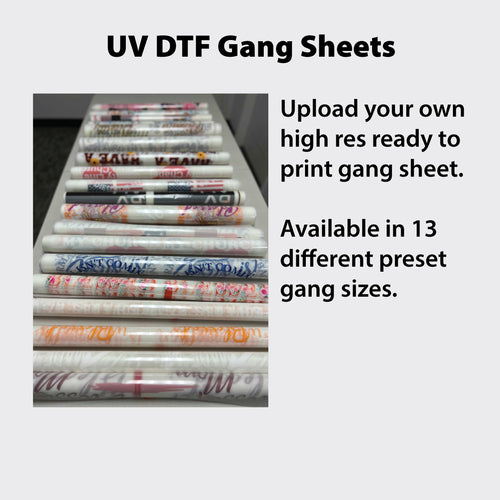
One of the most impactful changes any small business can make is switching from single transfers to gang sheets. Instead of printing one design at a time, a gang sheet lets you group multiple graphics—for totally different orders, sizes, or products—onto a single large DTF transfer sheet. This simple shift is a total game-changer for cost-effectiveness.
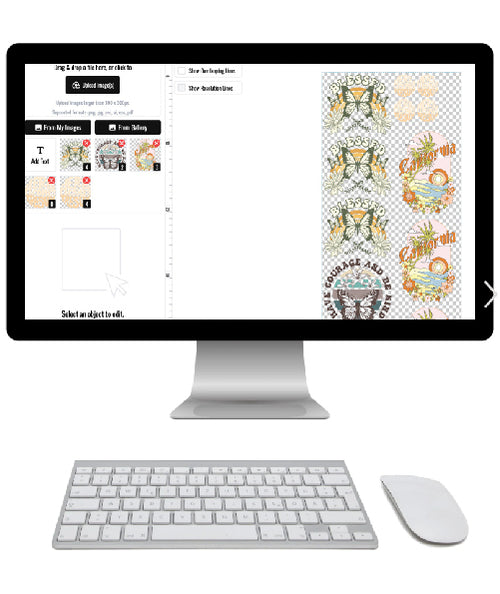
By filling an entire sheet, you slash material waste and drop the cost per design. Tools like our Auto-build gang sheet builder make this ridiculously easy. You just upload your designs, and the software automatically arranges them to maximize the space, ensuring you get the most value out of every square inch you pay for.
A Practical Example In Action
Let's walk through a common scenario to see how this plays out. Imagine you've got three separate orders on your plate:
- Order A: Ten shirts with a large chest logo.
- Order B: Fifteen hats with a small front logo.
- Order C: Five tote bags with a medium-sized graphic.
Instead of ordering three different sets of transfers, you can combine all these designs onto one gang sheet.
Using the Auto-build gang sheet builder, you'd upload all the graphics. The tool would then puzzle-piece them together, filling one large sheet efficiently for maximum cost effectiveness. Now, instead of juggling three different transfer types, you have a single sheet ready to go. You just cut out the designs as needed, press them in batches, and make your entire fulfillment process smoother.
By batching diverse orders onto one gang sheet, you can cut your transfer costs by 50% or more compared to buying individual designs. This efficiency is a direct path to higher profit margins on every single item you sell.
Before we move on, let's look at a quick cost-benefit analysis of workflow optimizations like this.
Cost-Benefit Analysis Of Workflow Optimizations
| Workflow Strategy | Upfront Cost/Effort | Per-Unit Cost Savings | Long-Term ROI For Small Business |
|---|---|---|---|
| Using Gang Sheets | Minimal; learning a builder tool | $0.50 - $2.00+ per design | High; immediately lowers material costs, boosting profit on every item. |
| Auto-Open Press | $200 - $500 more than manual | Saves seconds per press | Medium; improves throughput and prevents costly mistakes (scorched shirts). |
| Batching Orders | Organizational effort | Reduces setup time significantly | High; streamlines production, allowing more orders to be completed per hour. |
| Single Transfers | None | $0 (Baseline) | Low; higher material waste and slower workflow limit scalability. |
As you can see, a little upfront thought on your process can pay off big time down the road.
Leveraging Automation For Higher Throughput
As your business grows, your own manual labor becomes the biggest bottleneck. Features that introduce a bit of automation are crucial for scaling up without burning out. Two of the most valuable upgrades that directly impact your output are auto-open functionality and threadable platens.
An auto-open feature, usually powered by an electromagnet, automatically lifts the heat platen when the timer hits zero. This small convenience has a massive impact on your day.
- Prevents Scorching: It eliminates the risk of over-pressing and ruining a garment if you get distracted by a phone call or a new order coming in.
- Boosts Efficiency: You can confidently turn away to prep the next item, effectively creating a one-person production line.
- Reduces Fatigue: It saves you from the physical strain of manually opening a heavy press hundreds of times a day.
A threadable platen lets you slide a shirt over the lower platen, so you're only working with the front layer of fabric. This makes it way easier to align designs perfectly and stops ink from bleeding through to the back. This feature shaves valuable seconds off each press.
After all, once you've dialed in your material costs with gang sheets, learning how to price custom shirts properly is the next critical step to maximizing those profits.
Common Questions About Heat Presses
Choosing the right heat press for your small business means digging into a lot of technical specs. To cut through the noise, I've put together some straight answers to the questions we hear most often from entrepreneurs just starting out. Getting these right from the beginning can save you from some expensive mistakes and get your business on the right track.
A solid grasp of the basics will help you invest with confidence. From platen size to the old debate over a home iron versus a real press, we'll cover what truly matters.
What Size Heat Press Is Best For A Small T-Shirt Business?
You can definitely get by with a 15"x15" press, but a 16"x20" platen is really the sweet spot for most small t-shirt businesses that want to be efficient and have room to grow. This size is the perfect partner for getting the most value out of your DTF gang sheets.
That larger surface area isn't just for oversized designs; it lets you press multiple graphics at once. This is a game-changer for speeding up production and slashing your cost per item, which is everything when it comes to profitability. It helps you squeeze every last dollar out of your sheets, especially if you’re using our Auto-build gang sheet builder which packs your designs in for maximum, cost-effective use of space.
How Important Is Even Pressure And Temperature For DTF Transfers?
It's everything. I can't stress this enough—it is absolutely non-negotiable. Consistent temperature and even pressure across the whole platen are the two most critical factors for a durable, professional-looking DTF transfer. Any wobble in these can completely ruin your final product.
If you have hot or cold spots, parts of the transfer will under-cure, and that leads to peeling or cracking after just a few washes. In the same way, uneven pressure means you get poor adhesion, and the final shirt just won't have that premium feel.
For premium transfers designed to last over 100 washes, you need a machine that delivers precise settings every single time, without fail. In a professional shop, there's just no substitute for that level of quality control.
Can I Use A Home Iron Instead Of A Heat Press?
A home iron might be fine for some hobby-level vinyl projects, but for a professional business using DTF transfers, it’s completely out of the question. An iron simply can't deliver the consistent high temperature or the even, firm pressure that a proper DTF application demands.
If you try to make it work, you'll end up with unreliable, unprofessional results that won't have the durability your customers expect. Investing in a quality heat press isn't just a purchase; it's a foundational step in building a reputable brand that people trust for consistent, high-quality gear. It tells your customers you're serious about your craft.
What Is The Difference Between An Automatic And Manual Heat Press?
The main difference is what happens when the timer goes off. With a manual press, you have to be there to physically lift the handle. An automatic press, usually with an electromagnet, just pops open on its own.
For any business planning to do any kind of volume, that auto-open feature is a huge advantage. It prevents scorching by making sure the heat is removed at the exact right moment—a common and costly mistake when you're busy.
It also frees you up to prep the next item, which is a massive productivity booster. Plus, it cuts down on the physical strain over a long day of pressing, which helps you stay efficient and consistent across big batches of orders.
Ready to pair your new heat press with the best transfers on the market? At Lion DTF Transfers, we make professional-quality printing easy. Use our Auto-build gang sheet builder to maximize your value and create stunning, durable products that last.