



You already have the artwork. The question is whether your supplier will help you ship a clean, durable product or create rework, waste, and customer complaints.
That's where many buyers get stuck when they search for where to buy UV DTF transfers. They compare shops by price alone, place a test order, and only then discover the transfer was sized poorly, the carrier film was unstable on small graphics, or the adhesive wasn't suited for the hard surface they were decorating.
A better approach is to buy like a shop owner, not like a casual browser. Look at substrate fit, file handling, ordering workflow, sizing precision, and how the supplier supports repeatable production. If you're decorating mugs, tumblers, glassware, acrylic, plastic packaging, candles, or promo items, those details matter more than flashy product photos.
Why You Need a Modern Solution for Custom Products
A lot of small businesses hit the same wall at the same time. They've built a nice brand, customers want custom hard goods, and the product list grows faster than the production setup. Someone wants a short run of logo mugs. Another customer asks for branded water bottles. Then come phone cases, candle jars, gift boxes, and event swag.
Traditional decoration methods don't always fit that reality. Some require equipment that doesn't make sense for small batches. Others work only on limited materials. Some are fine for simple shapes but fall apart when you need full color detail or quick turnaround on mixed item types.
That gap is exactly why UV DTF has become such a practical option. It gives small shops, creators, and resellers a way to put detailed graphics on hard goods without building a full print department around those products. You can keep your product line flexible instead of turning down orders that don't match your equipment.
The broader custom-decorating space has also moved in that direction. The global custom T-shirt printing market was valued at about $5.16 billion in 2022 and is projected to reach $10.75 billion by 2030, according to Royal DTF's market summary. That same demand for customization supports more specialized buying channels, including suppliers focused on transfers for hard goods and promotional products.
What buyers usually need
Shoppers for UV DTF aren't looking for a novelty item. They need a production tool that solves a real bottleneck.
- Short runs that still look professional: You may need a dozen branded jars today and a mixed reorder next week.
- Full-color graphics on hard surfaces: Logos, gradients, small text, and layered artwork need to hold together cleanly.
- A process that doesn't require more equipment: If you can avoid adding another machine, labor step, or training issue, margins stay healthier.
Practical rule: If a decoration method only works when order volume is high, it won't help most growing small businesses.
Why sourcing matters more than people expect
A good UV DTF supplier doesn't just print artwork. They help you reduce manual trimming, avoid sizing mistakes, and keep placement consistent across multiple SKUs. A weak supplier leaves all of that risk on your table.
That's why the buying decision matters. The difference between “it sticks” and “it works in production” is where your profit usually gets made or lost.
Understanding UV DTF Transfers
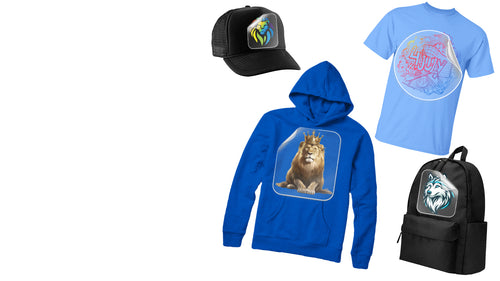
UV DTF is easiest to understand as a press-free decal system for hard goods. You're not heating fabric and you're not applying ordinary stickers that look flat and temporary. You're using a printed transfer designed to adhere to smooth, non-porous surfaces with a polished, finished look.

What UV DTF is built for
The most important technical filter is simple. The supplier needs to offer transfers calibrated for hard, smooth substrates, not just generic decals. Product pages in this category consistently identify UV DTF for surfaces like glass, metal, plastic, ceramic, wood, and similar non-porous materials, because the ink system bonds by surface adhesion rather than fiber penetration.
That distinction matters in real production. If you're applying graphics to a tumbler, acrylic sign blank, candle vessel, or cosmetic jar, adhesion depends on surface cleanliness and the surface itself. It's a different world from garment decoration.
How it differs from regular DTF
Traditional DTF is for textiles. It's made to be heat applied to fabric, where the transfer interacts with fibers and garment movement. UV DTF is for rigid products. No heat press is the main operational difference, but the bigger difference is where the product succeeds.
If you're still sorting out the terminology, this guide on what UV DTF is gives a basic orientation before you compare suppliers.
Here's the practical breakdown:
- UV DTF: Best for hard, smooth, non-porous surfaces.
- Traditional DTF: Best for shirts, hoodies, tote bags, and other textiles.
- Vinyl decals: Useful in some cases, but they usually don't offer the same printed detail, finish, or workflow for complex full-color artwork.
UV DTF works best when the substrate is rigid, smooth, and properly cleaned. That's the first condition to verify before you ever upload a file.
A quick visual walkthrough helps if you haven't handled the product before.
What buyers should notice in samples
When you evaluate a UV DTF sample, don't just look at the design from arm's length. Check the edges, small text, gloss consistency, and whether the transfer looks stable on fine elements. A good sample feels production-ready. A weak one looks acceptable in a product photo and disappointing in hand.
Pay attention to:
- Edge definition: Tiny letters and thin strokes should stay crisp.
- Finish quality: The transfer should look intentional, not cloudy or patchy.
- Surface fit: Curved or narrow application areas reveal flaws quickly.
If a supplier can't show clean hard-surface results, keep looking.
Key Factors for Evaluating UV DTF Suppliers
Most buying mistakes happen because people ask, “Who's cheapest?” before they ask, “Who's reliable?” Price matters. It just isn't the first filter.
The stronger way to compare suppliers is to check whether they help you run repeatable jobs with less waste. That means looking at fit for hard surfaces, ordering precision, file workflow, and whether their production model makes sense for your volume.
Start with cost and speed
A practical benchmark in the market is that some wholesale suppliers advertise UV DTF pricing as low as $0.03 per square inch, while some U.S. providers advertise 3–6 day delivery for custom UV DTF transfers, as shown on Ninja Transfers' UV DTF decals listing. That tells you the category has become accessible for short-run buying.
But low unit cost only helps if the order arrives usable. If poor registration or trimming issues cause waste, your true cost goes up fast.
Registration and sizing are not small details
UV DTF application is simple in theory, but small-item decoration exposes every production flaw. If you're placing graphics on cups, phone cases, jars, and labels, exact sizing matters. So does carrier-film stability.
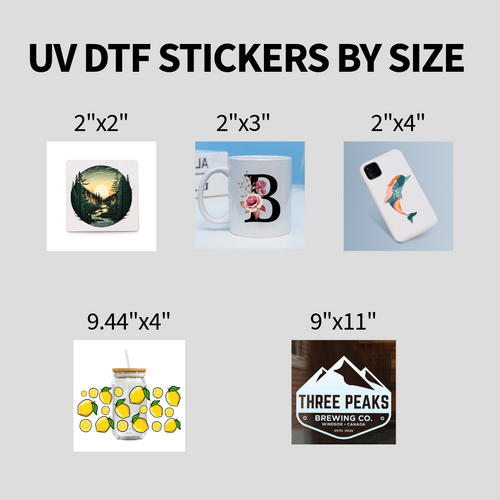
Suppliers that let you order by exact measurement or by size usually make life easier for shops with mixed SKUs. You spend less time trimming and less time trying to “make it fit” at the table.
A supplier that makes precise ordering easy usually saves more money than a supplier with the lowest listed square-inch price.
Use gang sheets to protect margin
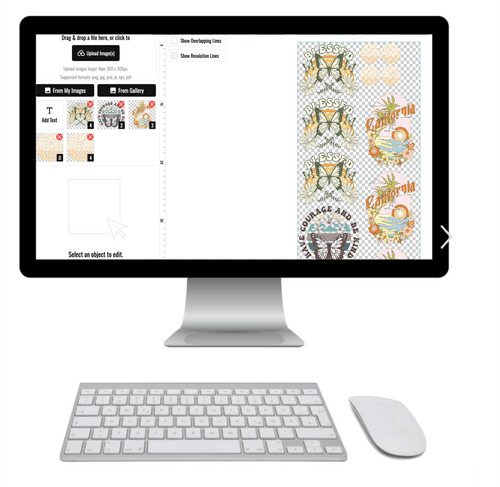
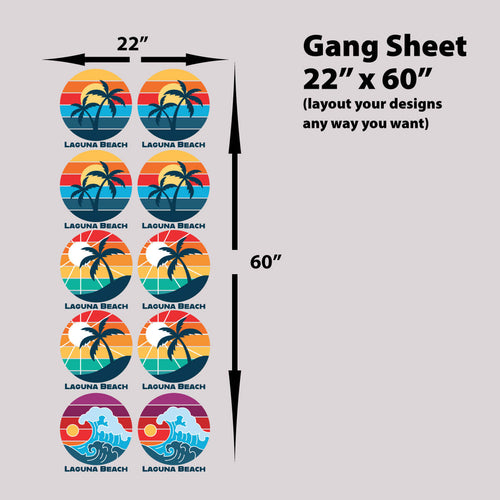
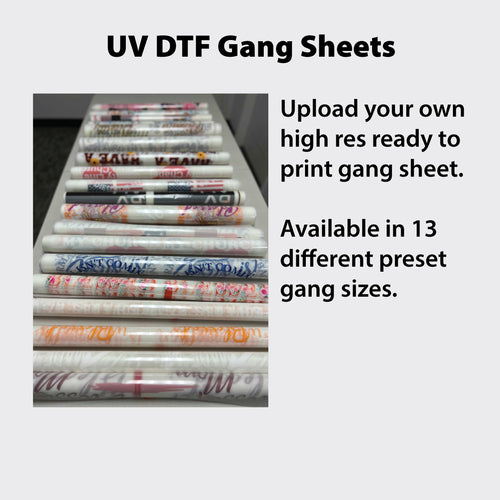
Gang sheets are one of the easiest ways to control cost when you have multiple small graphics. Instead of ordering one design at a time, you place many designs on the same sheet and use more of the film you're paying for.
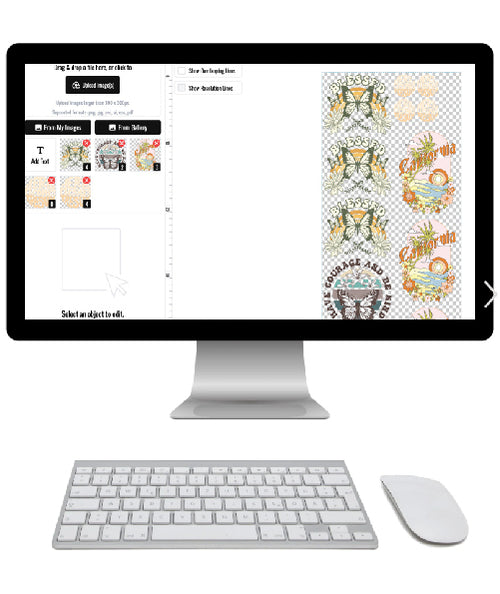
Workflow tools are important. Manual layout works, but it's easy to leave dead space, mismatch dimensions, or waste time arranging art. An Auto-build gang sheet builder is useful because it reduces those manual layout problems and helps you use the printable area more efficiently. For small brands and busy print shops, that's often the cleanest route to lower per-design cost without adding production friction.
What to ask before you buy
Some questions tell you more than product photos ever will.
- How are files handled: Do they print what you upload, or do they flag sizing and setup issues?
- Can you order exact dimensions: That's important when one customer needs a candle label and another needs a cup logo.
- Is the workflow built for repeat orders: Saved sizes, straightforward reordering, and clear naming conventions all help.
- Do they support gang sheets well: This matters even more if your product line changes week to week.
UV DTF supplier evaluation checklist
| Evaluation Criterion | What to Look For | Why It Matters |
|---|---|---|
| Substrate suitability | Clear indication that the transfers are made for hard, smooth surfaces | Prevents buying a product that isn't built for your application |
| Sizing options | Ordering by exact measurement or by size | Reduces trimming and improves repeatability |
| Registration quality | Clean alignment on small graphics and detailed artwork | Lowers misalignment risk on cups, jars, labels, and cases |
| Carrier-film stability | Easy handling during placement and release | Helps avoid shifting during application |
| Pricing model | Transparent pricing by size, sheet, or square inch | Makes job costing easier |
| Turnaround expectations | Clear production and delivery windows | Helps you schedule customer orders realistically |
| Gang sheet support | Manual and auto-build options | Improves material efficiency and lowers waste |
| File review process | Guidance on print-readiness and setup | Reduces failed prints caused by artwork problems |
Buyers who use this checklist tend to spot weak suppliers early. That's better than discovering problems after a customer has already approved a mockup.
Where to Find UV DTF Transfers Online
When people ask where to buy UV DTF transfers, they're usually choosing between three kinds of sellers. Each one can work. The right channel depends on how much consistency you need and how much production risk you're willing to absorb yourself.
Specialist online providers
These shops focus on transfer products rather than trying to be everything to everyone. That usually means a cleaner ordering flow, better size-based options, and clearer support for gang sheets and repeat production.
If you want a broader look at local-versus-online buying options, this article on finding UV DTF transfers near you is useful context.
Specialist providers are usually the strongest fit for:
- Print shops: You need predictable output and easier reorders.
- Product decorators: You're applying transfers across multiple hard-good categories.
- Growing brands: You need less trial and error and more repeatability.
The trade-off is that not every specialist is equal. Some are organized around production efficiency. Others are mainly storefronts with limited support.
Large print marketplaces
Marketplaces can be convenient because they aggregate many sellers in one place. They're useful when you want to compare listing styles, product formats, and turnaround promises quickly.
The upside is variety. The downside is inconsistency.
One listing may be excellent, and the next may tell you almost nothing about substrate compatibility, sizing precision, or application handling. That means the buyer has to do more vetting. If you go this route, read every product detail carefully and don't assume two sellers are offering the same thing just because the title says UV DTF.
General e-commerce platforms
Etsy, eBay, and similar platforms are common entry points for hobbyists and small test orders. You can often find niche aesthetics, low minimums, and individual creators selling custom work.
That can be a good fit if you're experimenting with a concept or ordering limited personal projects. It's less ideal when your business depends on stable production.
Here's the practical comparison:
- Best for experimenting: General e-commerce platforms
- Best for broad browsing: Large marketplaces
- Best for repeat business use: Specialist transfer providers
If your customer is paying for consistency, buy from a supplier set up for consistency.
What channel usually works best
For business buyers, specialist transfer shops are usually the safest choice because they're built around the exact workflow you need. They tend to think in terms of sizing, film usage, repeat orders, and application outcomes, not just one-off retail transactions.
That doesn't mean every order has to be large. It means the supplier should understand production, not just listing management.
How to Order and Prepare Your Files for Printing
A strong supplier can help with workflow, but they can't rescue weak artwork completely. Most UV DTF problems that people blame on printing started earlier with poor file prep, inconsistent sizing, or disorganized gang sheet layouts.

Build the file correctly before upload
The cleanest orders usually start with simple discipline. Use high-resolution artwork, keep backgrounds transparent when needed, and size the file for the actual application surface rather than guessing on the order page.
A practical setup includes:
- Use 300 DPI artwork: Low-resolution files often show their flaws on small detailed graphics.
- Keep the background transparent: That helps avoid unwanted boxes or visible edges around the design.
- Export in a reliable format: PNG, AI, or PDF are common working choices depending on the supplier and artwork type.
If you're ordering for hard goods, measure the printable area on the actual product. Don't estimate off a mockup. A cup logo that looks fine on screen can end up too tall, too wide, or awkwardly placed when you apply it.
Gang sheets are where savings show up
Gang sheets aren't just for large shops. They're one of the smartest ways for small brands to buy efficiently, especially when you have multiple logos, label sizes, seasonal art, or mixed client jobs.
You can build them manually. Many people do. But manual placement often leaves too much empty space and takes longer than expected. That's why tools matter.
An online UV DTF gang sheet builder is useful when you want to streamline layout, reduce manual arrangement, and fit more usable artwork onto a sheet. The Auto-build gang sheet builder is especially practical for buyers who want cost effectiveness without spending extra time nudging files around a canvas.
A simple ordering workflow that works
The smoothest process usually looks like this:
- Measure the product first. Record the maximum safe print area for each item.
- Prepare artwork at final size. Don't rely on visual scaling alone.
- Group related designs together. This makes gang sheet planning easier.
- Choose the sheet or size format that matches your order mix.
- Review spacing and orientation carefully. Small placement errors become expensive after printing.
The cheapest transfer is often the one you sized correctly the first time.
What slows orders down
A few problems show up again and again:
- Tiny files stretched too large: Fine on screen, rough in print.
- No consistent naming system: Confusing when multiple SKUs are on one sheet.
- Poor gang sheet organization: Designs end up rotated, crowded, or hard to cut cleanly.
- Wrong dimensions for curved products: The art may fit the width but not the usable visible area.
Treat file prep as part of production, not an afterthought. It saves time on every reorder.
Why Lion DTF Is a Top Choice for Your Transfers
When I evaluate a transfer supplier, I care less about slogans and more about whether the workflow helps a shop move faster with fewer mistakes. That means practical tools, clear file handling, and dependable production habits.
One option in this category is Lion DTF Transfers, which offers UV DTF stickers, ordering by size, upload-based ordering, and gang sheet workflows that fit both one-off and repeat jobs. Its Auto-build gang sheet builder is the part I'd pay attention to first because it directly affects cost control and ordering speed for shops that manage lots of small graphics.

Why the workflow stands out
A supplier becomes more useful when it reduces buyer effort without making the process opaque. Auto-building gang sheets does that well. Instead of manually arranging every logo, label, and variation, you can move from artwork to order with less friction and usually less wasted printable space.
That matters most for businesses handling:
- mixed product lines
- many small logo sizes
- repeat event orders
- private-label packaging runs
Where it fits in a buying decision
This is the kind of supplier setup that makes sense if you want one place to handle uploads, custom sizing, and gang sheet production without adding another layer of manual prep. It's also relevant if your orders switch between apparel-related transfer needs and hard-good decoration, since the product offering covers more than one transfer category.
Good suppliers don't just print files. They reduce avoidable errors before the print stage and make reordering easier after the first job.
The main reason to keep a provider like this on your shortlist is operational, not emotional. If the ordering system helps you size correctly, pack gang sheets efficiently, and move jobs through faster, that's value you'll feel on every order.
Application Tips and Common Pitfalls to Avoid
A good transfer still needs a clean application. Most failures happen at the table, not in the printer. The basic workflow is straightforward: peel, position, squeegee, then remove the top layer, and that sequence is exactly why registration accuracy and carrier-film stability matter so much on small items like cups and phone cases.
A clean application routine
Start with the surface, not the transfer. If there's dust, skin oil, residue, or moisture on the item, the adhesive has to fight through contamination before it ever reaches the substrate.
A reliable process looks like this:
- Clean the item thoroughly. Focus on the exact placement area.
- Peel carefully and keep control of the transfer. Don't rush this on narrow graphics.
- Position before pressing hard. Once it grabs, repositioning gets harder.
- Squeegee with even pressure. Work out air and push the graphic into full contact.
- Remove the top carrier slowly. Watch for lifting edges as you peel.
Common mistakes that cause avoidable failures
The most common problem is applying UV DTF to the wrong kind of surface. Hard, smooth, non-porous items are the safe lane. Surfaces that are heavily textured, porous, dirty, or too flexible create far more risk.
Other trouble spots show up fast:
- Skipping surface prep: Even a good transfer can lift if oils are left behind.
- Rushing curved applications: Cups and tumblers need controlled placement.
- Peeling the carrier too aggressively: That's where small details can lift.
- Using artwork that was sized without testing: Even perfect print quality won't fix poor fit.
Slow hands beat fast hands on UV DTF applications, especially on small-format products.
What works better in practice
For flat items, the process is usually forgiving if the surface is clean. For curved items, work gradually and keep pressure consistent. If a section starts to lift when removing the carrier, press it back down and give it another moment before trying again.
That small pause prevents a lot of ruined transfers.
If you're ready to stop guessing and order from a supplier built for fast, practical production, browse Lion DTF Transfers for UV DTF stickers, custom sizing, and gang sheet options that make repeat ordering easier.