
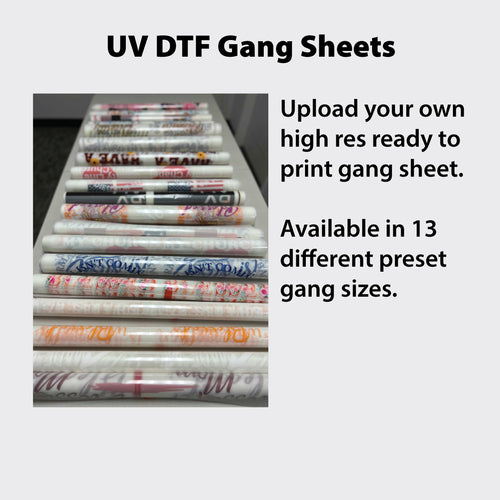
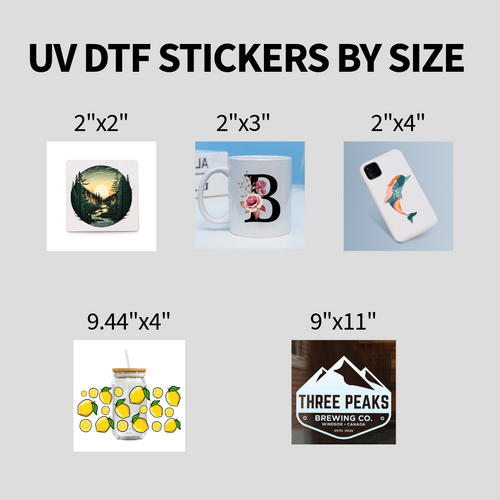
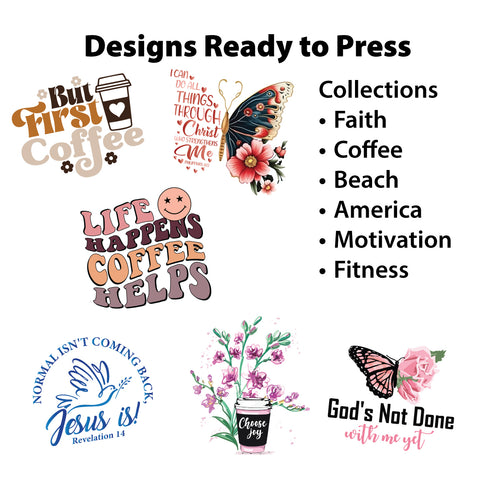


Ever wished you could print a whole bunch of different, high-quality permanent stickers for hard goods like mugs, tumblers, and laptops all at once? What if you could do it while saving a ton of money and material in the process?
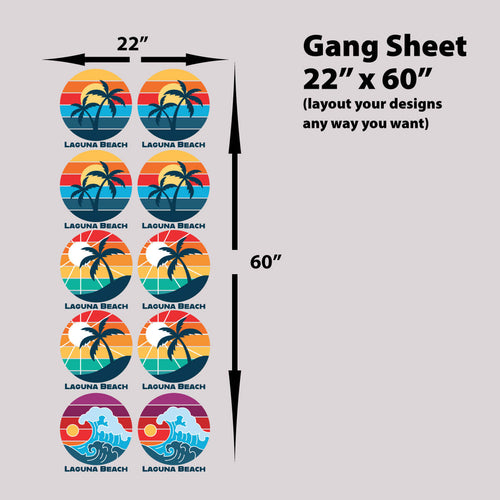
That's exactly what a UV DTF gang sheet is for. It’s a game-changing method that lets you group multiple designs onto one big adhesive sheet, making your production incredibly efficient.
What Exactly Is a UV DTF Gang Sheet?

If you've ever felt the pain of printing small sticker orders one by one, you already get the problem a UV DTF gang sheet solves. This method is all about pure, simple efficiency, letting creators and print shops run multiple designs in a single print job.
Think about it like baking. You wouldn't bake one cookie at a time on a giant tray, right? A smart baker fills that entire sheet with as many cookies as possible to save time and energy. A gang sheet does the exact same thing for printing. The term "gang" just means grouping—or "ganging up"—multiple designs to print together.
To give you a quick overview, here are the core concepts behind UV DTF gang sheets.
UV DTF Gang Sheet at a Glance
| Attribute | Description |
|---|---|
| Core Concept | Printing multiple, different designs on a single large adhesive sheet. |
| Primary Goal | Maximize material usage and minimize waste and printing time. |
| Key Benefit | Significantly lowers the cost per sticker or transfer. |
| Ideal Use | Perfect for custom product businesses, Etsy sellers, and promotional companies. |
| How It Works | Designs are "ganged" together in a layout, printed once, then cut and applied individually. |
This approach makes small-batch or varied-design printing not just possible, but profitable.
What Makes This Method a Game-Changer?
This really changes the whole financial picture of custom printing. By consolidating different jobs into one run, you slash material waste and print time. That translates directly into a lower cost for each sticker, which is a massive win for anyone selling custom products.
The key benefits are pretty clear:
- Cost-Effectiveness: Printing designs in a batch dramatically lowers the per-unit cost compared to printing them one by one.
- Time Savings: One single print run can give you dozens of ready-to-apply transfers, speeding up your entire workflow.
- Design Variety: You can print logos for a corporate client, detailed artwork for your online store, and text designs for a personal project—all on the same sheet.
By arranging multiple jobs onto a single sheet, businesses can reduce material waste by up to 40%. This makes it not just a smart economic choice, but a more sustainable one, too. It’s why everyone from small Etsy sellers to huge promotional companies is jumping on this technology.
Maximize Your Value with Smart Tools
The real magic of a UV DTF gang sheet happens when you pack the layout to fit as many designs as possible. You can do this by hand in your design software, but it's a slow, frustrating process of rotating, nudging, and squeezing images to fit just right.
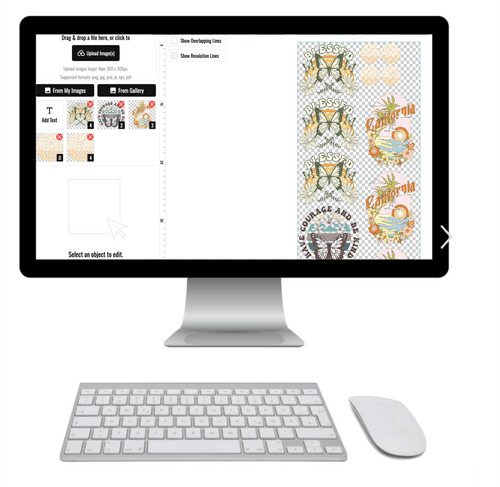
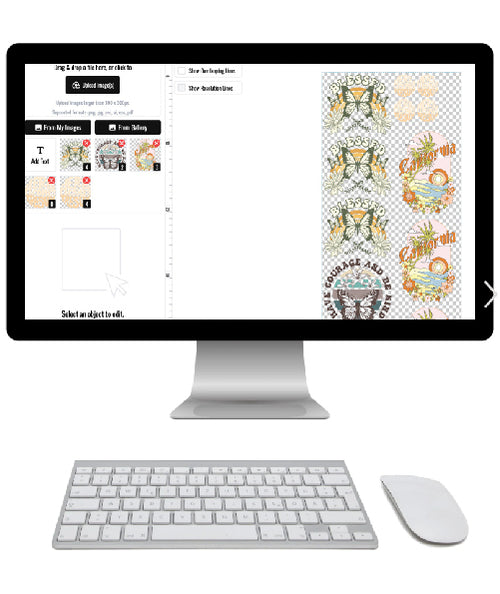
This is exactly why our Auto-build gang sheet builder is such a powerful tool. It automatically takes your uploaded designs and arranges them in the most space-efficient way possible, making sure you get the absolute most value out of every single square inch of your sheet. This focus on ease and cost-effectiveness makes creating complex gang sheets a breeze for anyone, no matter their design experience.
Choosing Between UV DTF, Regular DTF, and Vinyl
When you’re diving into custom products, it’s easy to get lost in all the options. The three big players you'll keep hearing about are UV DTF transfers, regular DTF transfers, and vinyl stickers. Getting the difference between them is the key to getting a professional-looking product and avoiding expensive mistakes.
Think of it like this: each method is a different tool for a specific job. You wouldn't use a hammer on a screw, right? Same idea here. You can't put a fabric transfer on a glass mug and expect it to work. Picking the right tool from the start saves you a ton of time, money, and headaches.
The Core Difference: Application Surface
The first and most important question you have to ask is: what am I putting this on? The answer immediately narrows down your options.
-
UV DTF Transfers: These are your go-to for hard, smooth surfaces. We’re talking about glass, metal, plastic, finished wood, and ceramics. There’s no heat press involved. You just apply them with firm pressure, and they act like a super-durable, premium "sticker" with no background.
-
Regular DTF Transfers: This one is strictly for fabrics and textiles. If you’re decorating t-shirts, hoodies, canvas bags, or pretty much any garment, regular DTF is what you need. It requires a heat press to bond the design directly into the fabric fibers.
-
Vinyl Stickers: While vinyl is flexible, it’s best for temporary or less demanding jobs on hard surfaces. You can stick it on a lot of the same things as UV DTF, but it just doesn't have the same permanent feel or high-end finish.
Trying to use the wrong one will fail instantly. A regular DTF transfer won’t even stick to a mug, and a UV DTF transfer will get completely ruined if you try to put it on a shirt with a heat press.
Comparing Durability and Finish
Beyond the surface, the look, feel, and toughness of each option are worlds apart. This choice directly affects how people see the quality of your product. A uv dtf gang sheet is perfect for cranking out multiple high-end decals for hard goods all at once.
The finish of a UV DTF transfer is often described as a slightly raised, glossy, and vibrant "paint-like" layer. This tactile, 3D effect gives products a premium feel that flat vinyl stickers cannot replicate. It creates a seamless look without the clear border often visible on traditional decals.
This raised, tough finish makes UV DTF transfers highly resistant to scratches, water, and fading. On the other hand, while some vinyl is durable, it's way more likely to start peeling at the edges and can fade when left out in the sun. Regular DTF, when pressed correctly onto fabric, has incredible washability, often lasting 100+ washes without cracking or fading. For a deeper dive into how DTF stacks up against another popular method, you can learn more about the differences between DTF and heat transfer vinyl in our guide.
Ease of Use and Cost Effectiveness
Each method has its own workflow and cost. For businesses that need to produce a bunch of different designs for hard goods, the uv dtf gang sheet is the undisputed champ for efficiency.
| Feature | UV DTF Transfer | Regular DTF Transfer | Vinyl Sticker |
|---|---|---|---|
| Application | Peel-and-stick; pressure only | Requires a heat press | Peel-and-stick |
| Equipment Needed | Squeegee or firm pressure tool | Heat press | None (or weeding tools) |
| Best For | Mugs, tumblers, laptops, metal | T-shirts, hoodies, most fabrics | Windows, laptops, temporary use |
| Finish | Raised, vibrant, no background | Soft, integrated into fabric | Flat, often has a visible edge |
One of the best things about UV DTF is how simple it is. The "cold" application—no heat press needed—means anyone can do it. The real money-saver, though, is ganging up your designs. Our Auto-build gang sheet builder was made for exactly this, automatically nesting your hard-good designs to use every single inch of the sheet. This slashes your cost-per-decal and makes it incredibly easy to produce a wide range of high-quality products profitably.
How to Design a Cost-Effective Gang Sheet
Building the perfect UV DTF gang sheet comes down to one simple, powerful idea: waste less space to save more money. It’s all about getting the most value out of every single print. This guide will walk you through the file specs and layout tricks you need to pack your sheet efficiently, turning every square inch into profit.
The starting point for any great print is a quality art file. For UV DTF transfers, your designs have to meet a few key standards to get that sharp, professional finish you're after.
Essential File Specifications
Your artwork has to be print-ready from the get-go. Following these specs helps you sidestep common printing errors, weird color shifts, and blurry results, saving you from the headache and cost of a reprint.
-
Resolution of 300 DPI: DPI (Dots Per Inch) is all about print sharpness. A file set to 300 DPI ensures your designs come out crisp and detailed, not pixelated or fuzzy.
-
Transparent PNG Background: This is non-negotiable. Your files must be saved as PNGs with a transparent background. The printer only puts ink where your design actually is, giving you a clean transfer with no unwanted background box.
-
CMYK Color Mode: Professional printers operate on the CMYK (Cyan, Magenta, Yellow, Key/Black) color model. If you design in CMYK, the colors you see on screen will be a much closer match to what comes off the printer.
This infographic clears up the differences between the top printing methods, so you can be sure UV DTF is the right call for your project's surface.

As you can see, UV DTF is the go-to choice for hard surfaces. Regular DTF is made for fabrics, while vinyl is more of a general-purpose decal.
The Smart Way to Build Your Gang Sheet
Once your individual files are prepped, it's time to arrange them on the sheet. While you could do this by hand, modern tools have made the process incredibly simple and far more effective. The goal is always to leave as little empty space as possible.
The easiest and most cost-effective way to get a perfectly packed layout is to use our Auto-build gang sheet builder. This tool automatically analyzes your designs and "nests" them together, rotating and shifting them to fit the absolute maximum number of images onto a single sheet.
This automated approach takes the tedious guesswork out of manual placement and flat-out guarantees you get more bang for your buck. It’s the best way to make your UV DTF gang sheet as profitable as possible, no design software skills needed.
Tips for Manual Gang Sheet Layout
If you'd rather build your layout yourself in a program like Photoshop or Canva, the same rules apply. Think of it as a game of digital Tetris—your mission is to fit every piece together as tightly as you can.
-
Rotate and Flip Designs: Don't be afraid to turn your images sideways or even upside down to slot them into awkward empty spots. A long rectangular logo might not fit horizontally, but it could slide in perfectly when rotated 90 degrees.
-
Fill Gaps with Small Designs: Have any small icons, logos, or bits of text? Use them to fill the empty real estate between your bigger designs. This is a fantastic way to print bonus items for free.
-
Maintain a Small Gap: While you want everything packed in, be sure to leave a small buffer of about 0.25 inches between each design. This gives you just enough room to cut them apart with scissors after printing without accidentally slicing into a neighboring transfer. For anyone new to this, our guide on how to create a DTF gang sheet in Canva offers a great step-by-step walkthrough.
Finally, for the absolute sharpest text and logos, vector files (like AI or EPS) are always king. If you're not sure how to prep your files or get them converted, our team is here to help get your artwork print-ready for a flawless final product every time.
For anyone in the custom products game, you know the real challenge isn't just making cool stuff—it's actually turning a profit. This is where the UV DTF gang sheet stops being just a printing method and becomes your secret weapon. It tackles the biggest headache in customization: how to run small, varied orders without your profit margins getting wiped out.
The whole advantage comes down to simple economics. When you group a bunch of different designs onto one sheet, you completely change how you pay for production. Instead of a base cost for every single sticker or logo, you pay one flat price for the entire sheet. That one move slashes your cost per transfer.
Boost Your Profit Margins Instantly
Let’s run the numbers. Say a single sheet runs you $20. If you can pack 40 different designs onto it, your cost per design drops to just $0.50. But if you only printed one design on that sheet? Your cost is the full $20. The more you fit, the cheaper each transfer gets, and the more money you make on every sale.
This pays off for all kinds of businesses:
- E-commerce Stores: An Etsy seller can print an entire sticker pack collection in a single go, offering tons of variety while keeping costs way down.
- Promotional Companies: A marketing agency can knock out logos for ten different clients on one order, making those small-batch promo items profitable again.
- Crafters and Makers: A hobbyist making personalized gifts can print designs for mugs, keychains, and phone cases all at once, saving a ton on materials.
And the demand for this kind of efficiency isn't just a small trend—it's exploding. The UV DTF gang sheet market is riding a huge wave. The global DTF printing industry, where gang sheets are a major player, was valued at a massive $782.1 million in 2023 and is on track to hit $2.1 billion by 2030. You can dig into the data on this incredible growth and see exactly why so many shops are jumping on board.
Gain a Competitive Edge with Speed and Agility
Beyond just saving money, the UV DTF gang sheet gives you a serious leg up on the competition. Being able to print a wide mix of designs in one quick run makes your business incredibly nimble. You can jump on trends and customer requests almost immediately.
Think about it: a new meme goes viral? You can have a sheet of designs printed and ready to go in a day. A local team wins the championship? You can be the first to offer celebratory decals. That kind of speed lets you cash in on opportunities while your competitors are still fumbling to set up individual print jobs.
That fast turnaround is a huge selling point. Quicker fulfillment means happier customers, which leads to better reviews and more repeat business. In a world where everyone expects fast shipping, producing and sending orders faster than the next guy is a game-changer.
Effortless Production and Cost Effectiveness
The trick to unlocking all this is packing your sheet as tightly as possible. But trying to do that by hand is a tedious, frustrating nightmare. That’s exactly why tools built specifically for this are so critical for any serious business.
For the easiest and most cost-effective way to get it done, our Auto-build gang sheet builder is the perfect answer. It handles all the heavy lifting, automatically arranging your designs to cut down on wasted space. This smart layout makes sure you squeeze every bit of value out of every sheet, maximizing your profits without you needing to be a layout expert.
Applying Your Transfers for Lasting Results

You've got your UV DTF gang sheet designs, and they look incredible. Now it's time to apply them perfectly. The great news is, you don't need any special equipment for this part—just a steady hand and a bit of care to get a permanent, professional-looking bond.
This guide will walk you through the process step-by-step, helping you sidestep common headaches like air bubbles or weak adhesion. Let’s get it right the first time.
Step-by-Step Application Process
Follow these steps exactly to make sure your transfer sticks flawlessly to any hard, non-porous surface.
-
Thoroughly Clean the Surface: This is the most critical step. Grab some isopropyl alcohol and a lint-free cloth, and wipe down your item. The surface has to be totally free of dust, oils, or any moisture for the adhesive to grab hold properly.
-
Peel the White Backing: Gently peel the white paper backing away from the clear film on top. Your design should stay completely attached to that clear carrier film.
-
Position and Press: Line up your design exactly where you want it. Once you're set, press it down firmly, starting from the middle and smoothing your way outward.
-
Squeegee with Firm Pressure: Use a squeegee (or even a credit card) to rub over the whole design with strong, even pressure. This forces the adhesive onto the surface and pushes out any pesky air bubbles.
-
Slowly Remove the Carrier Film: Carefully and slowly peel off the top clear film. Pulling at a sharp, low angle usually works best. If any part of the design starts to lift, just lay the film back down, squeegee that spot again, and then continue peeling.
Following this method creates a powerful bond that’s built to last.
Ensuring Durability and Longevity
One of the best things about UV DTF transfers is just how tough they are. Once you’ve applied them and let them cure for 24-48 hours, they create a durable layer that can handle daily life with ease.
These transfers are seriously resistant to:
- Water: They are completely waterproof, making them perfect for drinkware like tumblers and mugs.
- Scratches: The tough finish holds up against scuffs and minor abrasions from everyday use.
- Sun Fading: The UV-cured inks keep the colors vibrant and prevent them from fading in the sunlight.
The secret to making them last? It all comes down to proper surface prep and solid application pressure. Skipping the cleaning step or going too light with the squeegee are the top reasons a transfer might not stick for good.
Simple Care for Lasting Vibrancy
To keep your custom items looking sharp for years, a little care makes a huge difference. While these transfers are resilient, they aren't totally indestructible. The biggest enemy is the combo of high heat and harsh detergents you find in dishwashers.
For any decorated drinkware, hand-washing is strongly recommended. Just use soap with cool or warm water and avoid scrubbing the design with abrasive sponges. This simple habit keeps the adhesive strong and the colors as bright as day one. While these are cold-application transfers, it never hurts to know your settings for other methods. If you also work with apparel, you can explore our guide to heat press settings for DTF to nail your fabric projects.
Solving Common UV DTF Printing Problems
Even the most seasoned pros run into a printing snag now and then. It’s just part of the game when you’re working with something as precise as UV DTF gang sheet transfers. Don't get frustrated—think of these hiccups as a chance to dial in your technique.
Let's walk through the most common issues and give you some straight-shooting advice to fix them. Once you know what to look for, you'll be back to cranking out flawless custom products with total confidence.
My Transfer Won’t Stick Properly
This is easily the number one problem people face, and nine times out of ten, it comes down to one thing: surface prep. The adhesive on these transfers is strong, but it needs a squeaky-clean, non-porous surface to really lock in.
- The Cause: Dust, fingerprints, oils, or even a tiny bit of moisture will create a barrier that stops the adhesive from making a permanent bond.
- The Solution: Get yourself some isopropyl alcohol and a lint-free cloth. Before you do anything else, give the surface a thorough cleaning. Make absolutely sure it's 100% dry before that transfer even gets close to it.
I Keep Getting Air Bubbles
It’s a real bummer to see tiny air bubbles trapped under an otherwise perfect design. The good news is this is an easy fix that’s all about your application method. A little patience goes a long way here.
The secret to a bubble-free finish is all about consistent, outward pressure. You have to start in the middle of the design and work your way out to the edges. This method forces any trapped air out instead of sealing it in.
Grab a firm squeegee and apply smooth, even pressure across the whole design. Don't try to rush it. Slow and steady wins the race every time.
The Printed Colors Look Wrong
If the colors on your finished transfer don’t look anything like what was on your screen, the problem probably started way back in your design file. Your computer screen shows color in RGB (Red, Green, Blue), but professional printers run on CMYK (Cyan, Magenta, Yellow, Black).
When you upload an RGB file, the printer's software has to do its best to translate those colors into CMYK, and that conversion can cause some pretty big shifts in tone. The fix is simple: always set up your artwork in CMYK color mode from the very beginning.
Why Are My Transfers Peeling After Application?
Seeing the edges of your design start to peel up usually points to one of two culprits: you either didn't use enough muscle during application, or you didn't give it enough time to cure. That adhesive needs both firm pressure and time to work its magic.
After pressing the transfer, just leave it alone. It needs to cure for at least 24 hours before you handle it or put it to use. During this window, the adhesive hardens and creates its strongest possible bond. You can also use our Auto-build gang sheet builder to make sure your designs are spaced perfectly, which helps prevent issues that pop up when designs are too close together.
Got More Questions About UV DTF? We've Got Answers.
Even after diving deep, you might still have a couple of questions. It's totally normal. This is where we tackle the most common things people ask about UV DTF gang sheets, so you can get your next project started without any guesswork.
Let's clear up those last few details and get you ready to order and apply your transfers like a pro.
What Can I Stick These Transfers On?
The beauty of UV DTF is its versatility. These transfers are made for just about any hard, smooth, and non-porous surface you can think of. We're talking glass, metal, plastic, sealed wood, and ceramics. They're a game-changer for customizing things like tumblers, phone cases, laptops, keychains—even motorcycle helmets.
The most critical step, and one you can't skip, is making sure the surface is squeaky clean and bone-dry before application. And remember, these are not for fabrics or anything soft and bendy. For t-shirts and hoodies, you'll need our classic heat-press DTF transfers.
Do I Need a Heat Press to Apply Them?
Nope, not at all! That's one of the best parts of working with UV DTF. There's zero heat involved. The whole process is a simple "cold peel" application that relies on good old-fashioned pressure.
This makes it perfect for everyone, whether you're crafting at your kitchen table or running a full-scale business. All it takes is firm, even pressure to get a permanent bond. A basic squeegee or even a credit card is all the gear you need.
The secret to making your UV DTF gang sheet truly profitable is squeezing every bit of value out of it. Fit as many designs as you can onto a single sheet, and you’ll dramatically lower the cost of each individual transfer.
How Can I Make My Gang Sheet More Cost-Effective?
The fastest and smartest way is to use a tool built specifically for the job. Our Auto-build gang sheet builder was designed to automatically pack your designs together to cut down on waste. It intelligently nests more of your images onto the sheet, saving you cash without you having to lift a finger.
If you'd rather set up your layout manually, the strategy is the same: fill up all the dead space. You can do this by rotating your images and tucking smaller designs like icons or bits of text into the gaps between your bigger graphics.
How Tough Are These Transfers, Really?
UV DTF transfers are built to last. Once they're applied and have had time to fully cure (give them about 24 hours), they become water-resistant, scratch-resistant, and UV-resistant. That means the colors stay bright and won't fade out in the sun. They form a permanent bond that's made for the long haul.
For items that get handled a lot, like tumblers or mugs, we always recommend hand-washing only. The intense heat and harsh soaps in a dishwasher can start to break down the adhesive over time, so a gentle wash is the way to go.
Ready to bring your designs to life with a process that's as easy as it is impressive? Here at Lion DTF Transfers, we make it simple to create professional-grade custom products. Jump into our Auto-build Gang Sheet Builder and create your first cost-effective UV DTF gang sheet today. Start building your custom gang sheet now