


If you've spent any time in the custom apparel world, you know that creating Gildan custom hoodies is a go-to strategy. It just works. Whether you're just starting your brand or gearing up for a big group order, the combination of a dependable blank hoodie and a high-quality printing method like Direct-to-Film (DTF) is tough to beat.
This guide breaks down the whole process, from choosing the right Gildan blank to pressing your final design and everything in between.
Why Gildan Hoodies Are The Industry's Workhorse
Let's be honest—when someone says "blank hoodie," you probably picture a Gildan. There’s a good reason for that. Gildan is the undisputed giant in the wholesale apparel world, making their hoodies the default canvas for countless creators, brands, and businesses.
Their consistency, near-endless availability, and affordability create the perfect starting point for any custom hoodie project.
This isn't just a happy accident; it’s the result of a massive, finely tuned manufacturing operation. Gildan holds an incredible 80% market share in basic printwear across North America. When it comes to hoodies, they still command a huge 30-40% share in the U.S. market. By controlling their production from start to finish, they can sell hoodies to distributors at prices 20-30% lower than most competitors.

For anyone making Gildan custom hoodies, this translates into two things that really matter: reliability and cost. You can be confident that the same style, color, and size will be in stock when you need to reorder, which is absolutely critical for keeping your brand consistent.
The Perfect Canvas for DTF Transfers
So, what makes Gildan hoodies such a great match for DTF? It comes down to the fabric.
The most popular styles feature a 50/50 cotton-polyester blend, which is pretty much the sweet spot for getting vibrant, durable prints. The Gildan 18500 Heavy Blend Hoodie is a classic example of this.
Here’s why that blend works so well:
- Cotton Content: The cotton fibers give the hoodie that soft, breathable feel that people actually want to wear.
- Polyester Content: The polyester is what makes the colors in your DTF transfers really pop. It also adds durability and helps the hoodie resist shrinking after a wash.
This 50/50 mix handles the heat and pressure from a heat press like a champ, making sure the DTF adhesive gets a perfect bond with the fabric. The result is a design that feels smooth to the touch, won’t crack or peel, and is tested to last for over 100 washes.
When you pair a trusted blank like a Gildan hoodie with a premium transfer from Lion DTF, you're not just making a hoodie—you're creating a durable, retail-quality product that builds customer loyalty.
A quick look at the most popular Gildan hoodie styles can help you pick the right blank for your project, focusing on the blend, weight, and best use case for each.
Comparing Top Gildan Hoodies for DTF Printing
| Gildan Model | Fabric Blend | Weight | Best For |
|---|---|---|---|
| Gildan 18500 | 50% Cotton / 50% Polyester | 8.0 oz | The all-around workhorse; perfect for everyday wear, promotional items, and staff uniforms. |
| Gildan HF500 | 80% Cotton / 20% Polyester | 9.0 oz | A heavier, more premium feel; great for streetwear brands wanting a softer hand-feel. |
| Gildan 12500 | 50% Cotton / 50% Polyester | 9.3 oz | The DryBlend® version wicks moisture; ideal for athletic teams or workwear. |
| Gildan G185 | 50% Cotton / 50% Polyester | 8.0 oz | Essentially the same as the 18500; often used interchangeably depending on supplier stock. |
No matter which model you choose, the core benefits of using Gildan for DTF remain the same: you get a consistent, affordable, and reliable canvas for your designs.
Maximizing Your Profit Margins
Starting with an affordable Gildan hoodie is great for your bottom line, but the real profit comes from optimizing your printing costs. This is where using a tool like our Auto-build gang sheet builder completely changes the game for ease of use and cost-effectiveness.
Instead of paying for each design placement separately—like a front crest, a big back graphic, and a sleeve logo—you can fit them all onto a single transfer sheet. Our builder automatically arranges your designs to use every last inch of the film, which dramatically lowers your cost per print.
This efficiency makes it incredibly profitable to produce complex, multi-placement Gildan custom hoodies. Nailing down your apparel source is the first step, and our guide on finding wholesale blank apparel suppliers can help you lock that in. By pairing low-cost, high-quality blanks with smart, cost-effective printing, you’re setting your business up for success.
Prepping Your Designs for Perfect DTF Prints
A standout hoodie starts long before you ever fire up the heat press. I’ve seen it time and time again: the quality of your final product is tied directly to the quality of your digital design file. Getting this part right is how you avoid those all-too-common frustrations like blurry prints, weird background boxes, and colors that just look off.
Let's break down the practical steps for prepping your artwork. The goal is to make sure your design translates perfectly from the screen to your Gildan custom hoodies, giving you a sharp, vibrant, and professional transfer every single time.
The Non-Negotiable File Specs
Think of your design file as the blueprint for your print. If that blueprint is shaky, the final build will be, too. For printing with Lion DTF, there are three core rules you absolutely have to follow for a clean outcome.
Your file must be:
- High Resolution: Always export your design at 300 DPI (dots per inch). Anything lower, like the 72 DPI used for web images, will look pixelated and blurry once it's sized up for a hoodie.
- On a Transparent Background: The background of your art file has to be completely transparent. If it has a white or colored background, that color will get printed, creating an unwanted box around your design.
- Saved as a PNG: The PNG file format is non-negotiable because it supports both high resolution and transparency. A JPG file, on the other hand, automatically adds a white background and compresses your image, which tanks the quality.
Nailing these three specs solves more than 90% of print quality problems before they even start.
Understanding Color Profiles and Accuracy
Ever printed a design that looked perfect on your monitor, only to have the physical version come out looking dull or with slightly off shades? This is almost always a color profile issue.
Design software works in RGB (Red, Green, Blue), which is built for digital screens. Our professional printers, however, run on CMYK (Cyan, Magenta, Yellow, Key/Black) ink to create colors on a physical surface. The bottom line is simple: just design in CMYK like you normally would.
For those who want to get deeper into the technical weeds, understanding the difference between file types is a game-changer. Our article on Raster vs. Vector graphics breaks down how different file formats can impact your final print.
Practical Tips for Flawless Designs
Beyond the basic file specs, a few insider tips can take your designs from good to great. Small choices you make in the digital file have a surprisingly big impact on the final transfer.
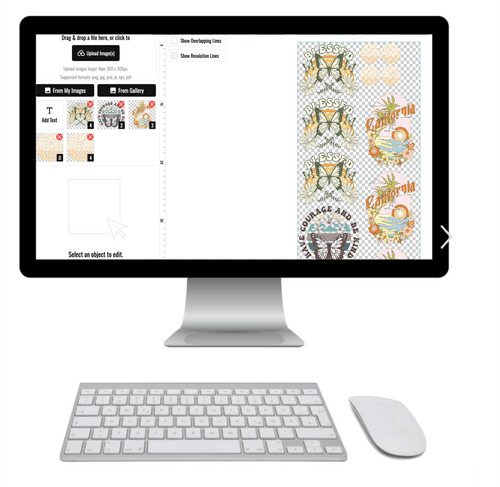
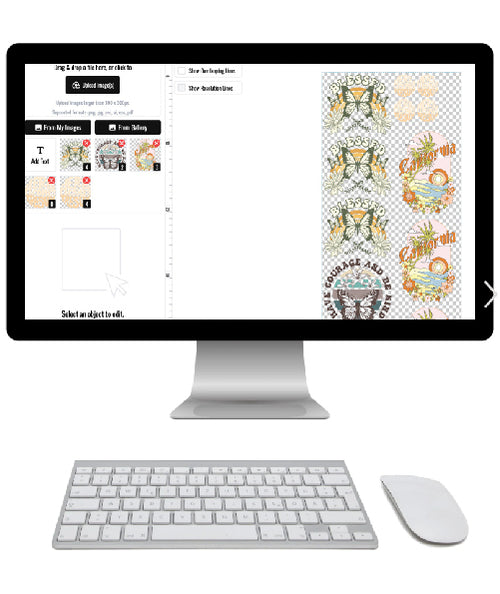
For example, our Auto-build gang sheet builder is an incredibly useful tool for packing more onto a single sheet and saving money. Its ease of use is a major advantage; you can load multiple designs—like a big back graphic, a small chest logo, and sleeve art—all onto one sheet and let the tool organize them efficiently.

The builder’s AI automatically arranges your uploads for maximum efficiency, turning what used to be a tedious manual process into a simple, money-saving step. This approach is key to making Gildan custom hoodies a profitable venture.
Finally, watch out for super thin lines and semi-transparent effects. From experience, lines thinner than 2 pixels may not print or adhere reliably. Effects like glows or semi-transparency don't translate well in DTF and often look patchy or incomplete. Stick to solid colors and bold lines for the most durable and visually striking results.
Building a Cost-Effective DTF Gang Sheet
Creating awesome Gildan custom hoodies is the fun part. Making them profitable? That’s where the real business happens. If you want to boost your margins, you have to get smart about how you order your DTF transfers. Buying individual transfers for every logo and placement is the old way of doing things—it's slow and it kills your profit.
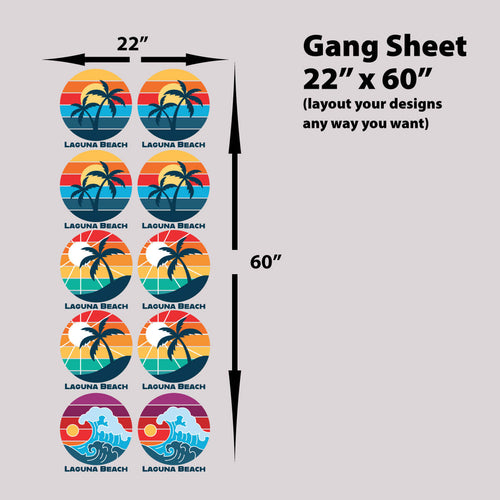
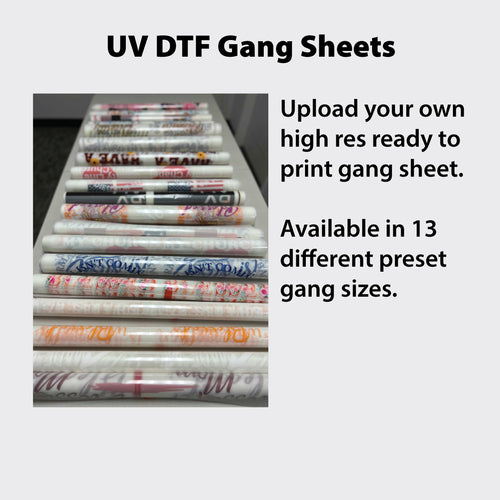
The answer is the gang sheet. Instead of paying for each design, you pay for the film area you use. This approach lets you pack multiple designs onto a single sheet, which drastically cuts your cost per print and squeezes every bit of value out of your order.
Maximizing Value with Smart Design Placement
Think about it this way: a local sports team needs hoodies. They want a big logo on the back, a smaller team crest on the left chest, and every player's number on the sleeve. If you ordered three separate transfers for every single hoodie, your costs would pile up fast.
With a gang sheet, you can put all three of those designs—the back logo, chest crest, and sleeve number—onto one sheet. And you don't have to stop at just one set. You can fill the entire sheet with as many copies of those designs as you can fit, making it incredibly efficient for group orders. Our Auto-build gang sheet builder makes this process effortless and highly cost-effective.
The core idea is simple but powerful: Stop paying per transfer and start printing per square inch. This shift in thinking is the key to unlocking better profit margins on every hoodie you sell.
This strategy couldn't be more relevant right now. The demand for custom apparel is driving the global hoodies and sweatshirts market, which is projected to grow at a compound annual growth rate (CAGR) of 6.3%. By cutting your production costs with gang sheets, you’re setting yourself up to grab a bigger piece of that pie.
Introducing the Auto-Build Gang Sheet Builder
Manually arranging designs on a gang sheet can feel like a frustrating game of Tetris. You're constantly rotating, nesting, and nudging files around to avoid wasting any precious film space. It's tedious, and honestly, it’s a waste of your time. Our Auto-build gang sheet builder was created to fix that exact problem, focusing on ease of use and cost-effectiveness.
This tool uses smart AI to handle all the layout work for you, ensuring you get the most efficient placement every time.
Here’s how simple it is:
- Upload Your Designs: Just drag and drop all your print-ready PNG files. You can mix and match logos, text, and graphics for different jobs all at once.
- Let the AI Do the Work: The builder’s algorithm immediately analyzes the size and shape of every file you’ve uploaded.
- Get Your Sheet Built Automatically: It then nests and arranges all the images onto your chosen sheet size, packing them together as tightly as possible to get you the most bang for your buck.
A task that could easily take you 20 minutes of careful clicking and dragging is now done in seconds. It not only saves you a ton of time but also creates a more optimized layout than most people could achieve by hand. For anyone serious about making Gildan custom hoodies profitably, this tool is a must-have for scaling your production.
A Real-World Gang Sheet Scenario
Let's walk through a common order. Say a startup needs 25 hoodies. They want their medium-sized logo on the front and their website URL printed smaller on the back shoulder.
Instead of ordering 25 individual front logos and 25 separate back URL transfers, you’d use the gang sheet builder. The ease of use is a key benefit here: you'd simply upload both design files and tell the builder you need 25 copies of each. The tool would then populate a gang sheet, fitting all 50 transfers onto the film as efficiently as possible.
You'll quickly see that you can fit all 50 transfers on just a couple of large sheets. This is worlds cheaper than buying 50 individual transfers. You can either pass those savings on to your client to win the job or pocket the difference and boost your own profit.
If you want to get your files prepped perfectly for this, check out our guide on how to create a DTF gang sheet in Canva. It’s a great walkthrough for getting your designs ready for the builder.
The Perfect Pressing Technique for Hoodies
You’ve got your Gildan blanks and a fresh stack of Lion DTF transfers. Now comes the most critical part of the process: the press. Getting this right is what separates a professional, retail-quality hoodie from one that looks like a cheap DIY job.
The right technique is straightforward, but every detail matters. Following these steps ensures your design not only looks incredible but is durable enough to last over 100 washes.
Prep the Hoodie, Not Just the Press
Before you even think about placing your transfer, you need to do a pre-press. This is non-negotiable, especially with thick garments like the Gildan 18500. Its 50/50 cotton-poly blend holds a surprising amount of moisture from the air, and that moisture is the number one enemy of a good transfer.
When heated, trapped moisture turns to steam and stops the DTF adhesive from bonding correctly with the fabric. To prevent this, just place the hoodie on your heat press and press it for 5-7 seconds. This quick step drives out moisture, gets rid of wrinkles, and gives you a perfectly flat surface to work on.
While the hoodie rests for a moment, double-check your settings. For a standard Gildan 50/50 blend, we consistently get the best results between 270-280°F using medium to firm pressure.
The Two-Press Method for Flawless Results
The secret to a transfer that feels soft and lasts forever is the two-press method. This ensures the adhesive melts deep into the fabric fibers and is then cured for maximum durability. Let's walk through it with a large back design on a Gildan 18500.
First, carefully position your Lion DTF transfer on the pre-pressed area. I recommend using a T-shirt ruler to get it perfectly centered and straight, but a good eye works too. Once you're happy with the placement, you’re ready for the first press.
Here's how it works:
-
The First Press: Cover the transfer with a Teflon sheet or parchment paper to protect your heat platen. Press the hoodie for 10 seconds. This initial press melts the adhesive and bonds the design to the garment.
-
The Hot Peel: As soon as the press opens, peel the film off. Do it immediately and confidently in one smooth, continuous motion. Our transfers are designed for a hot peel, and hesitating can cause parts of the design to lift.
After that first press, the design is on the hoodie, but you're not done yet. The surface will probably look a little shiny. The second press is what gives it a professional matte finish and locks it in for good.
Getting your designs ready for this stage is just as important. Our Auto-build gang sheet builder streamlines the entire process, turning your individual files into cost-effective, ready-to-print sheets with unparalleled ease of use.

This automated flow is all about efficiency. By uploading your designs and letting the builder arrange them, you cut down on waste and lower your cost per print—a huge win for any print shop.
- The Second Press: Now, cover the exposed design again with your Teflon or parchment paper. Press it for another 5-10 seconds. This final step embeds the ink deeper into the hoodie's fabric, removes the shine, and completes the cure. This is what gives it that signature soft-hand feel and unbeatable durability.
This two-press method is the industry standard for a reason—it works. It's the most reliable way to make sure your Gildan custom hoodies have the look and feel of a premium retail product. By sticking to this process, you’ll eliminate common problems like peeling edges or cracking after just a few washes.
Quality Control and Care for Lasting Results
Your job isn’t finished just because the heat press pops open. What you do next—a quick quality check and educating your customer—is what turns a fresh print into a professional product that people come back for. A quick inspection before anything ships ensures every hoodie meets the standard you’ve set for your brand.
First, get hands-on with the transfer. Run your fingers along the edges of the entire design. You're feeling for any lifted corners or peeling spots, which signal poor adhesion. The whole graphic should feel like it's seamlessly bonded to the fibers of the Gildan custom hoodies.
Now, check the finish. After that final press, the design should have a consistent, matte look that seems almost baked into the fabric. If you spot any shiny patches or uneven texture, it’s a red flag for temperature or pressure issues during the press.
Empowering Your Customers with Proper Care
The real test of a custom hoodie is how it holds up over time, and that comes down to how it's washed and dried. Giving your customers simple, clear care instructions is one of the easiest ways to guarantee they stay happy with their purchase and avoid complaints about premature wear.
It's a small detail, but it shows you stand behind your work and have created something built to last.
By empowering your customers with this knowledge, you build trust and reinforce the value of their purchase. It demonstrates that you've created a product designed to last, not just to make a quick sale.
This focus on durability is more important than ever. The demand for customizable apparel is surging, and Gildan's recent performance proves it. In Q3 2025, their net sales soared to $911 million, with the activewear line—including their best-selling hoodies—climbing 5.4% to $831 million. This incredible growth is great news for shops like ours, as it keeps quality blanks affordable. Learn more about the factors driving Gildan's growth and what it means for the industry.
Simple Steps for Long-Lasting Hoodies
Including a small care card or a note in your packaging is a simple but powerful customer service win. Here are the essentials you need to share.
Recommended Care Instructions:
- Wash Inside-Out: This is the most important step. Turning the hoodie inside-out protects the DTF transfer from getting scraped up by other clothes or the washer drum.
- Use Cold Water: Always wash on a cold cycle. Hot water is the enemy of the transfer’s adhesive and can cause it to break down over time.
- Avoid High-Heat Drying: Tumble dry on low heat, or better yet, hang it up to air dry. High heat from a dryer is the fastest way to cause cracking or peeling.
- Do Not Iron the Design: If you must iron the hoodie, use a low setting and never press directly over the printed graphic.
Sharing these instructions helps your customers keep their Gildan custom hoodies looking sharp for years. It’s how you build a reputation for quality, especially when you’re streamlining production with tools like our Auto-build gang sheet builder, which offers incredible ease of use and helps you create profitable, top-tier merchandise efficiently.
Common Questions About Gildan Custom Hoodies
When you’re diving into the world of custom apparel, you're going to have questions. We get it—we've heard just about all of them when it comes to making Gildan custom hoodies. Here are some straightforward answers to the questions we see most often, designed to help you get professional results from day one.
Which Gildan Hoodie Is Best for DTF Transfers?
Without a doubt, the Gildan Heavy Blend Hoodie (18500) is the go-to choice for DTF printing. Its 50/50 cotton/polyester blend gives you a perfectly smooth surface that handles the heat and pressure of a press like an absolute champ. The polyester content really makes your colors pop, while the cotton keeps it comfortable and breathable.
If you’re after a softer, more premium hand-feel, the Gildan Hammer (HF500) or Softstyle (SF500) are also excellent alternatives. Just remember to always run a test press to dial in your settings. Different fabric blends sometimes need small tweaks in temperature or time to get things just right.
How Does Gildan Hoodie Sizing Typically Run?
One of the best things about building your brand on Gildan is the consistency. For the most part, Gildan hoodies fit true to size. They have a classic fit that isn't too baggy or too slim, leaving enough room for comfortable movement without looking sloppy.
That said, if a customer is between sizes or just wants that relaxed, oversized look, sizing up is always a safe move. This is especially true if you’re selling to younger customers who tend to favor a roomier fit.
Can I Use a Home Iron for DTF Transfers on a Hoodie?
While we know it's tempting, trying to use a home iron for DTF transfers is a recipe for disaster, especially on a thick hoodie. A solid DTF transfer needs two things an iron just can't deliver: consistent, even temperature and firm, uniform pressure.
A heat press is built to do exactly that. An iron, on the other hand, has hot and cool spots, and you can't possibly apply even pressure across the whole design. This almost always leads to transfers that crack, peel, or wash out completely. If you want to create durable, professional-quality Gildan custom hoodies that people will pay for, a heat press is non-negotiable.
A heat press isn't just a tool; it's your quality control. It's the difference between a hoodie that lasts a weekend and one that lasts for years—and it protects your brand's reputation with every sale.
How Do I Maximize Profit on Custom Hoodies?
Getting the most profit from your hoodies comes down to one thing: lowering your cost per garment. The first step is buying your Gildan blanks in bulk to get a better price per unit.
But the real secret is getting smart about ordering your transfers. This is where our Auto-build gang sheet builder becomes a total game-changer. Instead of ordering individual transfers for a chest logo, a sleeve print, and a back graphic, you put them all onto a single large sheet.
The software automatically arranges your designs to pack them in tightly, minimizing any wasted space. This unmatched ease of use makes it incredibly cost-effective. You pay for the sheet, not for each design. This simple trick slashes your costs and makes even complex, multi-placement hoodies incredibly profitable.
Why Are My DTF Transfers Peeling Off the Gildan Hoodie?
Peeling is one of the most frustrating problems you can run into, but it’s almost always caused by one of three things: not enough pressure, the wrong temperature, or skipping the pre-press.
- Pressure: Your press needs to be set to medium-to-firm pressure. You need enough force to really embed the transfer’s adhesive into the fabric.
- Temperature: For a 50/50 blend, your temperature should be in the 270-280°F range. Double-check your press to make sure it’s accurate.
- Moisture: This is the big one. Always pre-press your hoodie for 5-7 seconds before applying the transfer. This step removes any moisture trapped in the fabric, which is the #1 enemy of good adhesion.
And don't forget the final press! After you peel the film, do a quick second press for 5-10 seconds with a cover sheet. This locks the design into the fabric, cures it for good, and gives it that soft, matte finish that looks and feels premium.
Ready to create stunning, profitable Gildan custom hoodies with ease? At Lion DTF, we provide premium DTF transfers that are vibrant, durable, and ship in just 1-2 business days. Use our powerful Auto-build gang sheet builder for its cost-effectiveness and ease of use to maximize your profit and start bringing your designs to life today.
Explore our full range of DTF solutions and get started at https://liondtf.com.