



saJumping into the world of custom apparel doesn't have to be complicated. With Direct-to-Film (DTF) transfers that arrive at your door ready to press, the whole game changes. This tech completely cuts out the need for expensive printers and messy inks, letting you turn a digital design into a pro-level garment with just a heat press.
It's a game-changer for small businesses and serious crafters alike.
What Are DTF Transfers Ready to Press?
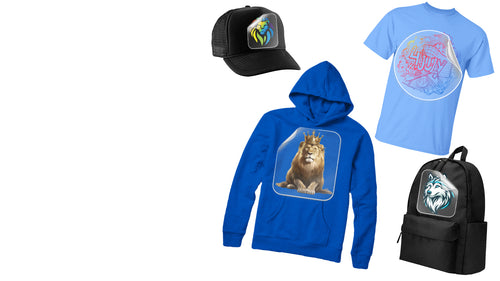
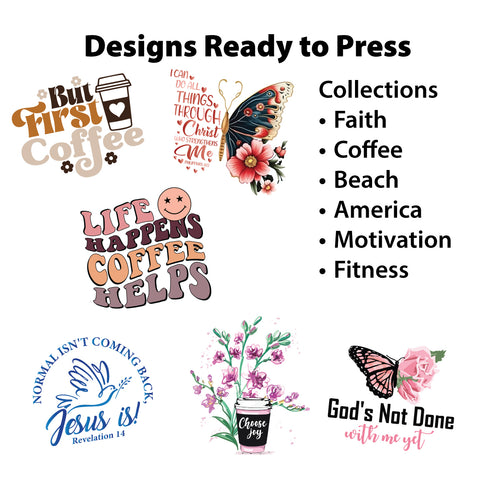
Simply put, DTF transfers ready to press are your designs, pre-printed onto a special film and fully prepped for you to apply with heat. You upload the artwork, and a specialty provider like Lion DTF handles all the technical stuff—the printing, powdering, and curing. The finished transfer gets shipped right to you.
All you have to do is press it onto your chosen garment.
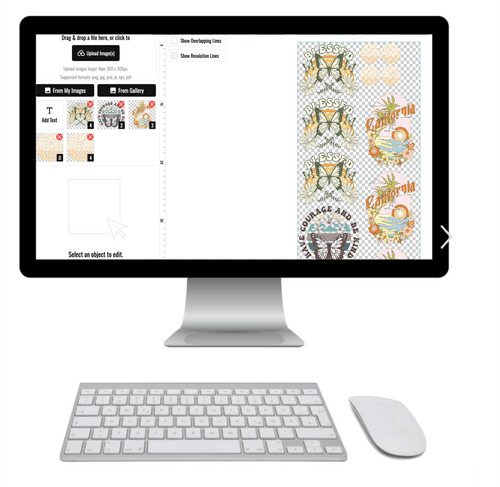
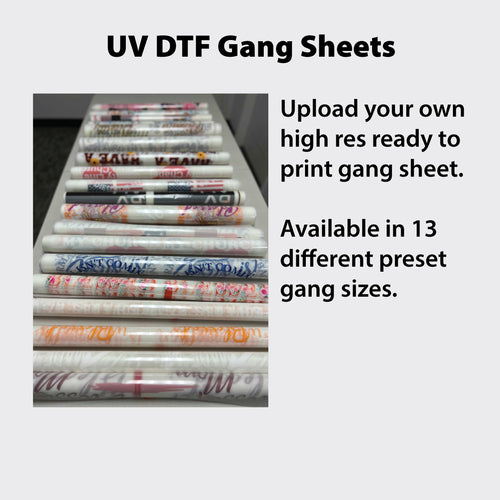
This approach separates the messy, complex printing part from the final application. It opens the door for small businesses, e-commerce brands, and home-based creators to produce high-quality, full-color apparel without dropping a ton of cash upfront. The quality and accessibility are why this method is exploding in popularity. For maximum cost-effectiveness, you can arrange multiple designs on a single sheet using our easy Auto-build gang sheet builder, which makes ordering your transfers simple and affordable.
The global DTF printing market, which is the engine behind these ready-to-press transfers, hit USD 2,720.0 million and is on track to reach a staggering USD 3,920.0 million by 2030. That kind of growth shows a major shift away from older methods as creators embrace DTF's speed and versatility for everything from custom tees to detailed merch. You can learn more about the direct-to-film printing market and its incredible expansion.

Why Choose This Method?
The appeal of using pre-made transfers is about more than just convenience. It’s a practical and scalable way to produce custom apparel with vibrant, detailed graphics that actually last.
Here's why so many people are making the switch:
- No Equipment Needed (Besides a Press): You get to skip the huge cost and constant maintenance of a DTF printer, powder shaker, and curing oven. All you really need is a reliable heat press.
- Full-Color, Complex Designs: Unlike vinyl, DTF handles intricate details, color gradients, and unlimited colors without a single issue. Your design is printed exactly as you created it.
- Fabric Versatility: These transfers stick beautifully to a huge range of materials, including cotton, polyester, 50/50 blends, and even trickier fabrics.
- Exceptional Durability: When you apply them correctly, Lion DTF transfers are tested to withstand 100+ wash cycles without cracking, peeling, or fading.
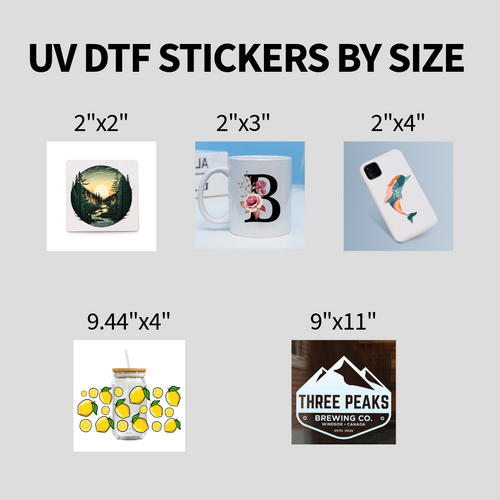
For businesses focused on profitability, the ability to group multiple designs is a massive advantage. Our Auto-build gang sheet builder lets you easily arrange different logos, sleeve hits, and neck tags onto a single sheet. This drastically lowers your cost per print and ensures you get the most out of every inch of material.
Dialing In Your Heat Press Settings for Any Fabric
That perfect, vibrant print you’re aiming for? The line between getting that and a frustrating failure often comes down to three things: temperature, time, and pressure. Nailing your heat press settings isn't just a technical step—it's the secret to getting consistent, professional-quality results with your dtf transfers ready to press. And trust me, generic advice just doesn't cut it, because every fabric needs its own specific approach.
Think of your heat press like an oven. You wouldn't bake a delicate pastry at the same temperature as a thick loaf of bread, right? It’s the same logic here. A thin polyester shirt will scorch under the same conditions that work perfectly on a heavy cotton hoodie. This is exactly why a one-size-fits-all mentality leads to ruined garments and prints that just don't last.
Cotton vs. Polyester: A Tale of Two Fabrics
Let’s start with the two heavyweights in the garment world: 100% cotton and 100% polyester. Cotton is a natural workhorse—it's absorbent, resilient to heat, and generally very forgiving. You can get away with higher temperatures, typically around 240-280°F, which helps the adhesive melt deep into the fibers for a rock-solid bond.
Polyester, on the other hand, is a different beast entirely. It's a synthetic material that's much more sensitive to high heat. Go too hot, and you’ll get "dye migration," where the fabric's dye actually bleeds into your transfer, ruining the colors. To avoid this, you’ll want to dial back the temperature to around 240-250°F and sometimes shorten the press time a bit to play it safe.
So, what about 50/50 cotton/poly blends? You guessed it—you meet in the middle. A good starting point for these popular fabrics is around 260-270°F with medium pressure.
The real goal is to use the lowest temperature that still gives you a permanent, complete bond. This protects the fabric's integrity and ensures your transfer adheres perfectly. When in doubt, always do a test press on a new type of garment.
Adjusting for Different Garments and Designs
Beyond just the fabric content, you also need to think about the garment's construction and even your design. A thick, heavy hoodie, for example, acts like a heat sink and soaks up a ton of energy. It might need an extra few seconds on the press compared to a lightweight tee of the exact same material, just to make sure the adhesive melts all the way through.
Your artwork matters, too. A huge, solid design has a lot of surface area and will need firm, even pressure to bond correctly from edge to edge. On the other hand, if you're pressing a bunch of smaller logos you've laid out with our slick Auto-build gang sheet builder, you have to make sure every single one is getting equal pressure. If a design goes over a seam or a collar, a pressing pillow isn't just nice to have—it's essential for creating a flat, even surface for the transfer.
To make things easier, here’s a quick-reference guide to get you started. For a much deeper dive into specific materials and troubleshooting common issues, be sure to check out our guide on heat press settings for DTF.
Recommended Heat Press Settings by Fabric Type
This table gives you a solid starting point for the most common materials we see. Remember, every heat press is a little different, so a quick test is always a good idea!
| Fabric Type | Temperature (°F/°C) | Press Time (Seconds) | Pressure Level | Peel Type |
|---|---|---|---|---|
| 100% Cotton | 280°F | 10 Seconds | Medium-High | Hot Peel |
| 100% Polyester | 240-250°F | 7-10 Seconds | Medium | Hot Peel |
| 50/50 Blends | 260-270°F | 10 Seconds | Medium | Hot Peel |
| Tri-Blends | 260-270°F | 10 Seconds | Medium | Hot Peel |
Think of these settings as your baseline. From here, you can fine-tune them to perfectly match your specific garment, press, and design for flawless results every single time.
A Start-to-Finish Guide for the Perfect Press
Turning a blank garment into a finished product with dtf transfers ready to press is one of the most satisfying parts of the job. Let’s walk through the entire workflow, from prep to the final press, so you can nail professional results every single time. It all starts with a clean setup.
Before you even think about turning on the heat press, get your garment ready. Lay it flat on your work surface and give the application area a good once-over with a lint roller. Even one tiny, stray fiber can get trapped under the adhesive, creating a weak spot that might cause lifting after a few washes.
Pre-Pressing for Success
Alright, now for the pre-press—a step I never, ever skip. Place your garment on the press and hit it with heat for 5-10 seconds at your target temperature. This quick press does two crucial things: it gets rid of any wrinkles for a perfectly smooth surface, and more importantly, it forces out any moisture hiding in the fabric.
Trust me, moisture is the number one enemy of a solid DTF application. If steam gets trapped under the transfer, the adhesive can't bond properly to the fibers, and you'll end up with peeling down the road. A quick pre-press makes sure the fabric is bone dry and ready for a perfect bond.
Alignment and the First Press
With the garment prepped and flat, it's time to place your design. Take a moment to get the alignment just right. A good rule of thumb for a standard t-shirt is to place the top of the design about three to four fingers down from the bottom of the collar. Once you’re happy with the placement, you're ready for the main event.
This infographic is a great visual for understanding the three key variables you’re always juggling.

Learning how to balance temperature, time, and pressure is what separates an amateur from a pro, and it’s the secret to getting a perfect press on any garment.
Now, press the transfer using the recommended settings for your specific fabric. Lion DTF transfers are a hot peel, which means you need to peel the clear film carrier off the moment the press opens. Don’t hesitate—just peel it back smoothly and confidently in one fluid motion.
Here's how you know you nailed it: You should be able to see the texture of the fabric’s weave subtly showing through the ink. That's your proof that the adhesive has properly melted into the fibers, creating a permanent bond.
The Finishing Press
Once you've peeled the film, there's just one more step: the finishing press. Cover the design with a Teflon sheet or a piece of parchment paper and press it again for another 5-7 seconds. This final press locks the design into the garment, seriously boosts its durability, and gives it a nice, professional matte finish.
That’s it. This simple, repeatable process is your key to consistent, high-quality results. By following these steps every time, from lint rolling to the final press, you’ll ensure every garment you create looks and feels amazing.
And when you're ready to scale up, our Auto-build gang sheet builder is the most efficient way to get all your dtf transfers ready to press on a single sheet, saving you time and money.
How to Get the Most Out of Your Money with Gang Sheets
If you want to boost your profits in the custom apparel world, it’s all about working smarter. That means ditching the one-by-one design orders and thinking bigger with your DTF transfers ready to press. The single best way to slash your per-print cost? Master the gang sheet.
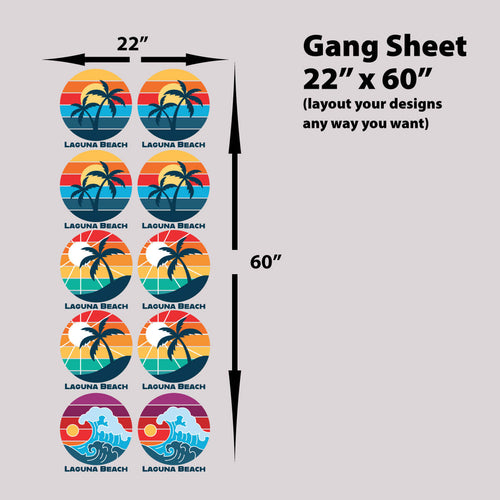
So, what is a gang sheet? It’s just one big transfer sheet where you arrange—or "gang up"—a bunch of different designs. Instead of paying for each design individually, you only pay for the total sheet area. This totally flips your cost structure, letting you bundle different art for one customer or prep for multiple jobs all at once. For ultimate ease of use, our Auto-build gang sheet builder lets you lay everything out visually, making the process fast and cost-effective.

Why Gang Sheets Are a Game Changer
Let's get practical. Say you land an order for 25 t-shirts. The client wants a big logo on the front, a smaller one on the sleeve, and a branded neck tag. Ordering those as three separate transfers would be a massive waste of money and time.
With a gang sheet, you can lay out all three pieces—the front logo, the sleeve hit, and the tag—onto a single sheet and just duplicate that group until the sheet is full. This trick drastically cuts your cost per shirt. You're basically getting the smaller prints for a tiny fraction of what they’d cost alone. This is exactly how savvy small businesses stay competitive on price while keeping their profit margins healthy.
The real magic is in using every last square inch of the film. When you pack your designs in tight, you’re not just saving space—you’re putting more money directly back into your pocket.
Streamline Your Workflow with an Auto-Builder
Now, building a gang sheet from scratch can feel like a game of Tetris, often needing design software and a lot of patience. That’s where our Auto-build gang sheet builder comes in. We built it specifically to take the headache out of the process.
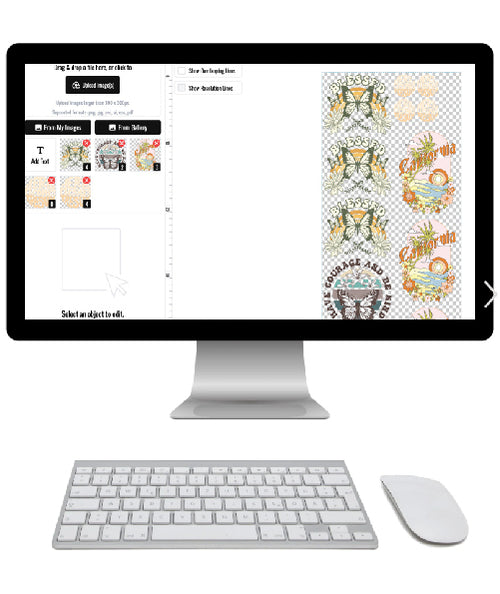
You just upload your individual art files—your logos, text, and graphics. The builder gives you a digital canvas where you can drag, drop, resize, and rotate everything into place. It helps automate the nesting, making it dead simple to create a perfectly packed, cost-effective layout in just a few minutes.
The massive growth of the DTF printing market, which experts have valued at $1.7 billion, is thanks in large part to tools like this. It’s what empowers home-based sellers and micro-brands to run on-demand businesses, ordering optimized sheets online and pressing finished products in no time.
Ready to put this powerful tool to work? For a full walkthrough on prepping your files and squeezing the most value out of every sheet, check out our guide on DTF gang sheets. It’s packed with everything you need to master the process and unlock some serious profitability for your business.
Solving Common Pressing Issues and Aftercare
Even when you've done everything right, pressing dtf transfers ready to press can occasionally throw a curveball. The good news is that most issues are simple to fix once you know what to look for. Let's walk through the common challenges so you can get your project back on track fast.
If a transfer isn’t sticking like it should, the problem almost always comes down to three things: pressure, heat, or moisture. Before you start tweaking settings, try one simple fix: re-run your pre-press for a solid 10 seconds. Hidden moisture in the garment is the number one culprit, and it completely prevents the adhesive from grabbing onto the fabric fibers.
Still seeing the edges of the transfer lift? It’s time to check your pressure. "Medium pressure" can feel a little vague, but you should feel some real resistance when you lock the press down. If the handle closes with almost no effort, you need to crank up the pressure. Always test on a scrap garment first.
Tackling Dye Migration and Wash-Related Issues
Working with 100% polyester or other synthetic blends introduces the risk of dye migration. This is when the dye from the fabric heats up, turns into a gas, and bleeds into your transfer, staining the colors. It’s a classic sign of too much heat.
The fix is straightforward: drop your temperature. For synthetics, you want to be in that 240-250°F range to keep the fabric dyes stable and your print looking sharp.
Another thing you might see is a transfer cracking after a few washes. This usually points back to an incomplete bond during the press. To avoid this, that final finishing press is non-negotiable. After peeling the film, always press the design again for 5-7 seconds with a protective sheet. This is the step that truly locks the ink into the fibers for long-term durability.
Essential Aftercare Instructions
The life of your print doesn't end when it comes off the press. Giving your customers clear, simple care instructions is crucial for their satisfaction and your reputation.
- Washing: Always wash garments inside-out in cold water. This protects the print from rubbing against other clothes.
- Drying: Tumble dry on low. High heat is the enemy of any decorated apparel. Hang-drying is even better if you want maximum longevity.
- Do Not: Advise against using bleach, fabric softeners, or ironing directly on the design itself.
Mastering these quick troubleshooting steps and providing solid aftercare advice ensures every garment you create is a testament to quality. This attention to detail is what separates the pros in a crowded market.
And this market is booming. The customization trend is part of a global industry now worth over $500 billion. More specifically, the DTF systems market was valued at USD 293.0 million and is expected to climb to USD 467.0 million by 2033. This growth is driven by businesses using dtf transfers ready to press for everything from team uniforms to promotional gear, where quality is everything.
For more hands-on advice, check out our guide covering tips and tricks for beginners pressing DTF transfers on t-shirts.
Got Questions About Ready to Press DTF Transfers? We’ve Got Answers.
As you start working with DTF transfers ready to press, you’ll probably run into a few questions. It happens to everyone. Here are the most common ones we hear, with straight-to-the-point answers to help you get ahead of any issues and press like a pro.
Can I Just Use a Home Iron Instead of a Heat Press?
Look, we get the temptation, but we have to be direct here: please don't. A home iron is a shortcut that will absolutely sabotage your results. A real heat press delivers two critical things an iron physically can't: consistent, edge-to-edge heat and firm, even pressure.
An iron has hot spots that create an uneven bond, and it can't generate nearly enough force to properly melt the adhesive into the fabric. If you use an iron, you’re setting yourself up for transfers that will almost certainly start peeling or cracking after just a couple of washes. Investing in even a basic clamshell heat press will make a night-and-day difference in the quality and durability of your work.
Help! My Transfer Is Peeling After Washing. What Went Wrong?
Peeling is the number one sign of a weak bond, and it almost always comes down to one of three things: not enough pressure, the wrong temperature, or hidden moisture in the garment. It's a frustrating problem, but the good news is it’s usually an easy fix.
First, check your pressure. You should have it set to a solid medium-to-high setting—it should take a little muscle to close it. Second, double-check your heat settings against our guide for the specific fabric you're using.
And finally, the step people most often forget: always pre-press your garment for 5-10 seconds. This is non-negotiable. It gets rid of any moisture that can ruin the bond. Tossing in a final 5-second press after you peel the film is also a great way to lock the design in for good.
What’s a Gang Sheet, and How Does It Actually Save Me Money?
A gang sheet is simply a large transfer sheet that you can fill with multiple designs. Instead of paying for each individual print, you're just paying for the total area of the sheet. It is, without a doubt, the most cost-effective way to order dtf transfers ready to press, especially when you have a project with logos, sleeve hits, and neck tags.
Our Auto-build gang sheet builder makes this process incredibly simple. You can easily drag and drop a big front logo, a few sleeve designs, and a dozen custom neck tags all onto one sheet. This completely changes your profitability by slashing your cost-per-print and making sure you get value out of every single square inch you buy. It’s how the pros scale their production and boost their margins.
Ready to create amazing custom apparel with killer durability and vibrant color? Lion DTF makes it happen. Build your custom gang sheet today and see the quality that thousands of other creators count on.