



Los Angeles buyers usually start looking for DTF transfers when the deadline is already tight. A streetwear drop needs to be ready for a weekend pop-up in Fairfax. A production coordinator needs branded crew shirts before call time. A local gym wants a short run of performance tees without paying for a screen setup that doesn't make sense for a small batch.
That's why generic print advice falls short here. In LA, speed matters, but speed without dependable print quality just creates rework. Cost matters too, especially when you're juggling samples, rush jobs, mixed garment types, and clients who change artwork at the last minute. DTF fits that reality well because it gives you a way to move fast without being boxed into one fabric type or a simple one-color design.
Your Guide to DTF Transfers in Los Angeles
If you're buying DTF transfers in Los Angeles, you're probably balancing three things at once. You need a transfer that presses cleanly, a supplier that won't slow the job down, and pricing that still leaves margin after blanks, labor, and delivery.
LA makes those trade-offs more visible than most markets. Brands test designs quickly here. Event timelines shrink overnight. Shops often need to print on whatever blank is available, not the ideal one. That's where DTF tends to outperform older workflows for many jobs. You can move from approved art to press-ready transfer without the setup burden that makes some other methods drag.
The local angle matters more than buyers think. Same-day pickup can save a job when shipping windows stop being realistic. A nearby supplier also makes file questions, reorders, and troubleshooting easier to handle because you're not waiting on a distant support queue that doesn't understand the pace of this market.
In Los Angeles, the right transfer supplier isn't just a vendor. They're part of your production timeline.
Buyers also tend to make one expensive mistake early. They shop only by sheet price. That usually backfires. A cheap transfer that presses inconsistently, feels overly plastic, or arrives with weak detail can cost more in wasted garments and repeat labor than the original savings ever justified.
A smart purchase starts with the basics:
- Print quality first: Fine details, smooth color transitions, and a clean adhesive finish matter more than a low advertised rate.
- Local responsiveness: Rush pickup, quick communication, and realistic lead times matter in LA.
- Usable ordering tools: A strong gang sheet builder saves time before you ever get to the heat press.
- Support after checkout: Good suppliers help with file prep and pressing, not just payment collection.
What Are DTF Transfers and Why Choose Them
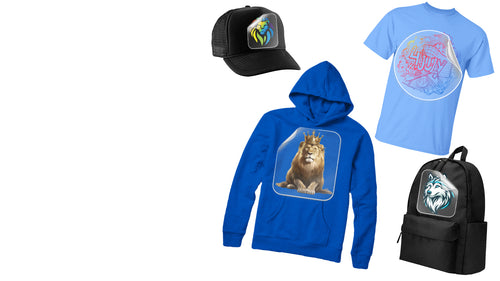
DTF works like a high-performance heat transfer that becomes part of the garment surface when it's pressed correctly. The design is printed onto film, adhesive is applied, and the finished transfer is then heat pressed onto the shirt, hoodie, tote, or other textile. For buyers, the practical benefit is simple. You get vivid, detailed graphics without being locked into one garment type or a slow setup process.

Where DTF fits in real production
For a Los Angeles buyer, DTF solves a common problem. One order might include cotton tees, polyester jerseys, and fleece hoodies in the same run. DTF transfers in Los Angeles are often chosen for exactly that kind of mixed-garment job because they're workable across a wide range of apparel without forcing the decorator into different print methods for each fabric family.
The other reason buyers switch is artwork freedom. When properly cured and applied, DTF prints deliver many washes without fading, cracking, or peeling, and the process supports full CMYK + white printing with unlimited colors and exceptional detail reproduction, including fine lines, gradients, and photographic images without outlines, according to DTF durability and print capability details from Transfer Superstars. That same source notes DTF is more economical than DTG for medium runs of 25–500 pieces and faster than screen printing for complex designs.
What works better than older methods
Screen printing still makes sense for some jobs. If you're running a long, simple order with stable art, it can be a strong option. But for smaller runs, artwork with lots of color, or designs that change often, screen setup becomes friction. You're paying in time and process before the first shirt is even printed.
Vinyl has its place too, especially for basic names and numbers. But it becomes labor-heavy when the design includes multiple colors or intricate elements. Weeding slows production. Layering adds complexity. Fine detail isn't where it shines.
DTG can produce nice results, but one of its workflow drawbacks is pre-treatment on many garments. DTF avoids that step on the fabrics it commonly serves, which is one reason shops use it for faster-moving custom work.
Practical rule: If the design is detailed, the garment mix is broad, or the order size sits in the middle, DTF is usually the first process worth pricing.
Why buyers in LA keep coming back to it
The biggest advantage isn't just print quality. It's flexibility. In a city where buyers often need samples, event merch, influencer drops, school apparel, and one-off restocks all in the same week, a process that handles complex artwork without color-count penalties is easier to build a business around.
That's why DTF transfers Los Angeles buyers rely on tend to come from suppliers who understand production reality, not just print specs. A good transfer has to look sharp on the table, press cleanly in the shop, and hold up after the customer starts wearing it.
How to Choose a DTF Supplier in Los Angeles
Most buyers compare suppliers too late. They upload artwork, pay, and only then learn what the shop's process is like. A better approach is to vet the supplier the way you'd vet any production partner. In LA, turnaround, communication, and file handling matter just as much as the print itself.
Use a practical evaluation checklist
| Criterion | What to Look For | Why It Matters in LA |
|---|---|---|
| Print quality | Clean edges, readable small text, smooth gradients, consistent white base | Many LA jobs involve brand graphics, event merch, or photo-based art that can't tolerate muddy detail |
| Turnaround | Clear production windows and realistic pickup options | Rush jobs are common, and vague lead times create missed launches |
| File review | Actual feedback on art problems before printing | Last-minute uploads often contain background issues, low resolution, or scaling mistakes |
| Pricing structure | Transparent size or area-based pricing without confusing add-ons | Buyers need to quote their own customers quickly and protect margin |
| Fabric compatibility | Confidence across common apparel categories | LA orders often mix fashion blanks, activewear, and promotional items |
| Customer support | Fast replies by phone, text, chat, or email | When a deadline slips, responsive support matters more than polished marketing |
A local supplier should also understand the operational reality behind the order. If you're printing for a pop-up, a delayed transfer can sink the entire event. If you're decorating uniforms, the job has to be repeatable when you reorder.
Questions worth asking before you buy
Ask what happens if your file has a resolution issue. Ask whether the supplier flags art concerns before production or just prints what was uploaded. Ask how they handle mixed designs on one order. Those questions tell you more than a homepage headline.
This is also where local context helps. For buyers comparing options for DTF ordering in Los Angeles, it's worth paying attention to whether the supplier is set up for rush workflows, not just standard e-commerce fulfillment.
A supplier that answers quickly before the sale usually handles pressure better after the sale too.
What experienced buyers watch for
The first sample tells you a lot. Check the white ink coverage, edge sharpness, and whether the transfer feels controlled rather than overly thick. Buyers often focus on color first, but registration, detail retention, and peel consistency are what separate usable production transfers from disappointing ones.
Look at the ordering experience too. If gang sheets are clumsy to build, if pricing is hard to follow, or if there's no clear support path when artwork needs adjustment, those problems usually get worse at scale.
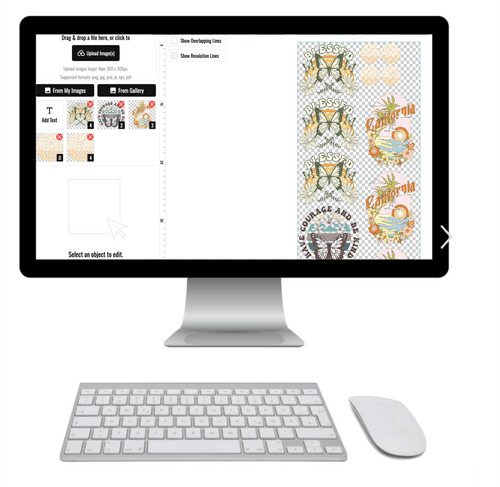
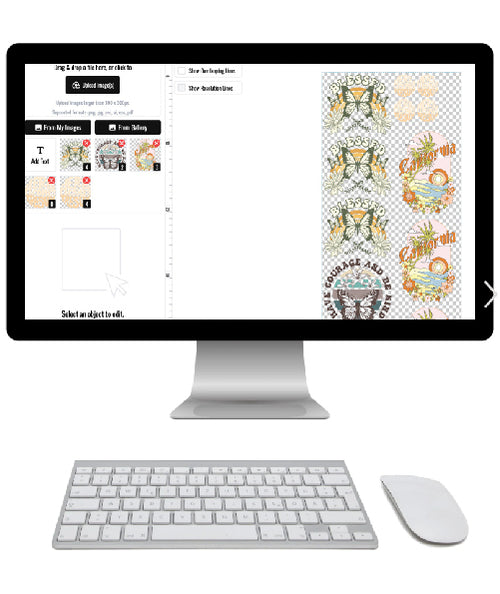
One practical option in this category is Lion DTF Transfers, which offers custom transfers, gang sheets, upload-based ordering, and an Auto-build gang sheet builder for buyers who want to fit multiple graphics efficiently on one sheet. That kind of tool is useful when you're trying to keep waste down while still moving quickly.
Maximize Value with an Auto Build Gang Sheet
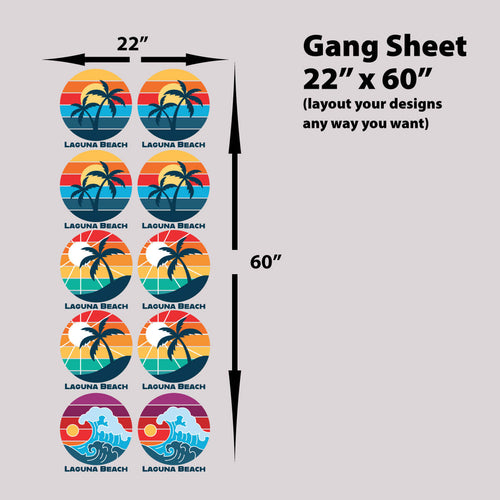
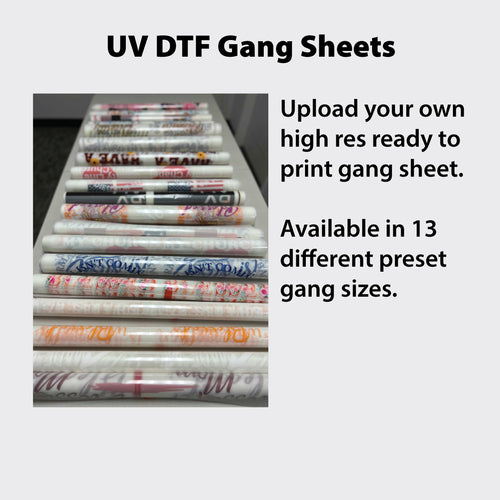
A gang sheet is one of the easiest ways to improve transfer economics. Instead of ordering each design as a separate print area, you place multiple graphics on one sheet and use the space more intelligently. For small brands, contract decorators, school merch sellers, and promo shops, that usually means less empty film and fewer ordering inefficiencies.
Why gang sheets save money
If you run several left-chest logos, sleeve hits, neck labels, and full-front designs in the same order, separate uploads can waste usable space. Gang sheets fix that by combining artwork on one layout. That's not just cleaner from a production standpoint. It cuts material waste.
According to Lion DTF's Auto Builder overview, gang sheets reduce material waste by up to 30% compared to single-design printing because they maximize space utilization. The same source notes that the Auto Builder automates layout and uses a green box indicator to confirm high printing resolution before submission.

Why Auto-build is worth using
Manual layout sounds simple until the order gets messy. You resize one graphic, then shift three others, then realize you left dead space along one side. That kind of arranging takes time, and time is cost even when no line item shows it.
The Auto-build gang sheet builder solves a real production problem. You upload multiple designs, let the software optimize placement, and get a faster path to a cleaner sheet. That matters even more when orders include a mix of logos, tags, and alternate graphics.
Here's where it helps most:
- For mixed artwork orders: You can combine front prints, back prints, sleeve art, and tags without laying everything out by hand.
- For repeat buyers: Consistent layout logic makes reorders simpler.
- For tight margins: Better space use lowers waste and can improve job profitability.
Another cited use case comes from Orange County, where the auto-build gang sheet builder is described as a significant advancement for arranging pre-approved designs and enabling cost savings of up to $0.15 per square inch, based on Lion DTF's Orange County discussion of auto-build gang sheets. Even if your own savings vary by artwork mix, the principle is solid. Better layout means less waste.
What doesn't work
The wrong move is cramming too many elements together without considering cut space and application workflow. A dense sheet can be efficient on paper but annoying on the production table if pieces are hard to trim cleanly. Good gang sheet strategy balances material efficiency with ease of use after the transfer arrives.
The cheapest sheet isn't the one with the most art jammed onto it. It's the one that wastes less space and still works smoothly in production.
File Prep and Pressing for Perfect Results
Good transfers can still fail if the file is messy or the press setup is inconsistent. Most pressing problems start earlier than people think. They begin with low-quality art, unclear edges, or a file that wasn't built for output.

Prep the artwork correctly
Use a file that stays clean when scaled. PNG can work well for print-ready raster art, and AI is useful when the design is vector-based. Keep the background transparent. If the background isn't completely removed, the transfer may carry a box or unwanted edge you didn't intend.
Resolution matters too. A practical target is 300 DPI at final print size. Small text and thin lines are where low-resolution files break down first. If the artwork looks soft on your screen when viewed near actual size, it usually won't sharpen itself during printing.
A quick preflight list helps:
- Check transparency: Remove hidden backgrounds and stray pixels.
- Scale at final size: Don't upload a tiny file and expect enlargement to stay sharp.
- Inspect thin details: Fine outlines and small text need extra attention.
- Keep spacing workable: If you're building a gang sheet, leave enough room for trimming.
For buyers who need a more detailed walkthrough on pressing and production handling, Lion DTF's guide to DTF printing and pressing is a useful reference.
Press settings that actually matter
DTF transfers in Los Angeles can be applied with commercial heat presses at 300–330°F for 15–20 seconds using firm, even pressure, according to French Press Custom's DTF transfer application guidance. That same source notes the method works on virtually any textile, including 100% cotton, polyester, nylon, and tri-blends, without pre-treatment.
Those numbers matter because DTF depends on proper heat and pressure to activate the adhesive correctly. Too little heat and the bond can be weak. Too much heat and you risk damaging sensitive garments.
Warm peel, cold peel, and what to watch
Peel style depends on the transfer system you're using. Some decorators prefer cold peel because it feels safer on unfamiliar garments. Others use hot peel systems to move faster. The real point is consistency. Don't change peel timing halfway through a run unless you're testing intentionally.
Here's a short demo for the application side of the process:
Common errors show up fast at the press:
- Uneven pressure causes partial adhesion.
- Moisture in the garment can interfere with bonding, so a quick pre-press often helps flatten and dry the area.
- Rushing the peel can lift edges if the transfer system isn't ready.
- Ignoring fabric sensitivity can mark certain synthetics even when the transfer itself is fine.
Shop-floor advice: Lock in one tested press recipe for the garment you're using, then stay consistent for the whole run.
How to Order Your DTF Transfers from Lion DTF
Ordering goes smoothly when you've already made the key decisions. You know whether you're submitting a finished gang sheet, uploading single designs, or sending art that still needs arrangement. Once that's clear, the rest is mostly choosing the path that matches your workflow.
Pick the ordering method that fits the job
The most efficient route depends on how ready your files are.
- Build a gang sheet: This works well when you have multiple logos, placements, or size variations and want better sheet efficiency.
- Upload a ready file: Best when your art is already laid out and sized correctly.
- Use a build-for-you option: Helpful when the artwork is approved but the layout still needs production setup.
For Los Angeles buyers, local pickup is often the deciding factor. If the order is tied to an event, launch, or overnight production window, pickup can be more practical than waiting on shipping even when transit is fast.

Keep the process simple
A clean ordering flow usually looks like this:
- Prepare the artwork at final size with a transparent background.
- Choose whether to upload a sheet or build one.
- Select the needed size and quantity.
- Confirm delivery or pickup.
- Press the transfers using the recommended settings for the garment.
The reason this matters is straightforward. The fewer manual corrections required during ordering, the faster the supplier can move the file into production. That's especially important for same-day or short-turn work.
What buyers in LA usually care about most
At this stage, the buying decision usually comes down to confidence. Can you get the transfer fast enough, and will it press the way it's supposed to when it arrives? Buyers don't need a complicated portal. They need a process that lets them upload art, get clear support if something is off, and keep moving.
For teams that reorder often, a supplier's responsiveness matters as much as the print. Fast replies by phone, text, email, or chat can save more time than a small price difference ever will.
Frequently Asked Questions
Are DTF transfers the same as UV DTF stickers
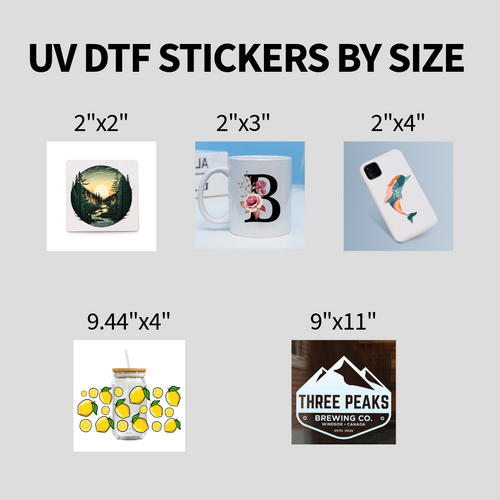
No. Apparel DTF transfers are made to be heat pressed onto textiles. UV DTF stickers are for hard surfaces and are applied differently. If you're decorating shirts, hoodies, or fabric totes, you want apparel DTF, not UV DTF.
Is same-day pickup available for Los Angeles orders
Local pickup is one of the main reasons buyers look for DTF transfers in Los Angeles instead of ordering from a national-only source. If your deadline is tight, pickup can make the difference between hitting the event window and missing it. It's worth confirming cutoff timing before placing the order.
What if my artwork isn't print-ready
That's common. Many buyers have a logo, screenshot, mockup, or rough design but not a production-ready file. In that situation, look for a supplier that offers vectorization, file cleanup, or a build-for-you service instead of forcing you to solve it alone.
Do DTF transfers hold up in the wash
Yes, when the transfer is produced and applied correctly, durability is one of the format's strengths. The exact lifespan depends on the transfer system, garment, and pressing consistency, but this is one of the reasons many shops use DTF for wearable merch rather than only for samples.
Can I use DTF on more than basic cotton tees
Yes. One of the practical advantages of DTF is its broad garment compatibility. That's useful when an order includes mixed blanks or when the available inventory forces you to pivot from one fabric type to another.
If you need a local partner for Lion DTF Transfers, start with the ordering method that matches your artwork, use the Auto-build gang sheet builder when you want better sheet efficiency, and confirm pickup or delivery timing before checkout. That approach keeps the job moving and gives you a cleaner path from file to finished garment.